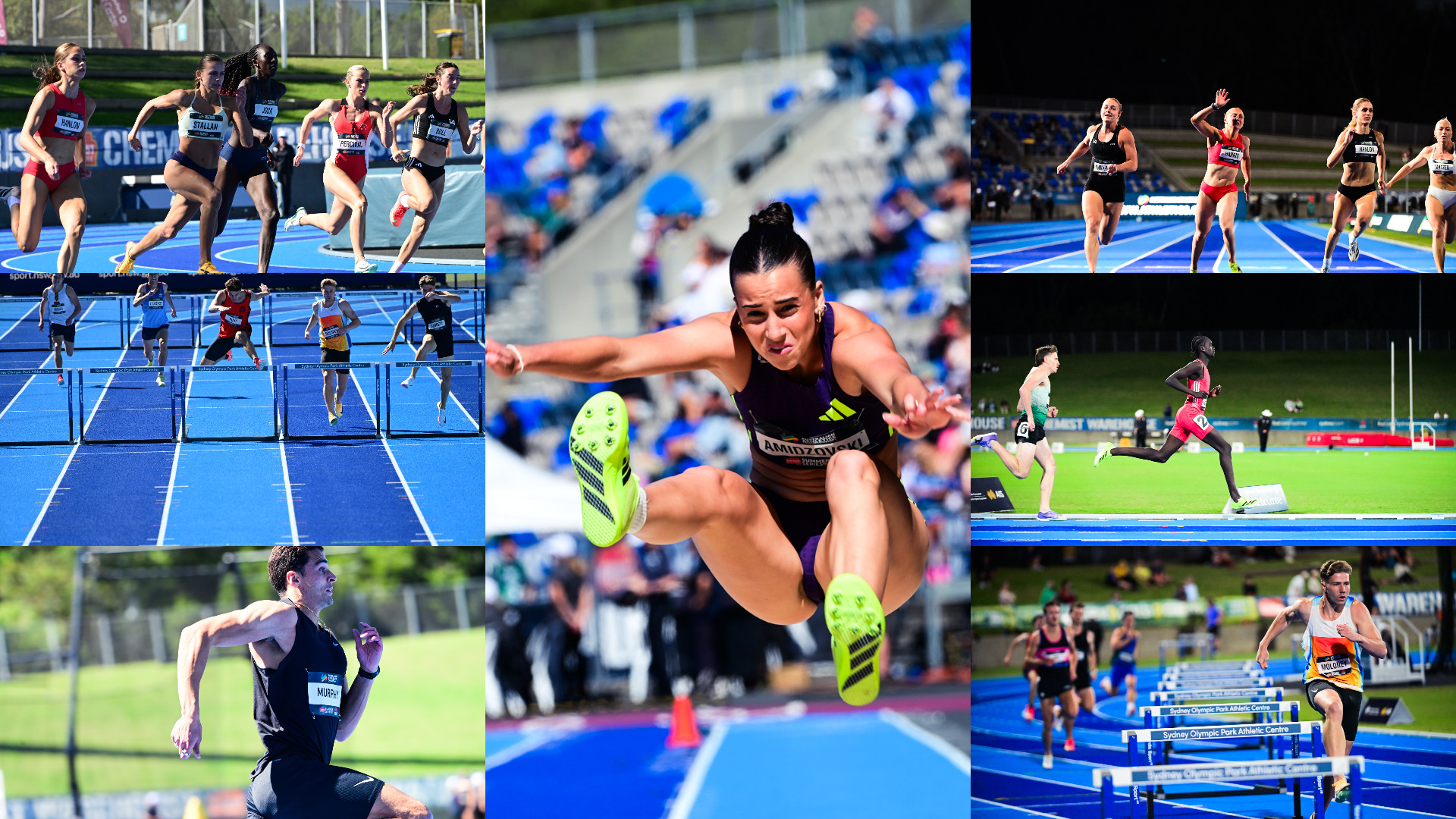

Championships are rarely remembered in full.
Not for the timetable, or the long list of results that blur together by the final day.
They’re remembered in moments, the ones that cut through. The ones that shift momentum, define careers, or reveal something deeper about the athletes at the centre of them.
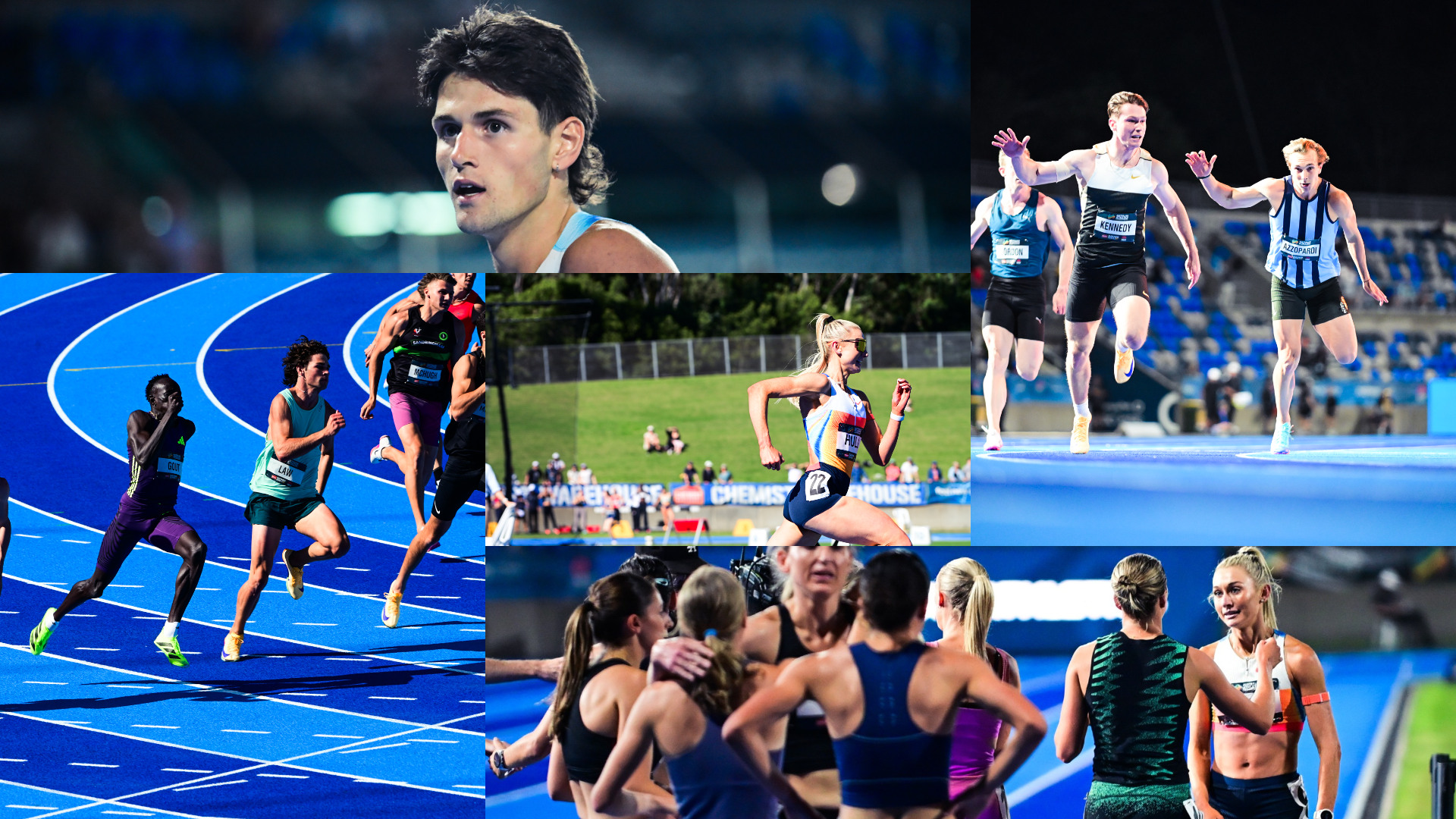
From generational speed to raw emotion, from chaos to composure, the 2026 Australian Championships delivered a meet that will be revisited for years.
These were the five moments that defined it.
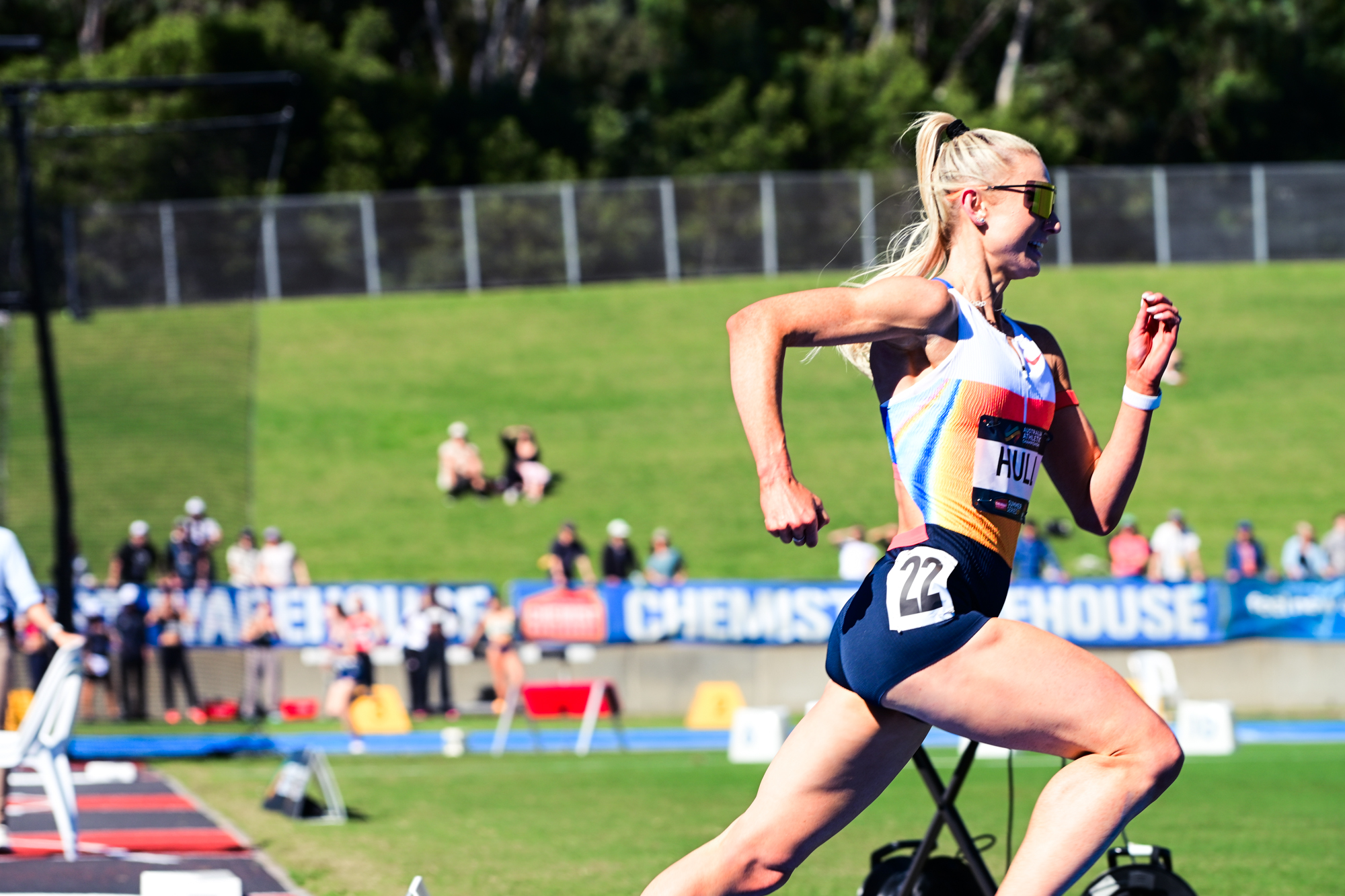
5. Jessica Hull, 5000m — the response
Forty-eight hours earlier, Jessica Hull was on the track.
Not crossing the line. Not kicking for gold.
Face first on the track.
The 1500m fall had taken her out of contention, physically and emotionally. Whether she would even race again that weekend was uncertain due to media speculation.
Which made what followed all the more compelling.
In the 5000m, Hull removed the variables. No traffic. No positioning risk. No reliance on luck. She sat, waited, and then, with the race in her control, delivered.
A 61-second final lap broke the field and secured the title in 15:13.21, but the time almost felt secondary.
This was about composure.
About absorbing the chaos of one race and returning with clarity in the next.
In a championships full of defining moments, this was one of the most complete responses for the crowd favourite.
Article continues below…
4. The 1500m — and the fall
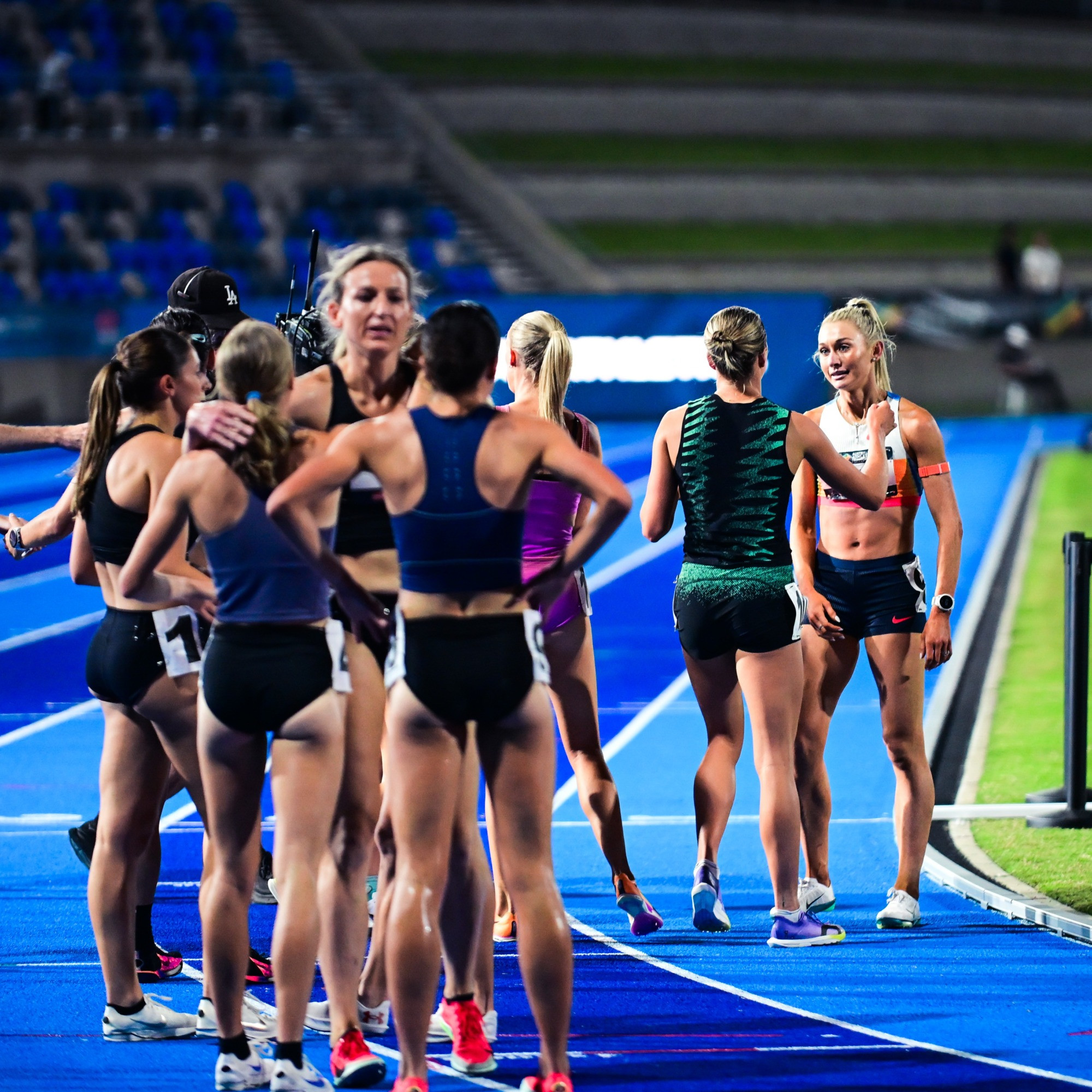
Some races are remembered for how fast they were.
Others for what they became.
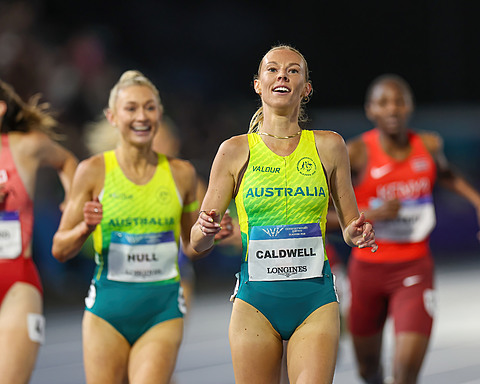
The women’s 1500m final — featuring Jessica Hull, Claudia Hollingsworth, Abbey Caldwell and Sarah Billings — will sit firmly in the latter category.
A slow, tactical race built pressure with every lap. Positioning tightened. Margins disappeared. And when the decisive move came, it came with consequences.
Hollingsworth, boxed in and searching for space, shifted outward in the home straight. In doing so, she clipped Hull, who fell heavily to the track just as the race was opening up.
Behind them, Caldwell — building into her finish — was checked and lost momentum at the critical moment.
What followed extended well beyond the finish line.
Hollingsworth crossed first. She was disqualified following protests. Sarah Billings was elevated to national champion. By the following day, the decision was overturned on appeal. The title was reinstated. A rerun was denied.
Few races have unfolded with such complexity. Or left such a divided response in their wake.
Yet, as has so often been the case in Australian middle-distance history, the defining element wasn’t just the incident.
It was the aftermath.
Measured responses. Respect between competitors. No escalation beyond the race itself.
External link
In a moment that could have fractured the sport, the athletes instead held their line.
3. Lachlan Kennedy — the arrival
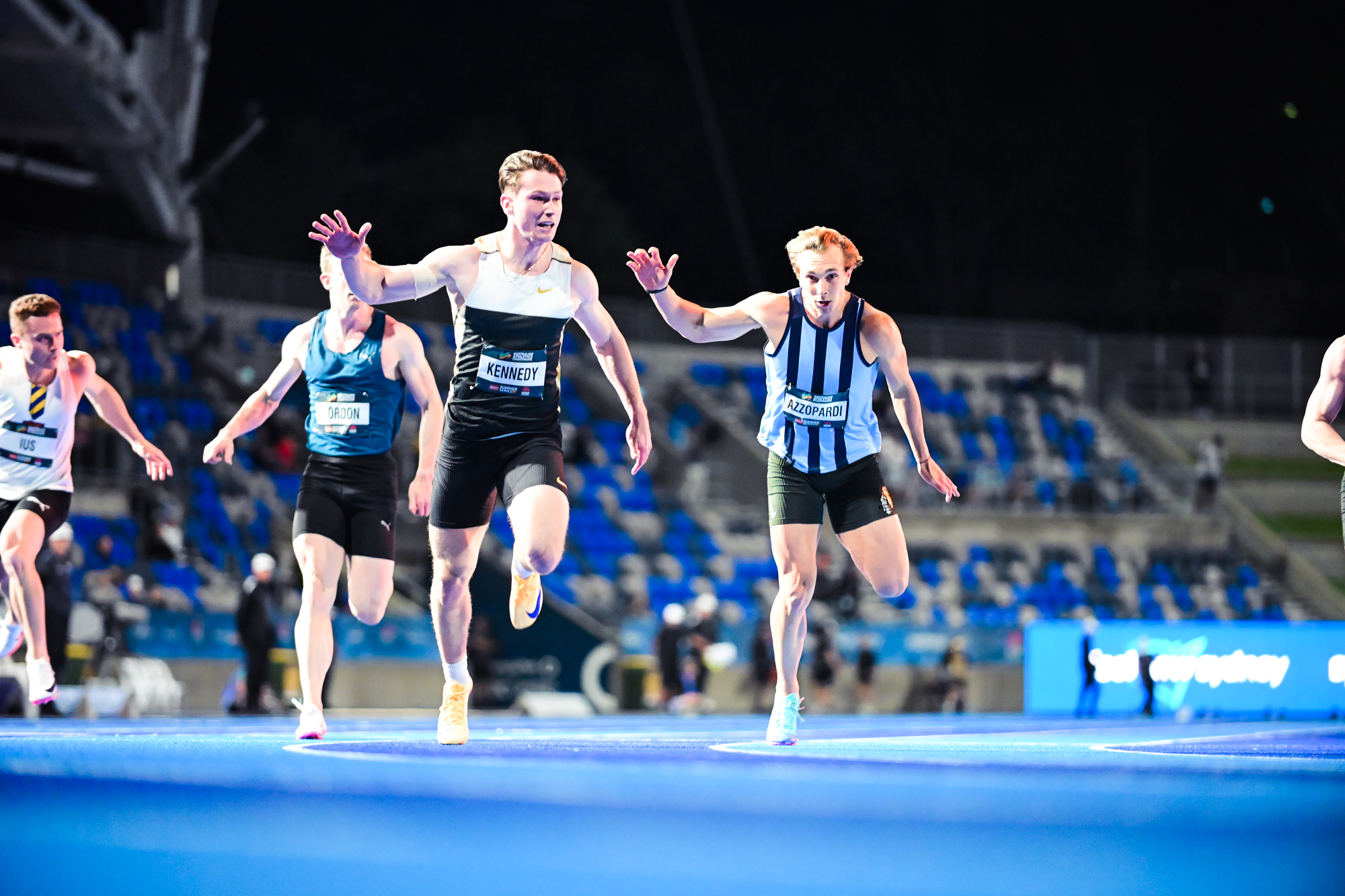
Breakthroughs in sprinting aren’t just about one fast run.
They’re about repeatability. Control. Execution under pressure.
Lachlan Kennedy delivered all three.
9.96 in the heats.
9.96 again in the final.
Not wind-assisted. Not a one-off.
Backed up, when it mattered most.
In between, a composed semi-final and a field stacked with proven performers only added to the weight of the performance.
For years, Australian sprinting has searched for consistency at the top end — not just flashes, but standards.
Kennedy didn’t just win his first national title.
He redefined his own ceiling, and in doing so, gave the event a new reference point.
2. Cameron Myers — 1500m and the double
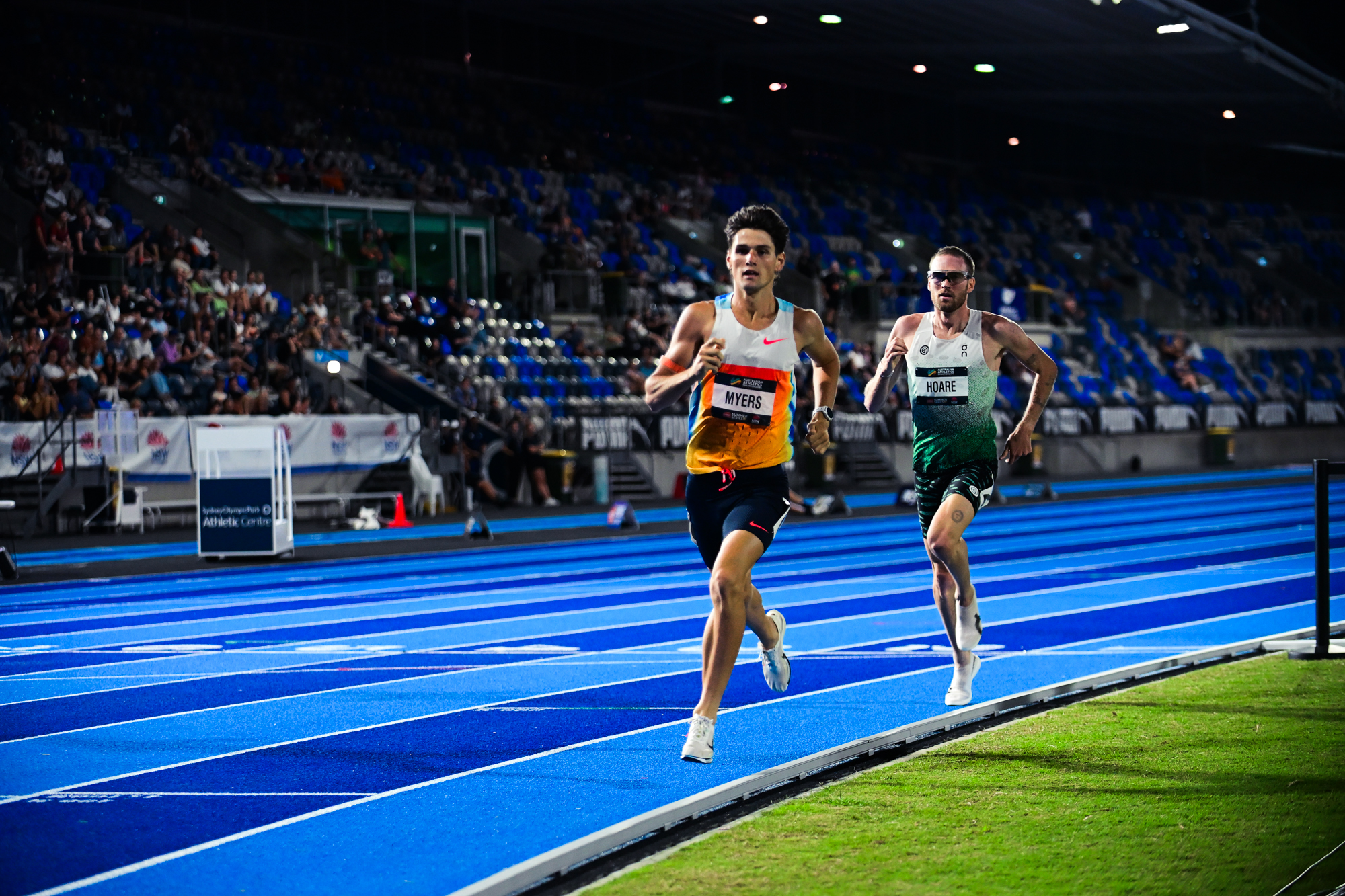
Championship racing exposes athletes.
It asks different questions than paced meets or time trials.
Tactics. Recovery. Emotional control.
Cameron Myers answered all of them.
Arriving with the 1500m as his primary focus, Myers left with two national titles — doubling back 24 hours later after a sensational front running Australian Allcomers record of 3:29.85 to claim the 5000m in a personal best 13:11.66 against a field that refused to yield.
The margin told part of the story. The race itself told the rest.
Seth O’Donnell pushed him all the way. Morgan McDonald surged late. There was no room to fade.
And yet Myers held.
“Pressure creates diamonds,” he said.
This wasn’t just a double.
It was a statement about who he is becoming as a championship athlete.
1. Gout Gout — and that 200m
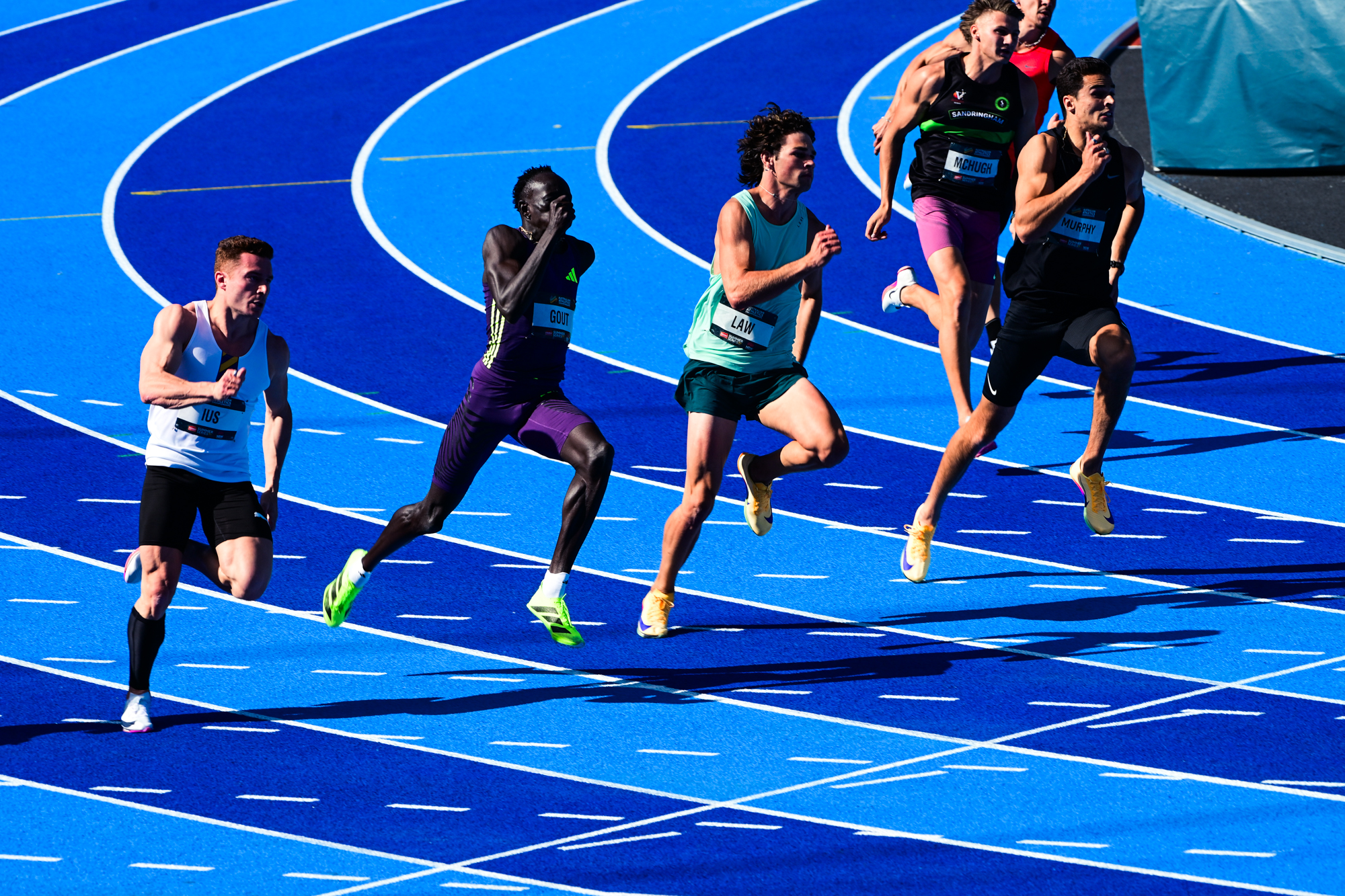
Every so often, a performance arrives that feels like it belongs to a different timeline.
Gout Gout delivered one.
19.67 seconds.
Legal. Controlled. Unmistakable.
A World Under 20 Record, and the first time an Australian has broken 20 seconds under legal conditions.
But beyond the numbers, it was the manner.
Running from lane seven, challenged on both sides, Gout didn’t panic. He built. And then, in the final 50 metres, he separated.
Decisively.
The rest of the field responded with personal bests — six men under 20.40 — but the race had already shifted into something else.
Something bigger than a national title.
Gout had written 19.75 as his target.
He ran faster.
And in doing so, may have shifted the expectations of Australian sprinting with him.