
There is a particular kind of pressure that descends on an athlete in the qualifying round of a national championship: the knowledge that you must make the final, that failure here is final, that there is no second chance. For most athletes, that pressure is a weight to be managed. For Delta Amidzovski, it turned out to be the key.
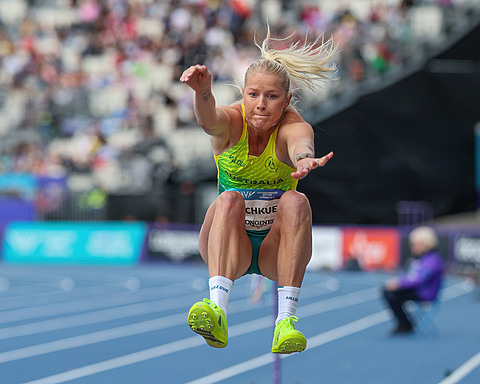
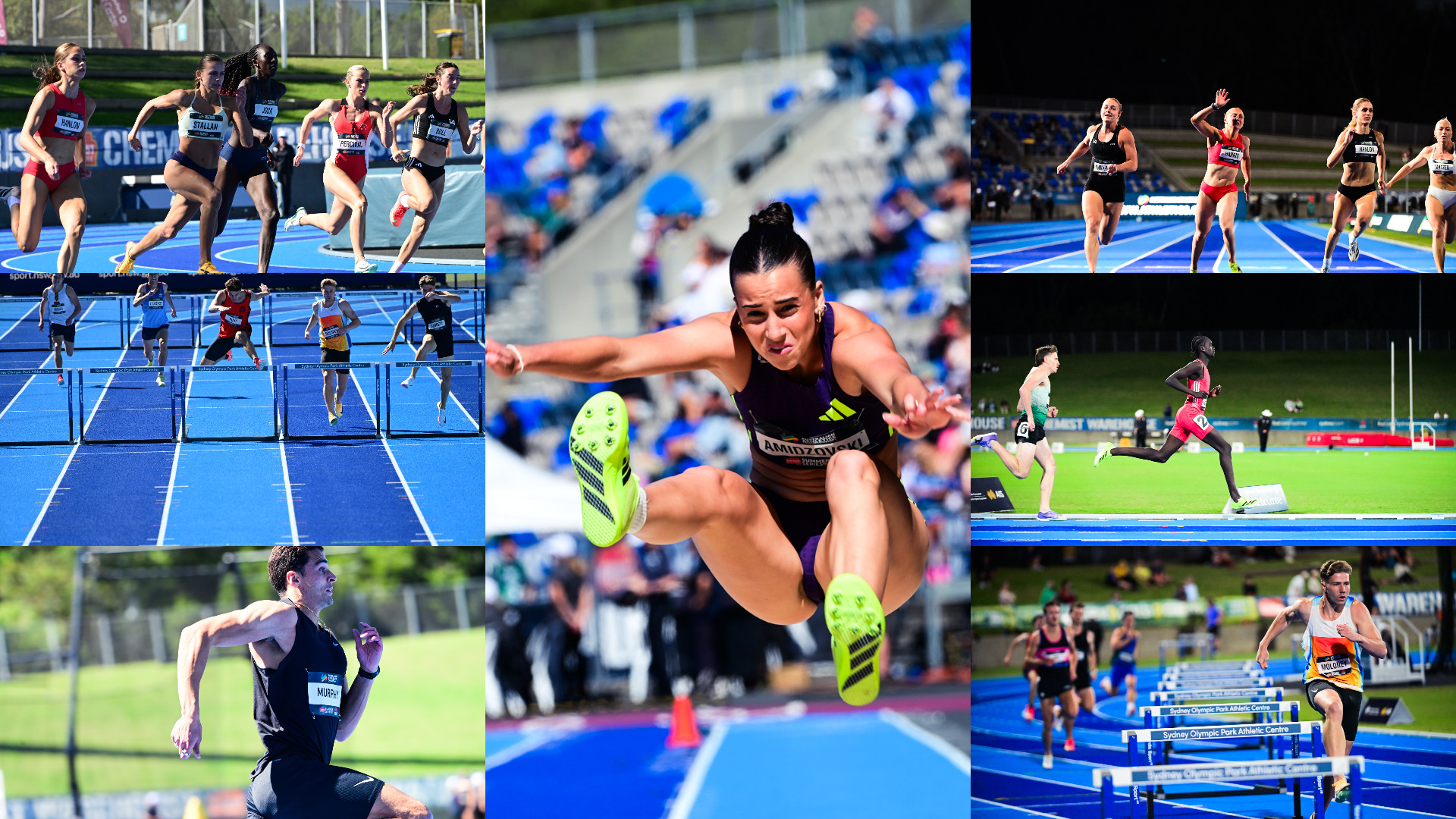
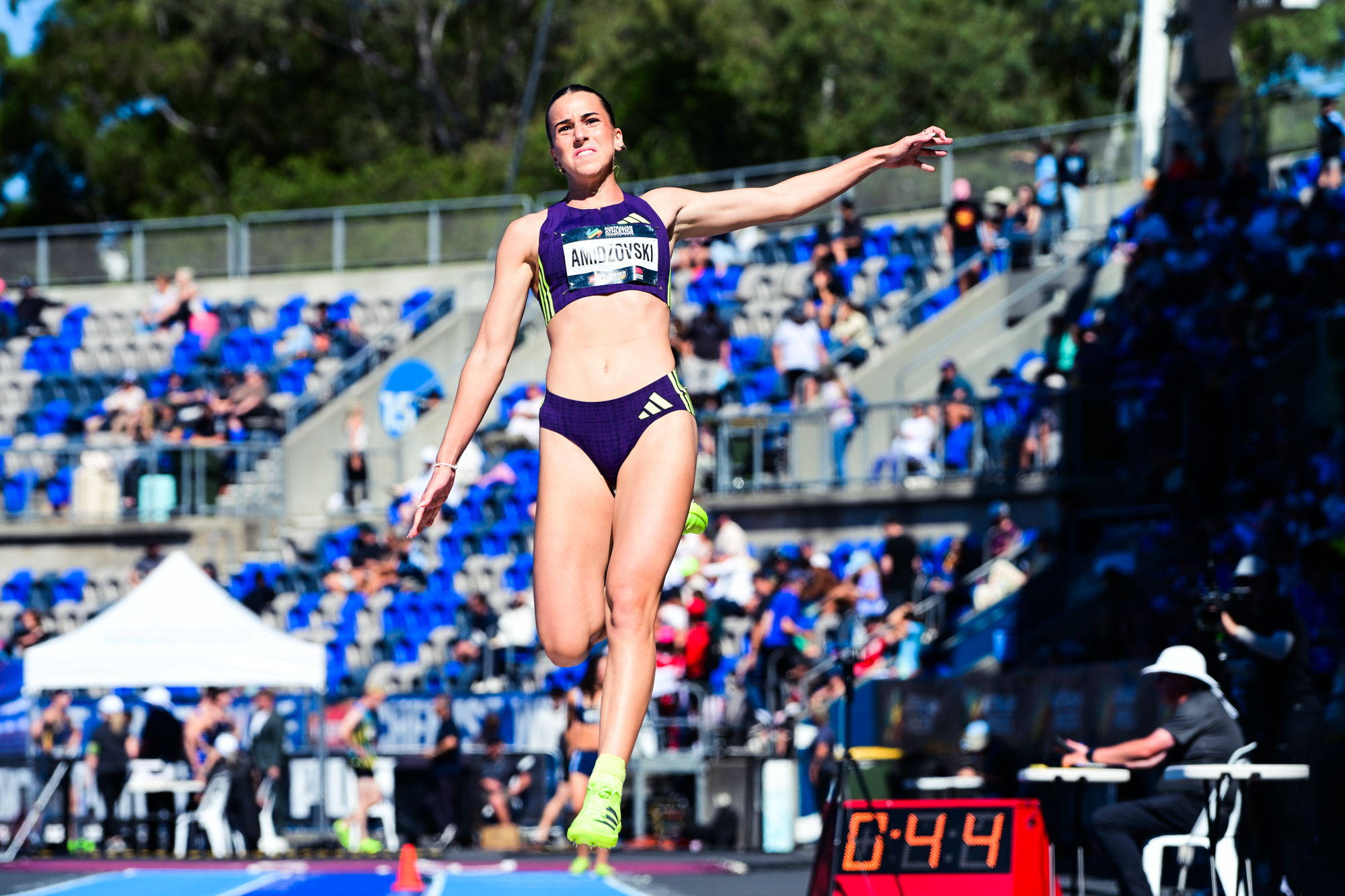
Earlier this month at the Australian Athletics Championships, the 19-year-old from New South Wales stepped into the long jump pit for her first qualifying attempt and promptly launched herself 6.84 metres through the humid air: a personal best by 22cm, and the kind of jump that draws gasps from officials and competitors alike. It bettered the Commonwealth Games qualifying standard of 6.70m set by Australian Athletics. She had not come to the stadium expecting that number. She had come hoping nothing more than to hit the automatic qualifying mark of 6.35m in a single jump.
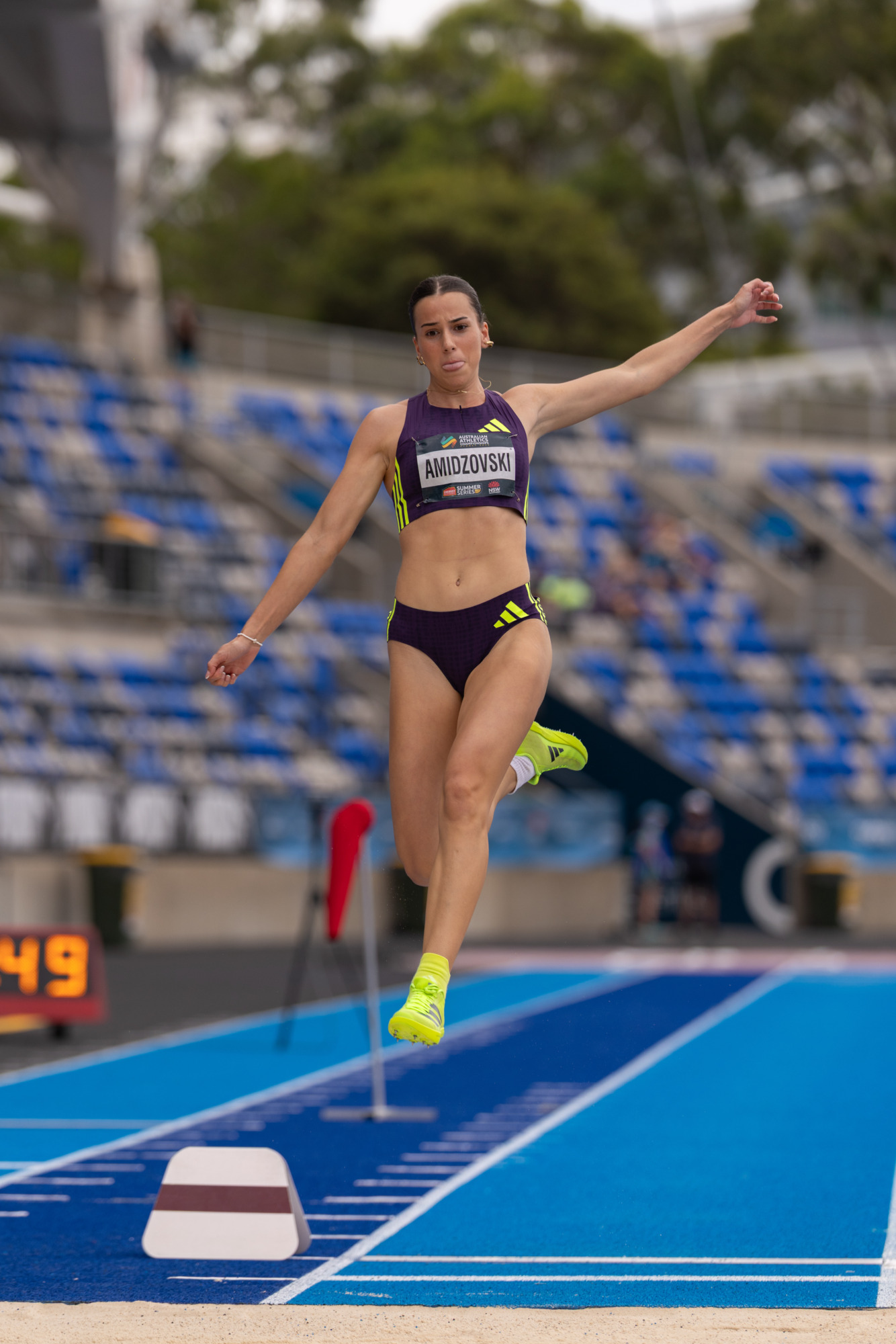
“I knew I was capable of jumping something great,” she said afterward, with the measured calm of someone who has learned to trust herself. “I feel like all season was kind of leading up to just trying to tick off all the boxes.”
The final, as finals so often do, told a more complicated story. Winds swirled and shifted, turning trustworthy run-ups into guessing games. Amidzovski’s first jumps found her well short of the board. And the woman in the next sandpit was producing a story of her own.
Brooke Buschkuehl is 32-years-old, the national record holder at 7.13m, and returning to competition this season, just nine months following the birth of her first child. That she was at the Australian Championships at all was remarkable. That she won them — edging Amidzovski by two centimetres on the final jump of the competition, both women landing in the 6.60s — was the kind of result that makes a sport pause and take stock of itself.
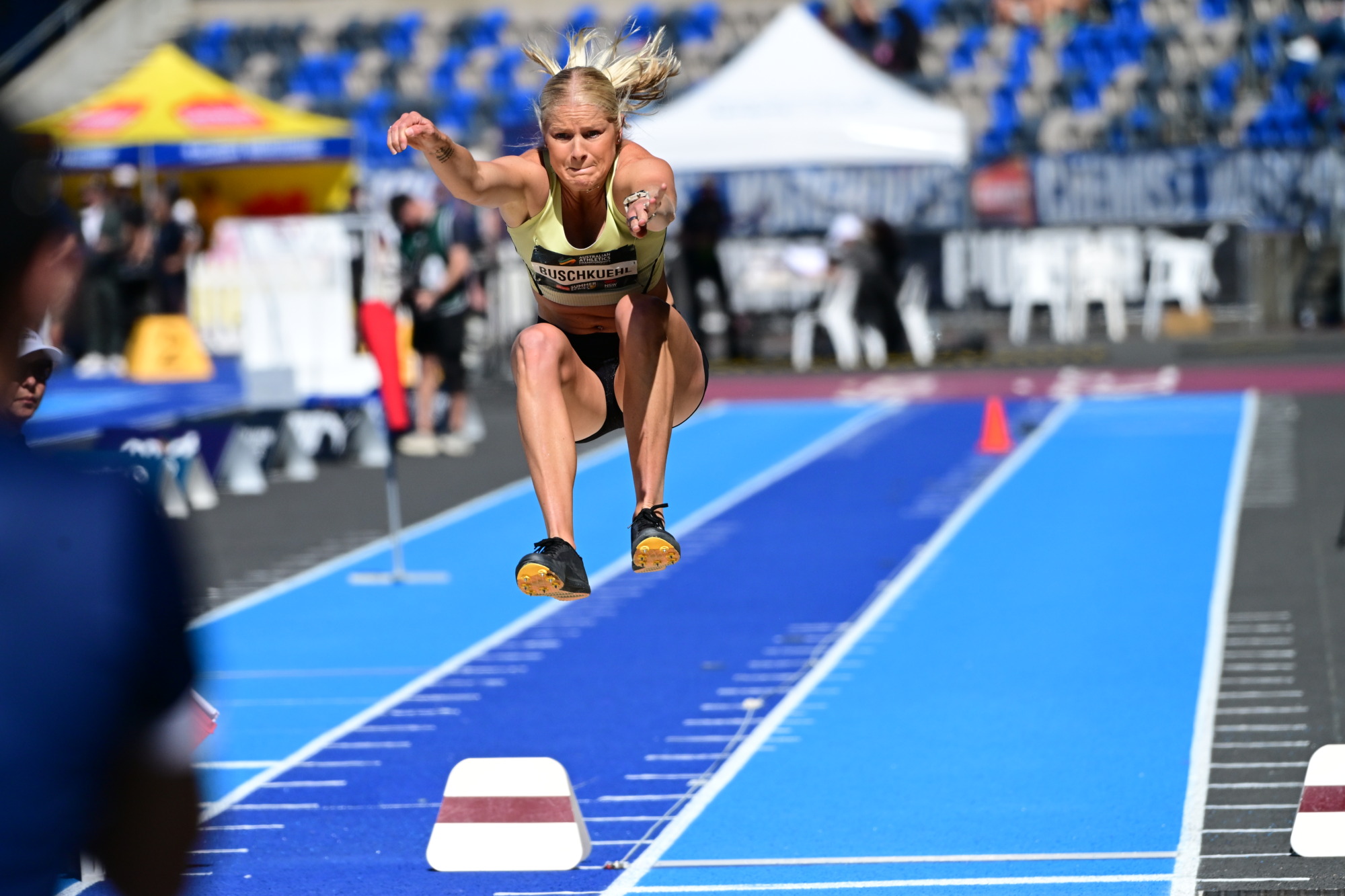
For Amidzovski, the defeat in her first year in the open ranks was shaded with something more complicated than disappointment. Buschkuehl is not simply a rival; she is, in a very literal sense, a hero. As a child, Amidzovski would hunt her down at competitions just to get a photograph.
“I always, anytime I went to competitions, I’d want to find Brooke so I could get a photo. Now I’m competing with her.”
Delta Amidzovski
“I’ve always looked up to Brooke,” she said. “She’s honestly incredible.” She paused. “But having her in that final definitely brings that next step — you’ve also got to bring your competitiveness and bring your best at every competition.”
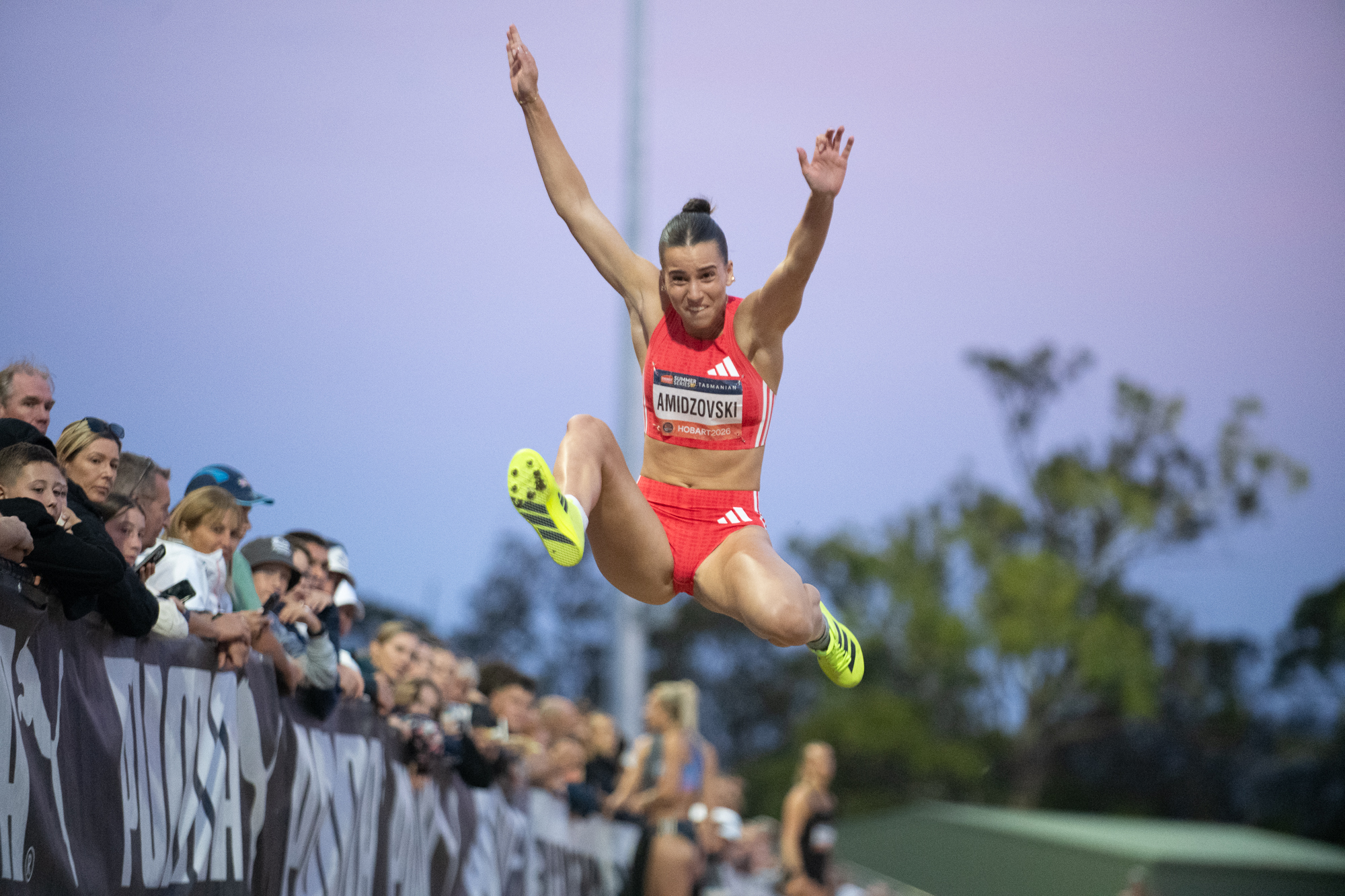
There is something fitting about the dynamic: a 19-year-old at the beginning of everything, a 32-year-old closer toward the other end of her career, separated by two centimetres of sand. Amidzovski posted 6.65 metres in that final — a mark that, absent the extraordinary circumstances of the qualifying round, would have been the best jump of her career. Similarly, her second best jump of 6.63m was better than what she entered the championship with. She found a way to frame it accordingly.
“Getting two PBs in the final rounds regardless of the 6.84 — I can’t be too disappointed.”
Delta Amidzovski
What makes Amidzovski’s trajectory so striking is how recently her attention shifted to the long jump at all. For most of her junior career, the sprint hurdles was her primary discipline, and she remains a gifted hurdler, dangerous enough that the clash of schedules at Nationals forced a genuine choice this year. It was at the 2024 World Under 20 Championships, competing in a long jump event she had trained for only once a fortnight, that her potential announced itself to the world. She won gold.
“Going into World Under 20 championships, I really hardly trained for long jump,” she said. “But what I was working on in hurdles — specifically my speed — played into my long jump.”
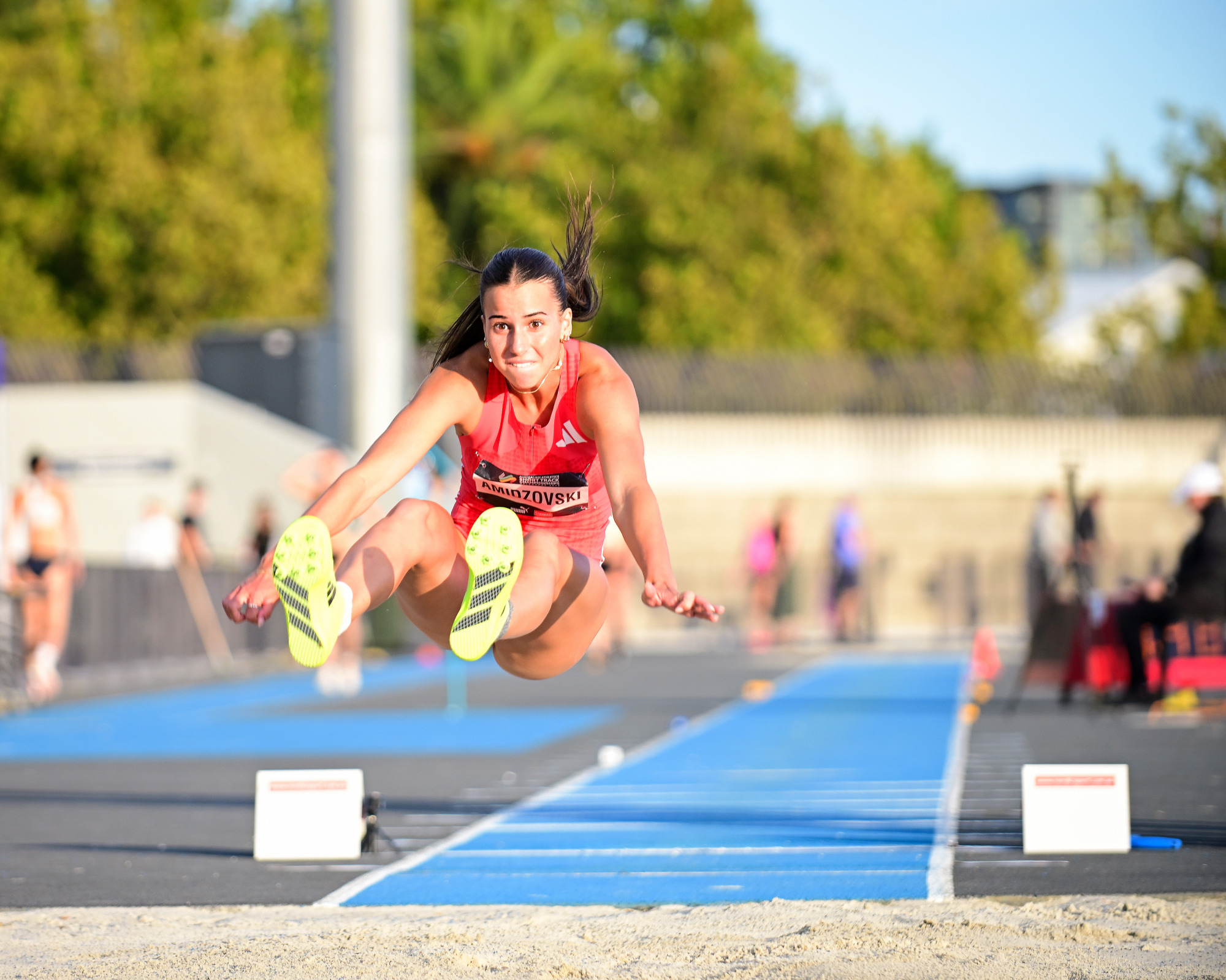
Since then, she has remade herself. The pre-season preceding this domestic campaign was defined by an unglamorous but transformative commitment to 300m runs, more of them than she had ever done before, designed to sharpen the back-end speed endurance that she felt was costing her in the hurdles. Her first attempt was, by her own admission, an ordeal. By the last one of the training block, she had dropped four seconds off her time. She also dedicated months to perfecting a hitch kick technique in the long jump, wrestling with doubt before deciding to stay the course.
“I had a few doubts on whether I should go back to just the normal hang,” she admitted. “But I kept it and I think it’s definitely paid off.”
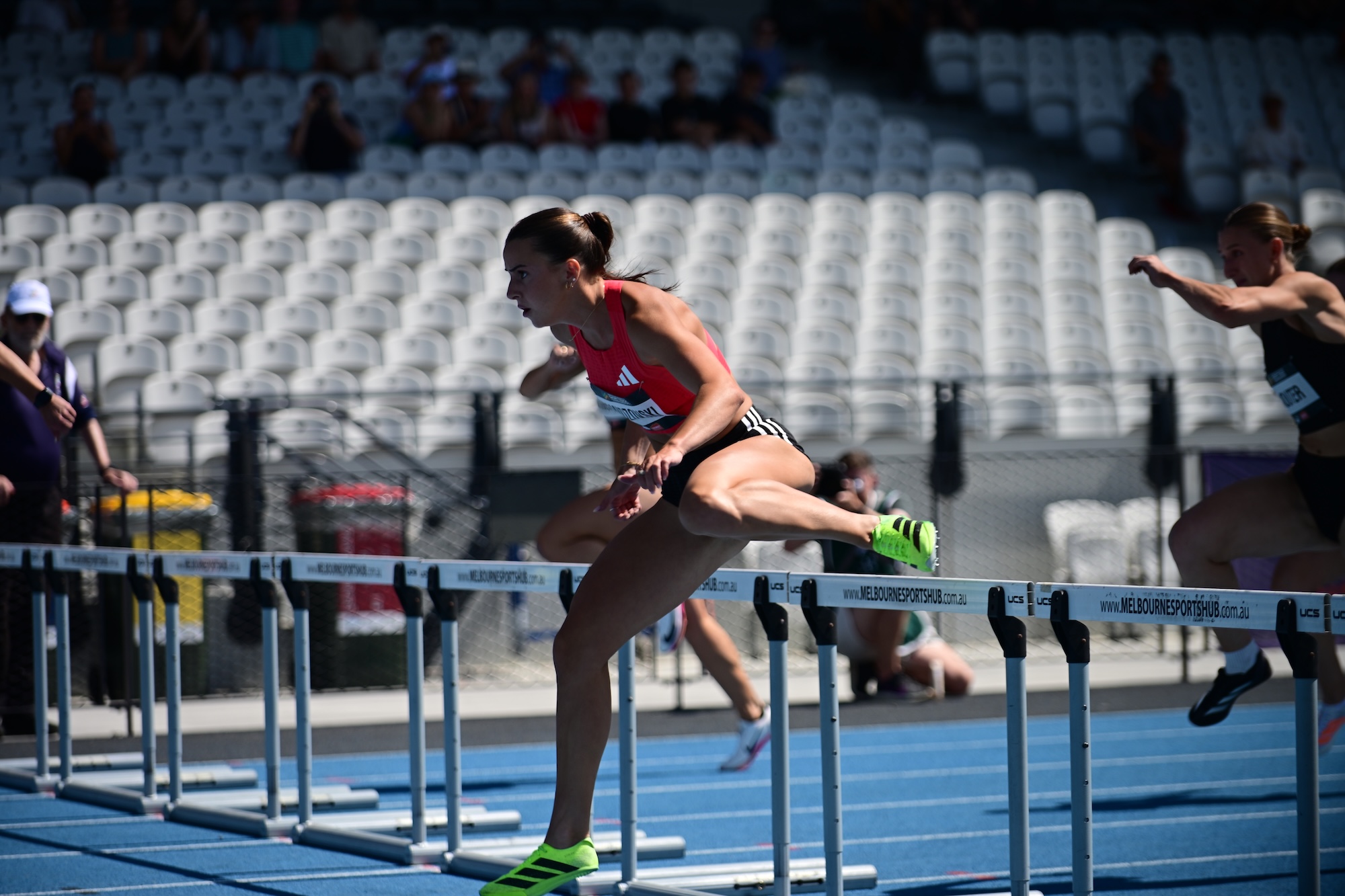
Her coach is also her mother, Becky — and Amidzovski insists that is not a complication. It is a competitive advantage. Her mother has coached her hurdles and long jump technique for years, and this season took full responsibility for every aspect of her program. The arrangement has drawn the kind of raised eyebrows any familiar coaching structure tends to attract, but Amidzovski is clear-eyed about why it works.
“You know you can trust what they’re going to do is going to be beneficial for you, because obviously they’re your parent at the same time. They only want the best for you.” The two drive to training separately — in part because of differing schedules afterwards —but also a small but deliberate act of psychological compartmentalisation. “When we step on the track, it’s coach and athlete. We differentiate it very well.”
It helps, too, that her mother sees the whole person, not just the athlete. This year, Amidzovski is in her second year of a law degree at the University of Wollongong: a choice shaped by a lifelong love of reading and writing at school. She is studying part-time now, having resisted the switch before being persuaded that athletic careers have shorter windows than legal ones. Her exams this semester fall squarely in the middle of her competition travel schedule, with the deferred exam period coinciding, improbably, with Commonwealth Games.
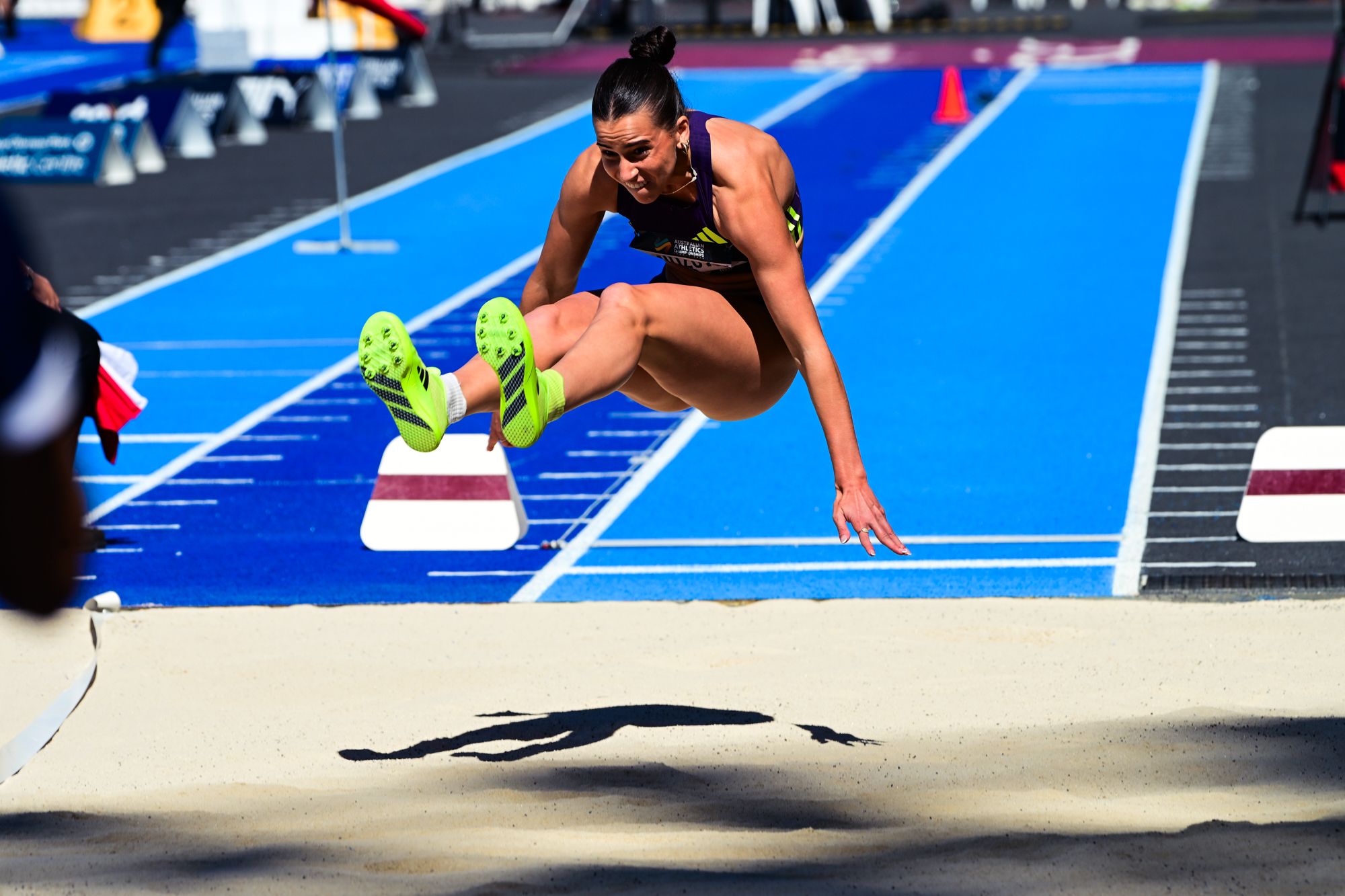
“The degree’s there forever, but you only have this short frame of being an athlete.”
Delta Amidzovski
Commonwealth Games looms large in the months ahead. Amidzovski will compete at the Oceania Championships next, then travel to Europe in mid-June for at least one Continental Gold meet before the Games themselves. She is measured about her goals — she wants to make the final, and she wants to medal — but there is a quiet ambition underneath the careful phrasing.
“The momentum just keeps going this year,” she said. “The domestic season definitely sets you up well for going into the international season. You blow out the cobwebs, keep the momentum going — and then you step onto the international stage and that’s where your big performances are ready to come out.”
She paused, then added something that said more than she perhaps intended. “I feel like I am an entirely different athlete to what I have been, now stepping into seniors.”
On the basis of 6.84 metres in a qualifying round, on a day she was merely hoping to progress, it is difficult to argue with her. The gap is already closing. What once felt like the future has arrived sooner than expected. And Delta Amidzovski is already stepping into it.