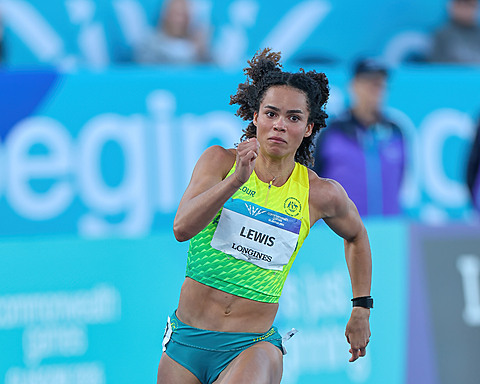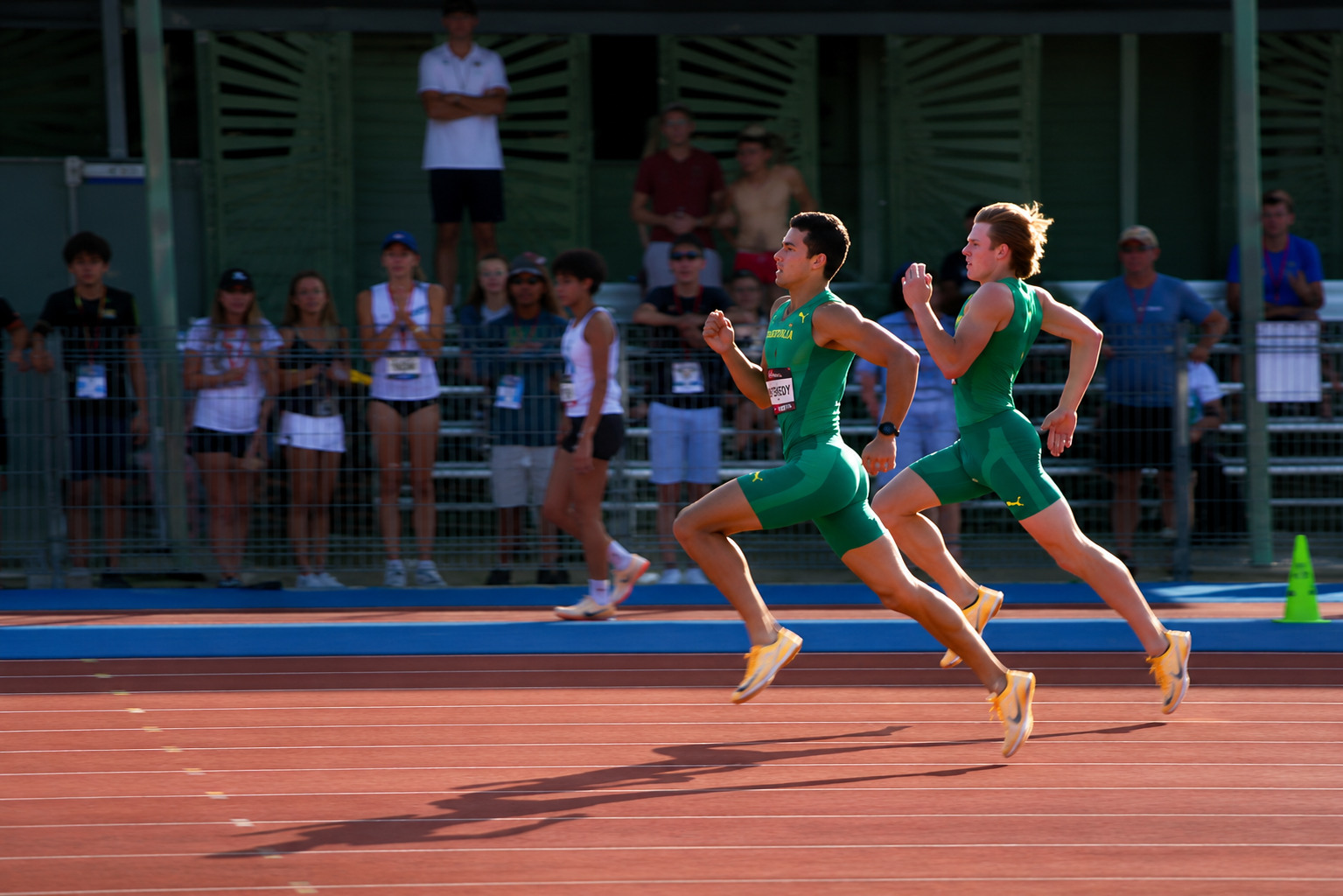

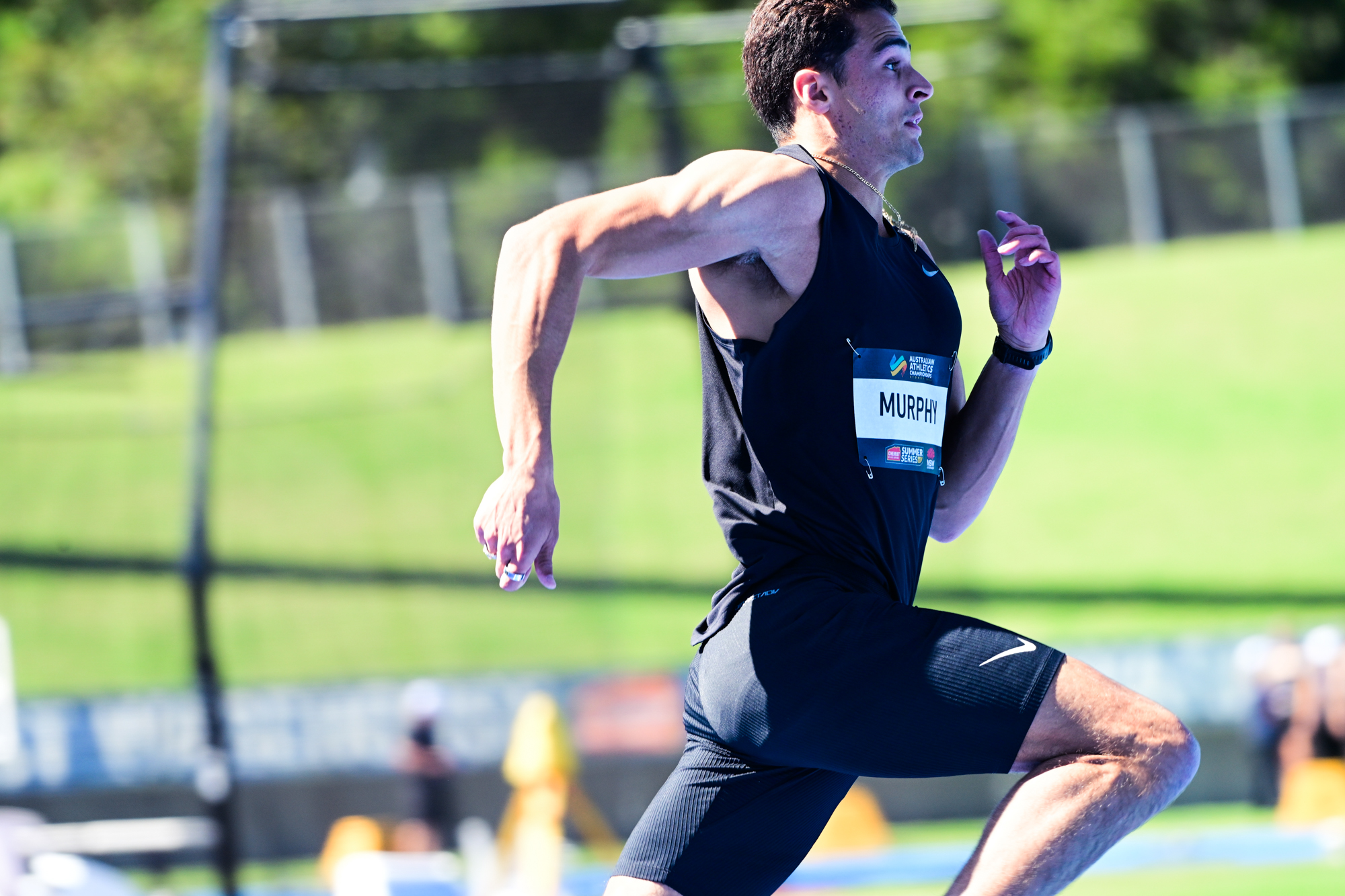
The wind, as it turned out, had no loyalty. In the race before the men’s 200-metre final at the Australian Athletics Championships – the women’s – it gusted to a mischievous plus-2.3, then swung headlong into the bend, sending athletes and officials into frustrated confusion. The women’s field, chasing personal bests in what should have been perfect conditions, were denied by the very same swirling air that had seemed so generous moments before and which had impacted the women’s long jump earlier in the meet.
And then, with the men in the blocks, the wind made up its mind. It turned. It pushed. It followed them all the way around the freshly resurfaced Sydney Olympic Park Athletic Centre.
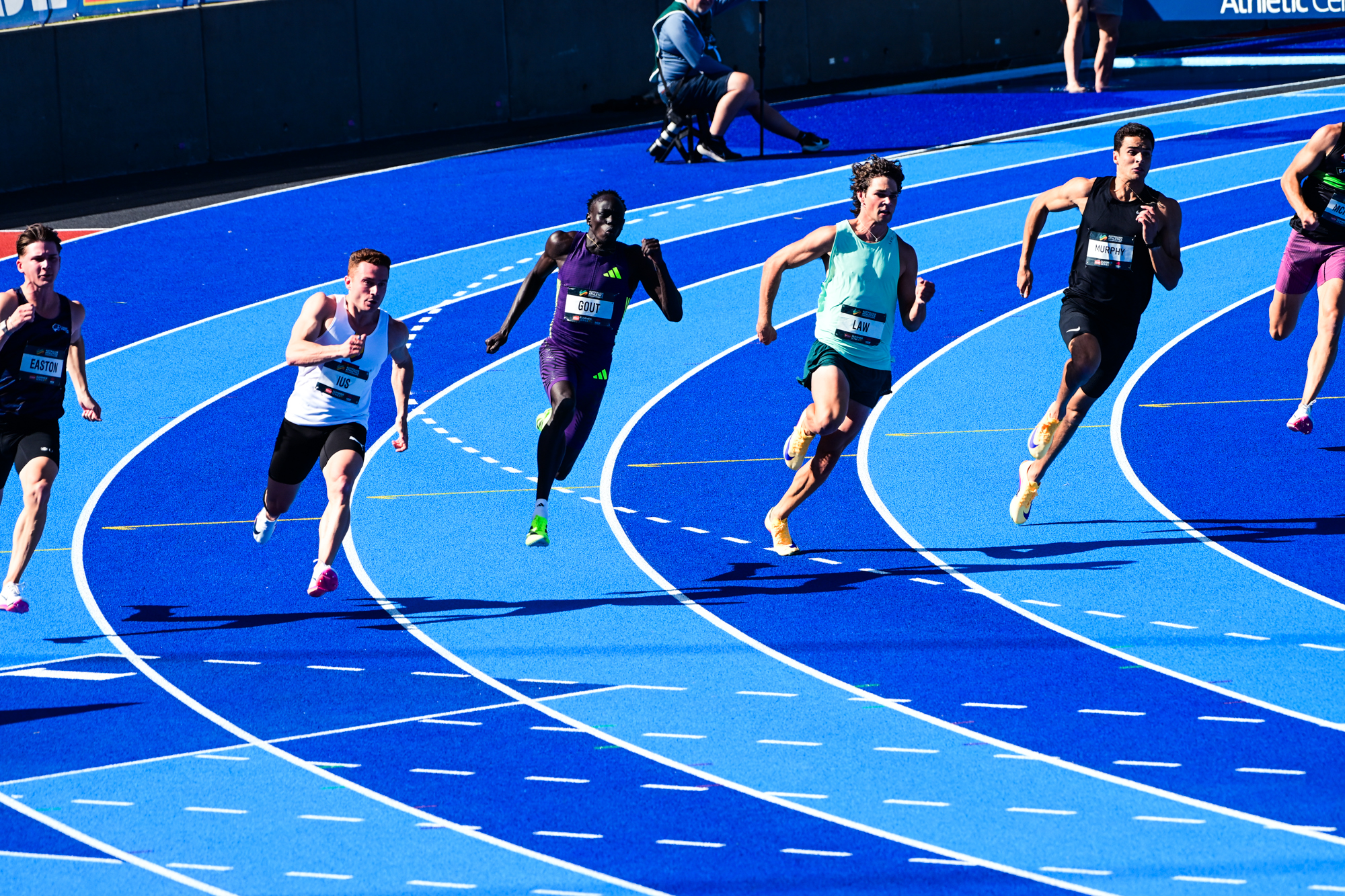
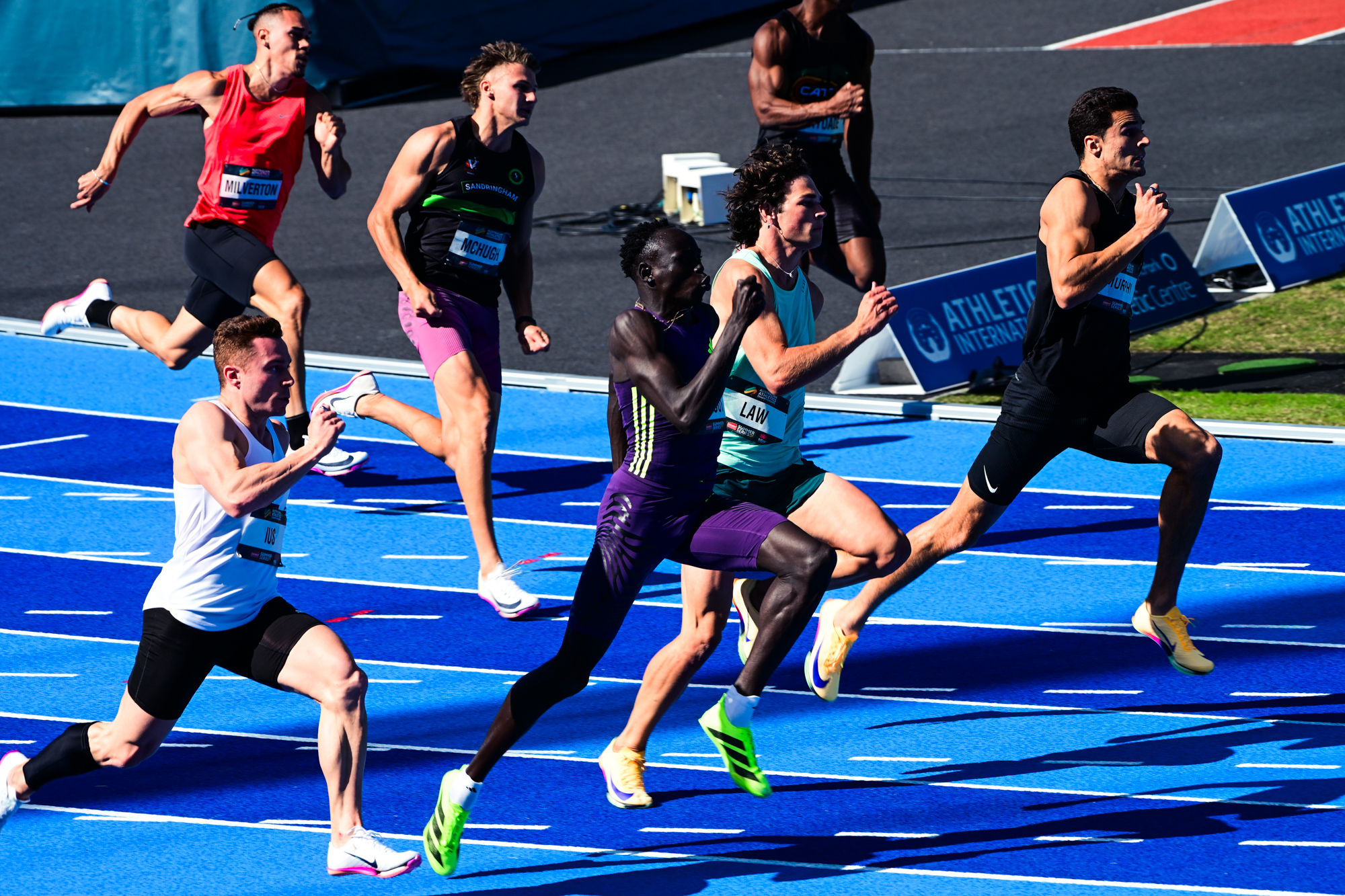
Aidan Murphy, 22 years old, lanky and loose, stepped into lane five. He was not the man the crowd had come to watch. That was Gout Gout, the 18-year-old phenomenon already being spoken of in the same breath as the fastest in the world ever. The pressure on Murphy, as he later described it, was delightfully absent. He felt like a dark horse. He felt his blood run hot. He settled into the blocks and tried not to think too hard about what was coming.
Gout Gout crossed the line in 19.67 seconds: extraordinary, historic, a World Junior Record and already being dissected by every athletics fan on earth. Murphy crossed second in 19.88 seconds, with a wind reading of +1.7 metres per second: legal, legitimate, and unambiguous. He barely noticed the clock.
It wasn’t until later that the number settled into meaning. A 19 — not a 20 — at the front of his time. Sub-20 seconds, in Australia, in legal conditions. Peter Norman had held the national record for decades since 1968 before Gout finally broke it last year. Murphy hadn’t just run a personal best. He’d joined the rarest company in the history of Australian sprinting.
“I told Reece — if you don’t break the Australian 400 record this year, I’m coming for it next year. It’s a race against time. Quite literally.”
Aidan Murphy, on his friendly rivalry with Reece Holder
This is a story about speed. But it is also, in a quieter way, a story about inheritance.
Four years before Aidan Murphy was born, his mother Tania Van Heer-Murphy stood on a track in Kuala Lumpur and did something that would one day feel, to him, almost mythological. She ran at the 1998 Commonwealth Games — bronze in the 100 metres, then gold in the 4×100 relay and 4×400. She was, in the vernacular of Australian athletics, a serious operator. And her son grew up with that as simply the family backstory: not pressure, not blueprint, just fact.
Athletics was not Aidan Murphy’s first sport, or his second. He came to it last, at fourteen, after years of surf lifesaving had revealed a simple and useful fact: the boy was fast. Remarkably fast. He dominated school sports days. Then he found out that track and field was a real thing, with heats and finals and performance-based seedings at interclub, and something clicked.
His mother coached him, briefly. A local coach followed soon after, and the apprenticeship proper began.
In August 2024, Murphy joined Nik Hagicostas, the coach now guiding both his training and his broader athletic vision. The results, within months, were striking.
A season built in three acts
The story of Murphy’s 19.88 actually begins in February. On the 21st of that month, he ran 44.81 in the 400 metres at South Australian Interclub: a personal best, and a signal that something was building. Then, on 7 March, a 10.23 over 100 metres at the SA Championships: another PB, and his first competitive run over the shorter distance, with virtually no block work done all season. By the time Sunday 12 April arrived and the national 200m final was set, Murphy had already rewritten his own record book twice. A third time felt, if not inevitable, then at least overdue.
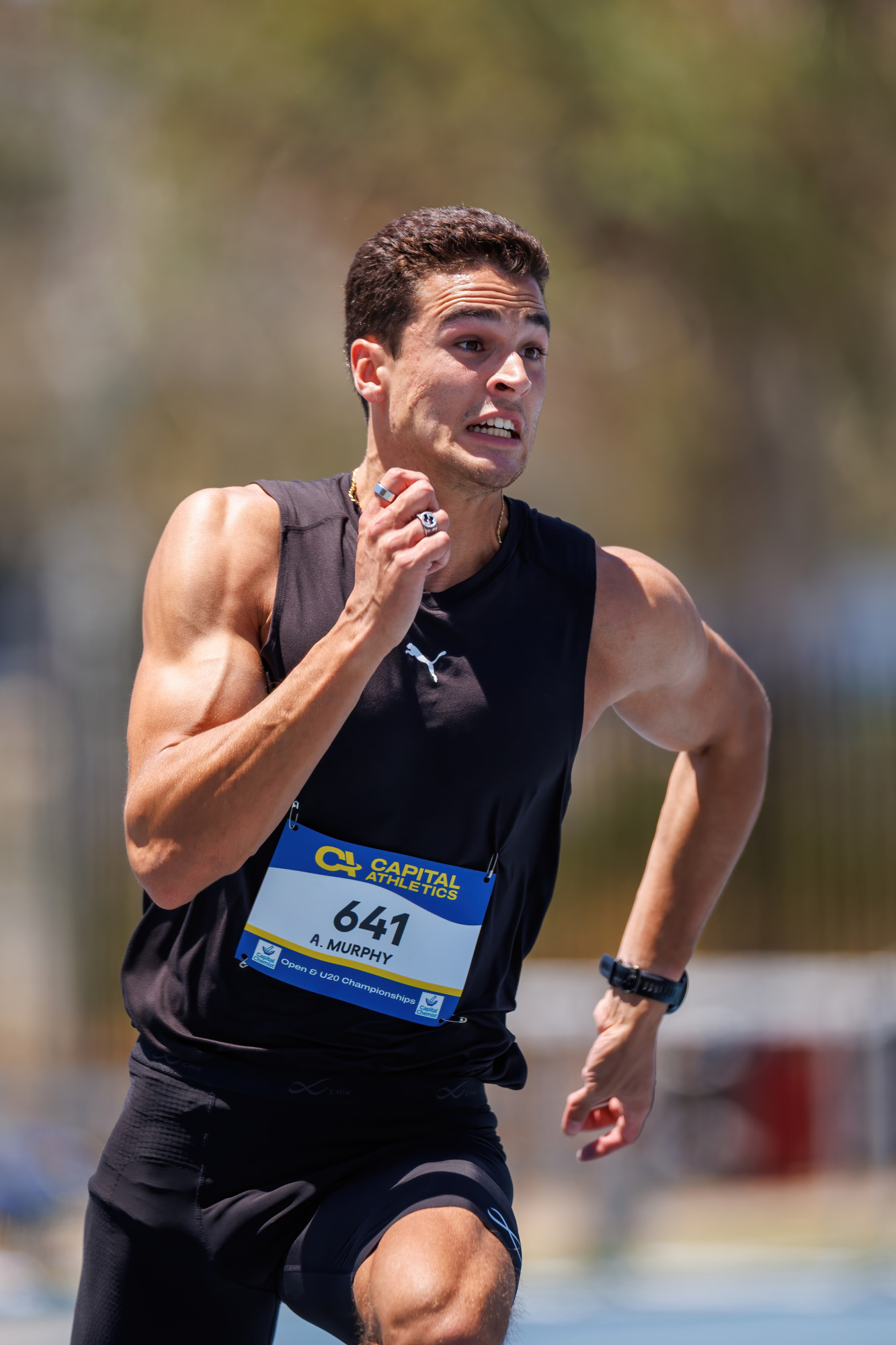
His previous 200m PB had been gathering dust for four years, since his junior days. He had arrived in Sydney expecting something in the range of 20.1 or 20.2. What he got instead was a floating, effortless 19.88.
“It’s as close as you can get in our sport to a flow state.
Aidan Murphy
It just felt like you were floating all the way down to the line.”
He didn’t even register the clock until it was over.
Many had expected him to also line up in the 400m at Nationals — he was in the form of his life over that distance, and would have been among the favourites. But he and Hagicostas had looked at the Commonwealth Games calendar and made a deliberate call: the 200 was the priority. Rounds of the 400 could wait until he was ready to win the final, not just reach it. There is a maturity in that thinking. Athletes his age tend to enter everything. Murphy is building something, patiently, from the inside out.
The friendly war
Reece Holder is Australia’s premier 400-metre runner right now — the national champion — and Murphy wants what he has. Not in a way that curdles into resentment; in the way that good competition works, where admiration and ambition occupy the same space. The two are friendly. Murphy rings Holder. They talk records. The banter, it seems, flows easily in both directions.
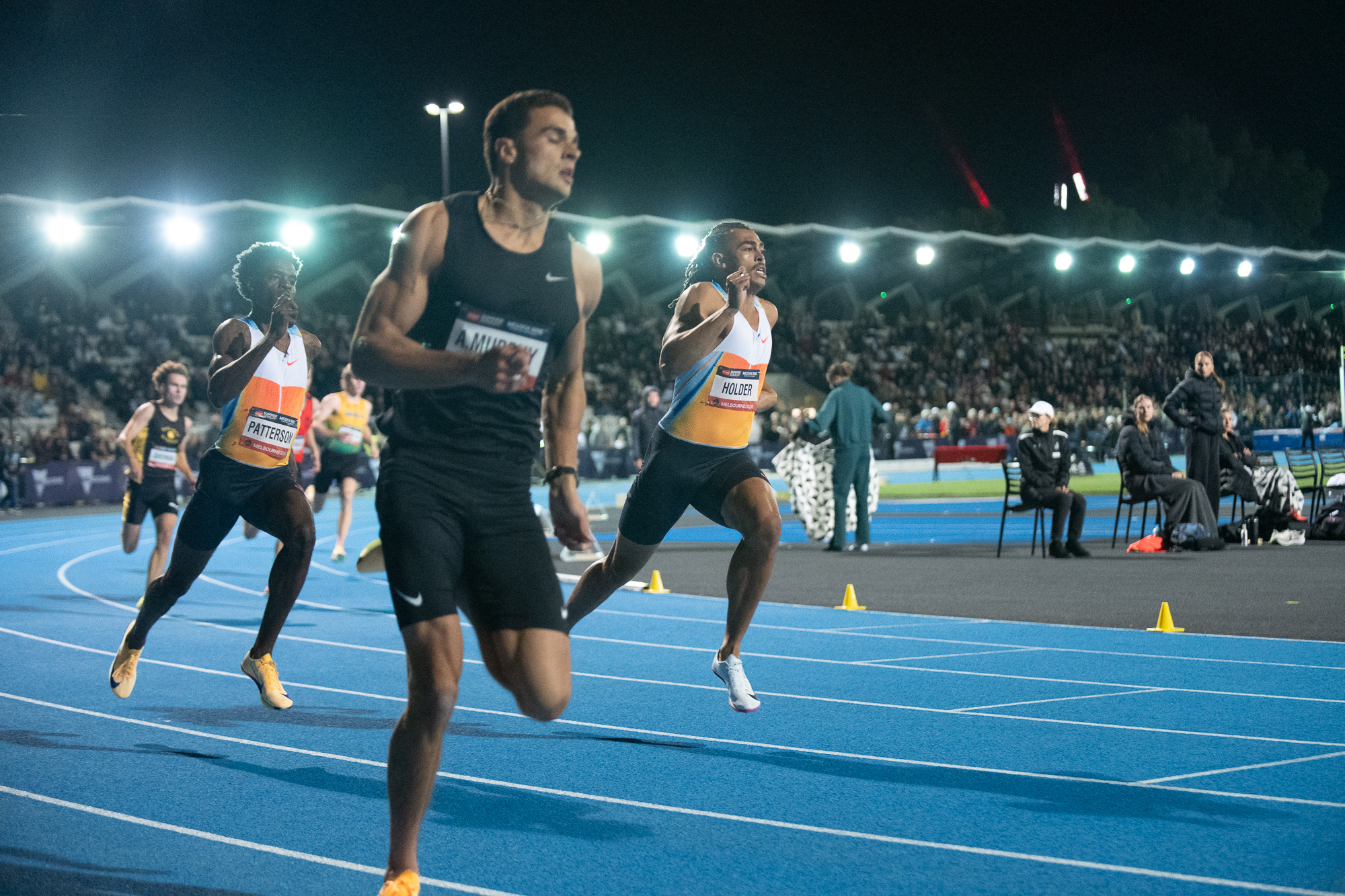
The Australian 400-metre record of 44.38 seconds by Darren Clark in 1988 is the shared horizon. Murphy has served notice in the most straightforward terms possible. He is coming. He is just not in a hurry to arrive unprepared. The plan, sketched carefully with Hagicostas, involves using the Oceania Championships as a first test of the 200/400 double — examining what his nervous system can handle before he asks it to perform on the biggest stages.
The long view runs to Brisbane 2032. In between, Murphy sees the two-four double as his identity — the 100 metres lingering on the horizon too, a curiosity he’s unwilling to entirely discard. “With some proper training,” he says of the shorter sprint, “I think I could run 10.1, maybe 10.0.” He ran 10.23 in March off almost no block work. The maths is not comforting for his rivals.
He is also clear-eyed about what sub-20 has done to his sense of possibility. “I genuinely thought I would just be doing the 400 next year,” he admits, “but it’s sort of laid the road to being able to do both over my entire career, which I think is pretty special.”
Adelaide, actually
Between sessions, Murphy is a final-year economics student at the University of Adelaide. He works part-time at a pool supplies company, quoting jobs, shifting chemicals, keeping the lights on. He is not a full-time athlete in the way the term gets applied to those who train in centralised high-performance squads in Sydney or Melbourne. He is, for now, an Adelaide athlete. And he makes this sound like an advantage.
South Australia, he notes, is home to the second-longest car racing track in the world, behind only the Nürburgring — a point he makes with civic pride. There are car enthusiasts out there (he’s amongst them), and wine, and a training squad he describes with genuine warmth. When he watches meets, he goes to support the squad, not to scout rivals. The culture is right.
Next on the calendar: the Oceania Championships, likely some European racing through Madrid or Budapest, possibly a trip to America, then the Commonwealth Games. His name is expected to appear in the 200m and on the mixed 4×400 relay squad. Selection letters are pending. He is, as he puts it with characteristic understatement, not unhappy about his chances.
There will be people, of course, who point to the conditions in Sydney — the fortuitous tail, the swirling wind that somehow landed perfectly for the men and not for the women — and ask whether 19.88 demands context. Murphy has heard it. He acknowledges, graciously, that the underlying challenge is fair: Australia has speed, but it needs to show up internationally. He intends to be part of the answer to that.
His personal best had been sitting untouched for four years before he erased it on 12 April, in a single, floating, perfectly-paced run. A wind reading of +1.7 — legal, uncontroversial, and frankly not all that dramatic. Yet almost everyone in that final ran a personal best. “Everyone was just in form,” Murphy says simply. “I think it should be talked about more than it has been.” Not a fluke. Not a gift. Not something to explain away.
Just a young man from Adelaide, whose mother was winning Commonwealth medals on the other side of the world four years before he drew his first breath, finally running the kind of time that makes people sit up and pay attention.
The 19 is there now. It won’t go back to a 20. And if Reece Holder is watching — he should probably break that 400m record this year.