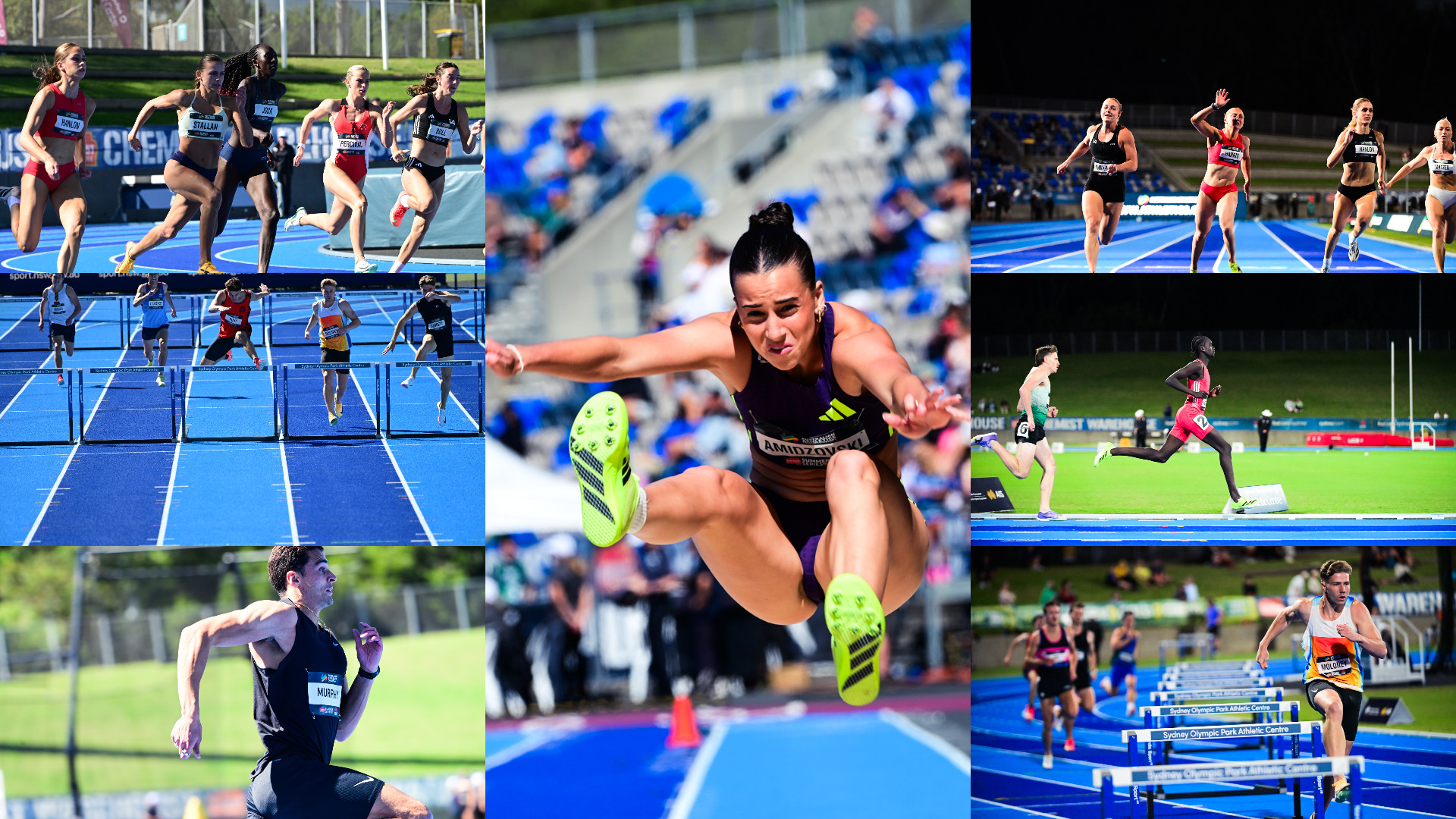

Ash Moloney came home from Tokyo with a bronze medal in the decathlon and an injury that never really healed. Now, at 25, he is doing something rare among elite athletes — beginning again.
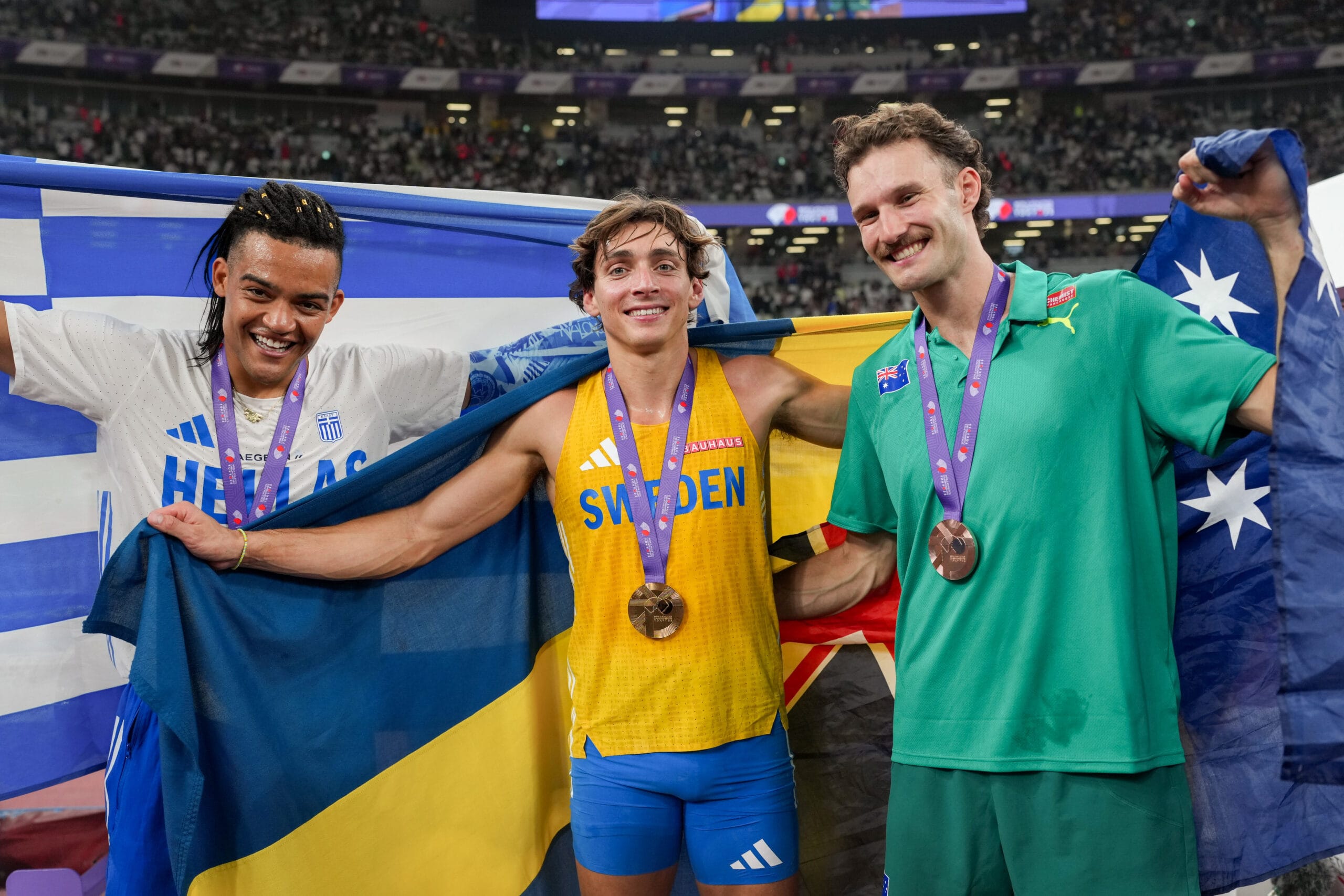
There is a moment, familiar to most competitive athletes but rarely spoken about in the bright currency of sporting success, when the thing you love best begins to feel like a liability. For Moloney, that moment arrived not in defeat but in the aftermath of triumph — on the dais at the Tokyo Olympics, bronze medal around his neck, every jump still aching.
“You could probably see in the footage,” he said recently. “I was in quite a bit of pain every jump.”
Moloney was 20 years old at those Games. He had already won Australia’s first ever Olympic decathlon medal, competing across ten events over two days with a tendonitis so stubborn it had followed him from his teenage years. The pain was not new. What was new was what it would cost him to keep ignoring it.
The Weight of Ten Events
The decathlon is, by design, a test of everything. Speed, power, the hair-trigger technique of events that take years to master individually — the decathlete must hold all of it in balance, simultaneously, for two consecutive days. The margins are thin. The body’s tolerance for accumulated load is thinner.
In the years that followed Tokyo, Moloney found himself navigating a circuit that was slowly narrowing around him. Injuries compounded. Training became cautious. Competition became uncertain.
“It was basically trying not to get injured, rather than trying to win.”
Ash Moloney
The distinction matters. Moloney had always loved the process — the daily accumulation of a training life, the texture of hard work. But managing around pain is a different kind of work entirely. It breeds a specific, corrosive anxiety: the sense that the body, once an instrument of ambition, has become an obstacle to it.
“Even just turning up to training,” he said, “it was like, ‘oh, we’re going to do the same thing again.'”
The high jump was where it hurt most acutely, and that particular cruelty was not lost on him. The event had always been one of his best. Every takeoff meant a flash of excruciating pain. “It was dragging me down,” he said, “bit by bit.”
A Door, Opened by Injury
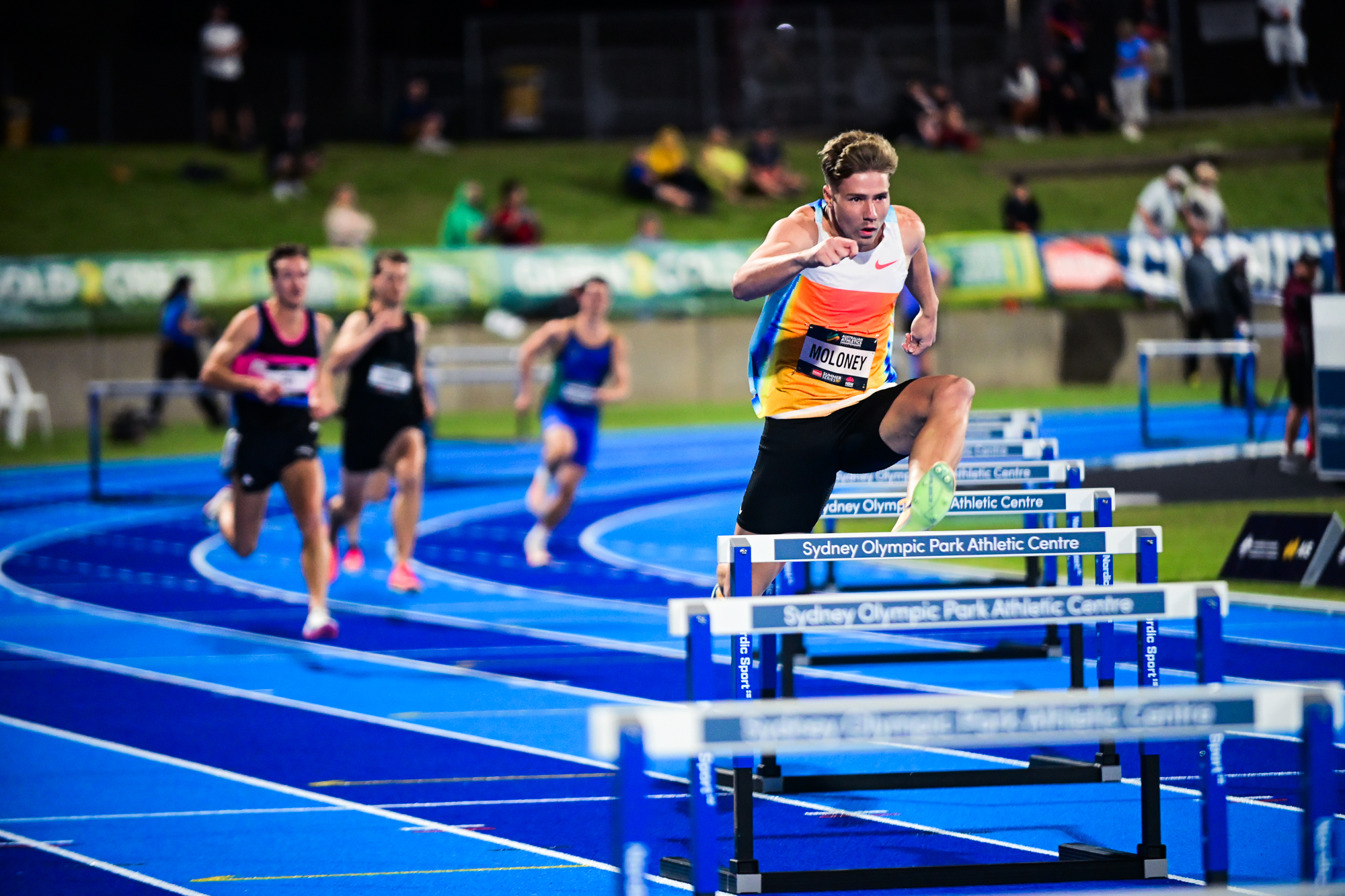
The path to the 400-metre hurdles opened through the same door that had been causing him trouble all along. A hip impingement forced Moloney to modify his hurdling mechanics — specifically, to lead with his non-dominant leg. What began as an act of necessity turned, in the logic of sport, into something surprising.
“We had to learn how to hurdle on the opposite leg,” he said. “And I ended up running the same time on both legs.”

For a coach, that kind of symmetry is difficult to ignore. For Moloney himself, the implication was clear. He had always been capable over the 400 metres, with a personal best of 45.82. He had pace to spare — a 100-metre time of 10.34, the kind of raw material that hurdles coaches dream about. So the question, when it came, arrived almost matter-of-factly.
“Why not try the 400 hurdles?”
Within two weeks, he was training specifically for the event. Within a month, running at the Hobart Track Classic. Six weeks later, he was racing under 50 seconds. The transition, on paper, looked almost effortless.
It was not.
Learning in Public
The 400-metre hurdles does not reward brute force. It rewards rhythm: the delicate, mathematically precise negotiation between stride length and hurdle spacing, executed under the metabolic pressure of a near-sprint. Athletes spend years perfecting this. Moloney is learning it in real time.
“It’s really about how smooth you can get over the hurdles,” he said, “not how fast you are.”
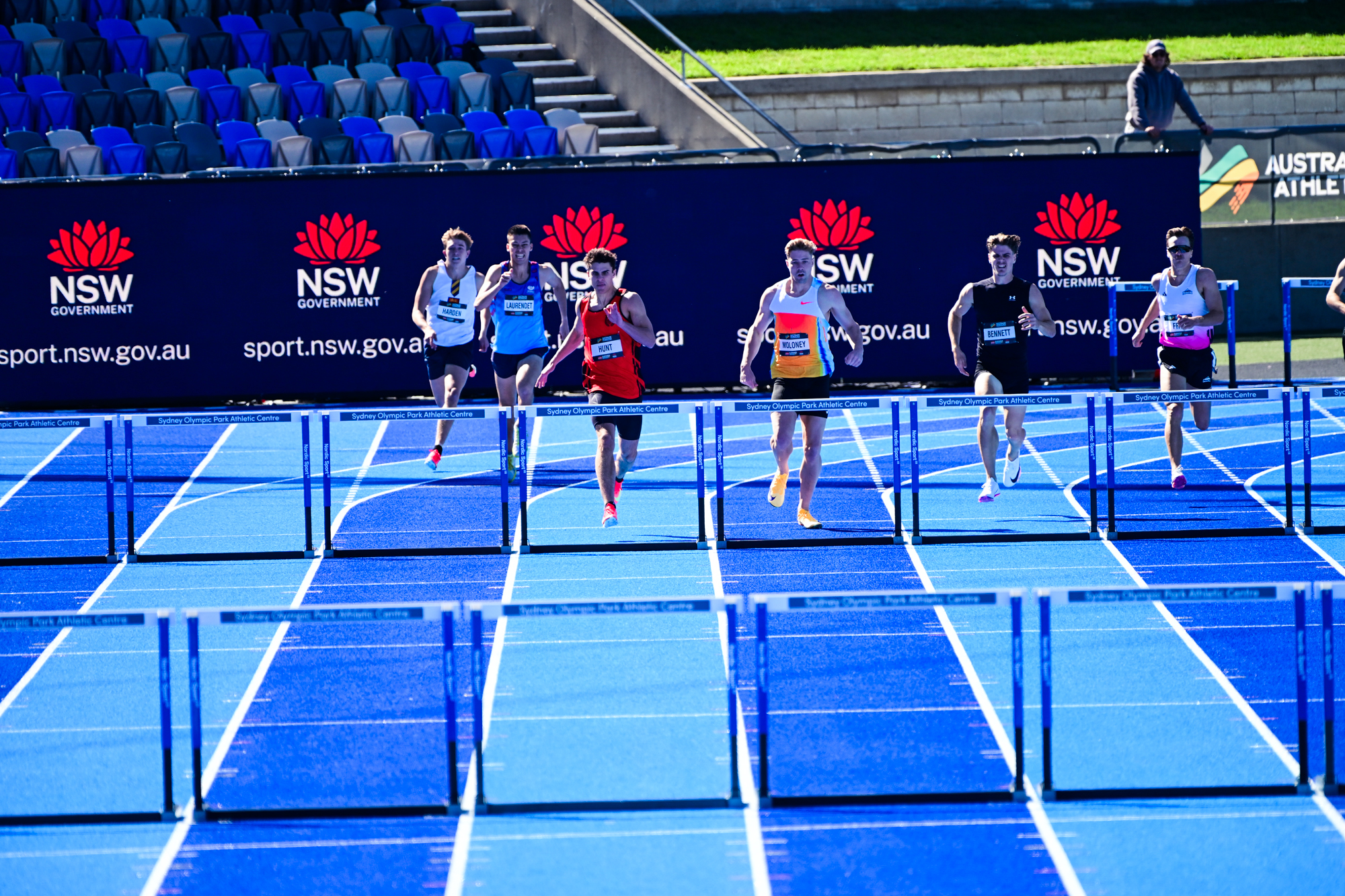
For an athlete whose athletic identity has been built on speed and physical dominance, that distinction requires a daily recalibration. He is candid, almost disarmingly so, about how far he has to go technically.
“I was never a good hurdler. I was always aeroplaning over every hurdle.”
Ash Moloney
At the national championships, he tried to out-muscle the event. “I thought, ‘screw it, let’s just send the first 200,'” he said. It nearly unraveled him. The balance between aggression and control — between the instincts of a powerful decathlete and the discipline required of a specialist — is still being found.
He is doing this, notably, inside a sprint group that does not offer much shelter. Working under coach Andrew Iselin alongside some of Australia’s fastest athletes, Lachlan Kennedy and Calab Law, the standard of even a recovery session is confronting. “No one takes any reps easy,” Moloney said, “including the easy reps.”
What Tokyo Left Behind
There is another dimension to this reinvention, one that sits alongside the purely athletic. Moloney speaks about the Tokyo bronze with the complicated pride of someone who achieved something extraordinary and found, in its immediate aftermath, that the story had been told without him at its centre.
His training partner Cedric Dubler had made a last-ditch effort — desperate, heroic, captured on video — to keep Moloney in medal contention in the final event, the 1500 metres. The moment went viral. It was genuinely moving. It was also, in the weeks that followed, the story that the public seemed most to want.
“It became more about Cedric than it was about me,” Moloney said quietly. “That whole narrative kind of took away from my own story.”
He does not say this with bitterness. But it explains something about the hunger behind this second act — the need not just for a new challenge but for a new story. One that is entirely his.
“I needed a new goal,” he said. “I’ve always enjoyed having goals I haven’t achieved before.”
And then, plainly: “I want to make a whole new story.”
The Second Act
There are qualification targets ahead — the Oceania Championships, a possible European campaign, the Commonwealth Games. The horizon is deliberately unstructured. Moloney is not defending anything. He is not managing a legacy. He is, in the oldest and most uncomplicated sense, just trying something.
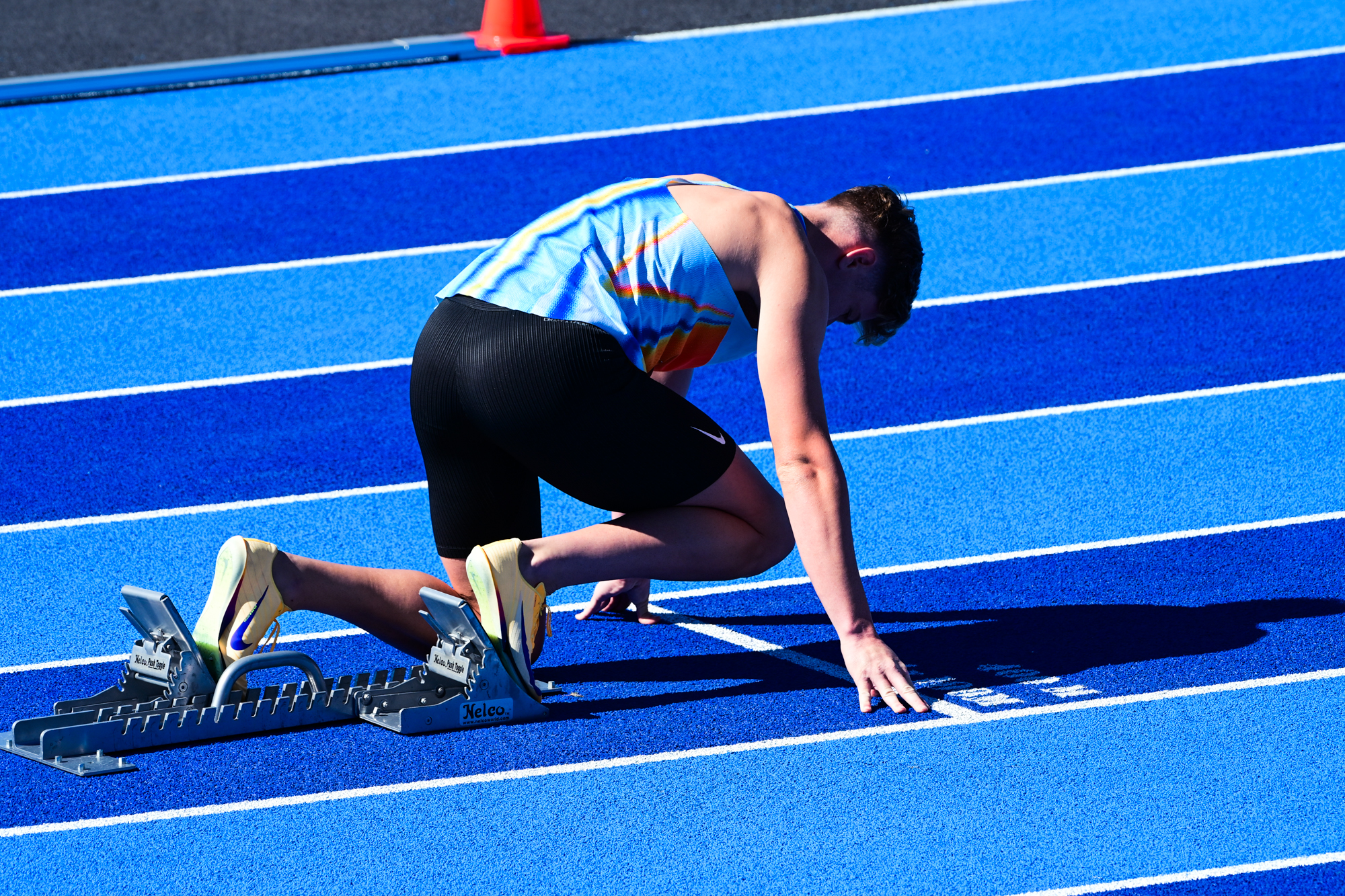
He has not officially closed the door on the decathlon. “I haven’t 100% given away the decathlon,” he said. “I’m just exploring options.” But the phrasing is telling. An athlete who intends to return does not speak quite like that. He speaks like a man who has set something down and is still surprised, perhaps pleasantly, by how light he feels without it.
Olympic medallists rarely begin again. The pathway from the podium is usually one of refinement — incremental, protective, aimed at preservation. Moloney has chosen the opposite: the exposed, uncertain, genuinely risky business of starting somewhere new.
How far he can go in the 400 hurdles remains an open question. The event is fierce at the international level; the margins between good and great are unforgiving. But the metrics that matter most right now are not splits or rankings. They are the older, more private ones — whether he is running toward something again, rather than away from pain.
“The sky’s the limit, really,” he said.
Whether or not he reaches it, the willingness to look up is, for now, its own kind of answer.