


World Athletics published its qualification system and entry standards for the 2027 World Championships in Beijing yesterday, and buried within its seven pages of technical language is a set of changes that will fundamentally reshape how athletes — particularly Australians — approach the next two years of competition.
The headline number is easy to miss. The shift from a 50/50 split between entry standards and world rankings to a 40% standards / 60% rankings model might sound like an administrative footnote. It isn’t. Taken together with new restrictions on where qualifying marks can be achieved, the category requirements for valid performances, and explicit new rules around indoor tracks and throwing venues, the Beijing document represents the most consequential recalibration of the qualification framework in recent memory.
The Standards Have Moved. And They’ve Moved Hard
The first thing to understand is that the entry standards for Beijing 2027 are significantly faster and further than those set for Tokyo 2025. This is by design. With 60% of athletes now expected to qualify through world rankings rather than a single performance, the standards have been deliberately tightened to reflect genuine world-class benchmarks: markers that only the top tier of the sport can realistically achieve.
A side-by-side comparison across a few events tells the story clearly: Event Tokyo 2025 (Men) Beijing 2027 (Men) Tokyo 2025 (Women) Beijing 2027 (Women) 100m 10.00 9.95 11.07 10.96 400m 44.85 44.45 50.75 50.00 800m 1:44.50 1:43.00 1:59.00 1:57.50 1500m 3:33.00 3:30.00 4:01.50 3:58.00 5000m 13:01.00 12:50.00 14:50.00 14:36.00 400mH 48.50 48.00 54.65 54.00 High Jump 2.33m 2.30m 1.97m 1.96m Pole Vault 5.82m 5.90m 4.73m 4.75m Discus 67.50m 67.20m 64.50m 64.50m
Full qualifying entry standards
Across almost every event, but not all, the standard has tightened. The 800m men’s mark moves from 1:44.50 to 1:43.00, a full one-and-a-half seconds. The women’s 800m drops from 1:59.00 to 1:57.50. The men’s 1500m goes from 3:33.00 to 3:30.00.
These are not marginal adjustments. These are marks that reflect the genuine front of the global performance curve in 2026, not a generous target for a capable athlete having a good day.
The intent is transparent and stated outright in the Beijing document: entry standards are now meant to identify the genuine elite — approximately the top 40% of a world-class field — while the remaining 60% qualify by demonstrating sustained excellence across a season through world rankings. The philosophy is a fundamental shift away from the idea that one exceptional performance should be sufficient for selection. Consistency, depth, and competition at the highest levels now carry more weight than ever.
For Australian athletes, this recalibration has a layered impact. Athletes like Jessica Hull, Peter Bol, Nicola Olyslagers, Nina Kennedy, and Kurtis Marschall operate at a level where the standards remain within reach. But the next tier — athletes who might have been chasing a Tokyo standard as a realistic goal — now face a significantly steeper cliff. The path for most will now run through the world rankings, which brings its own set of challenges.
Rankings Now Reward Access, Not Just Excellence
The shift to a 60% rankings pathway sounds like good news for athletes who compete consistently but haven’t yet broken through to a single world-class mark. In theory, it rewards the whole body of work across a season rather than one peak performance.
The catch is that the world rankings system is not neutral. It assigns placing scores based on the category of the competition, which means a win at a Diamond League meeting is worth substantially more than the same time run at a lower-tier domestic meet. A faster time at a Category E state championships meet yields far fewer ranking points than a slower time that places an athlete competitively at a World Athletics Continental Tour meeting.
For Australians based at home, access to high-category competition during the local summer is limited. The Australian Athletics Summer Series — the domestic Continental Tour events — provides the primary pathway to accruing meaningful ranking points on home soil. But the window is short, the schedule tight, and athletes who miss those meets through injury, illness, or meet selection constraints face a significant deficit heading into the northern hemisphere season.
That asymmetry has always existed in the world rankings model. Under Beijing’s 60% rankings pathway, it becomes more consequential than ever.
Not All Meets Are Equal: The Category C Rule Changes Everything
The most significant — and potentially the most disruptive — change in the Beijing document is one that has received almost no attention in the initial coverage.
Under the Tokyo 2025 qualification system, entry standards could be achieved at any properly authorised competition. The only requirements were that the meet was conducted in conformity with World Athletics rules and listed on the Global Calendar.
Beijing 2027 changes that entirely.
The new document states explicitly: “For Entry Standards, all performances must be achieved in a competition in World Rankings Category C and above.”
Performances set in Category D or E competitions will still count for world rankings, but they will not be valid for the purposes of achieving an entry standard.
This is a profound structural change, and its implications for Australian athletes are significant.
Category C and above is broadly the level of a World Athletics Continental Tour meeting, a national championship, or a high-level international invitational. The Australian Athletics Summer Series events of Perth, Adelaide, Sydney, Melbourne and Nationals sit at this level and above, as do international meets like the Prefontaine Classic, the Oslo Diamond League, and other major European tour stops.
The practical effect is this: to achieve a Beijing entry standard, Australian athletes will need to do it either at an Australian Athletics Summer Series event, or at a recognised international meet of sufficient category in the northern hemisphere: a Diamond League, a Continental Tour Gold or Silver, or a major championship.
What falls outside Category C is almost everything else: the Australian Short Track Championships, State Championships, previously eligible interclub meets (NSW, Old, WA and SA), and the vast majority of the domestic competition calendar. Races at Box Hill, like the Box Hill Burn, have served as a reliable vehicle for middle distance athletes chasing an entry standard in favourable conditions in the past? No more. Not valid for an entry standard under Beijing rules. A strong performance at a state championship meet? Similarly, it will count for rankings but not for the standard itself.
Article continues below…
The NCAA Pathway Closes Further
There is a well-worn pathway in Australian athletics: talented young athletes head to the United States on college scholarships, develop through the NCAA system, and use the volume of competition available in American collegiate athletics to chase global qualifying marks.
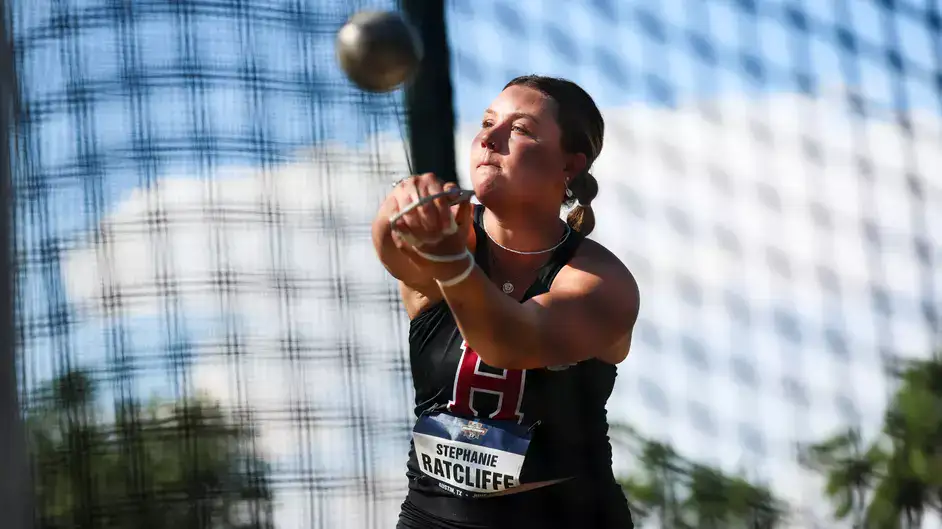
That pathway still exists, but the Beijing changes substantially narrows it.
Most NCAA regular-season competition — the dual meets, the conference championships at smaller conferences, the invitational meets that fill the American collegiate calendar — sit at Category D or below. Performances achieved at those competitions will not be valid for entry standard purposes under the new rules.
The meets are meaningful but limited. The NCAA Championships, as a high-profile championship, sit at Category B and remains valid for qualifiers. Select open meets that hold Continental Tour status — the Mt. SAC Relays, the Drake Relays, and a handful of others — will also qualify. But the everyday fabric of the NCAA season, the competitions that make up the bulk of an American college athlete’s year, will no longer be a vehicle for achieving a Beijing entry standard.
For Australian athletes in the US college system, the implication is clear: if chasing a Beijing standard is the goal, the specific meets that count must be identified well in advance and planned around accordingly. The days of quietly running a qualifying time at a mid-season NCAA invitational and banking it are over.
Indoor Track: Shut Out Entirely
Here is where the rules become particularly pointed, particularly for the 800m, 1500m, and 5000m.
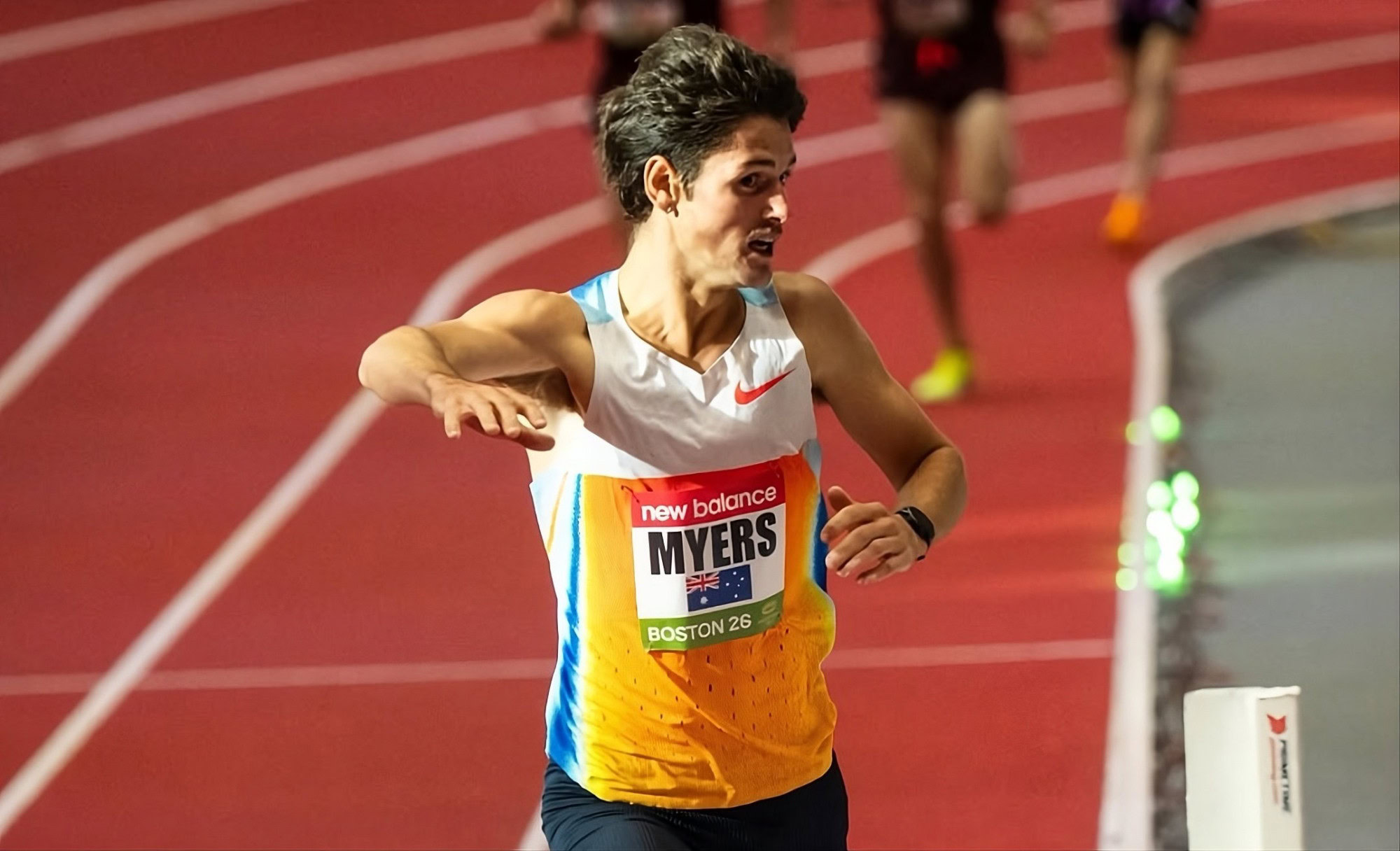
The Beijing qualification document states that short track performances for races of 200m and longer will not be accepted for Entry Standards. They remain valid for world rankings, but the mark itself — however fast — cannot be used to achieve a qualifying standard.
This is an indoor track ban by another name. Except for longer indoor tracks (>201.2m), which do count.
The European and North American indoor seasons, which runs through mainly January and February, has recently been a productive hunting ground for Australian middle distance athletes. The Boston University David Hemery Valentine Invitational, the Millrose Games, the New Balance Indoor Grand Prix — these are serious, high-quality competitions that routinely produce world-class marks. Under the Beijing rules, none of those marks will count toward achieving an entry standard.
The logic is understandable. Indoor tracks are shorter at 200 metres, compared to the standard 400m outdoor oval; and the geometry of tighter bends, banked curves, tuning of the surface to the resonant frequency of the strides of elite athletes, and different racing dynamics means times are not directly comparable to outdoor performances. World Athletics has maintained indoor/short track and overall world records separately. This new rule takes that distinction a step further, formally excluding indoor marks from the standards pathway.
The practical impact on Australians is real. The northern hemisphere indoor season provides competitive racing in the Australian off-season. Athletes who train or travel in the US through December and January and race their way into form indoors will now need to treat that entire block as rankings work only, not as an opportunity to tick off a qualifying standard.
The Ramona Problem: Discus and Unconventional Venues
There is a specific clause in the Beijing document that will not generate much news globally, but matters enormously in the throwing community.
It reads: “Discus Throw performances for Entry Standards must be achieved within the confines of a traditional athletics facility unless otherwise approved at least one month in advance by World Athletics Competition Unit.”
This is a direct response to a growing trend in field events — and in the discus in particular — of using specialised standalone venues to optimise for performance. The most prominent example is the Ramona facility in Oklahoma, where Mykolas Alekna set the current world record, and where a purpose-built throwing environment has produced a string of elite performances. Under the Beijing rules, a discus mark set at Ramona (or any similar standalone throwing venue) will not count toward an entry standard unless specifically pre-approved by World Athletics (and one would suspect the rule is written so as to exclude it).
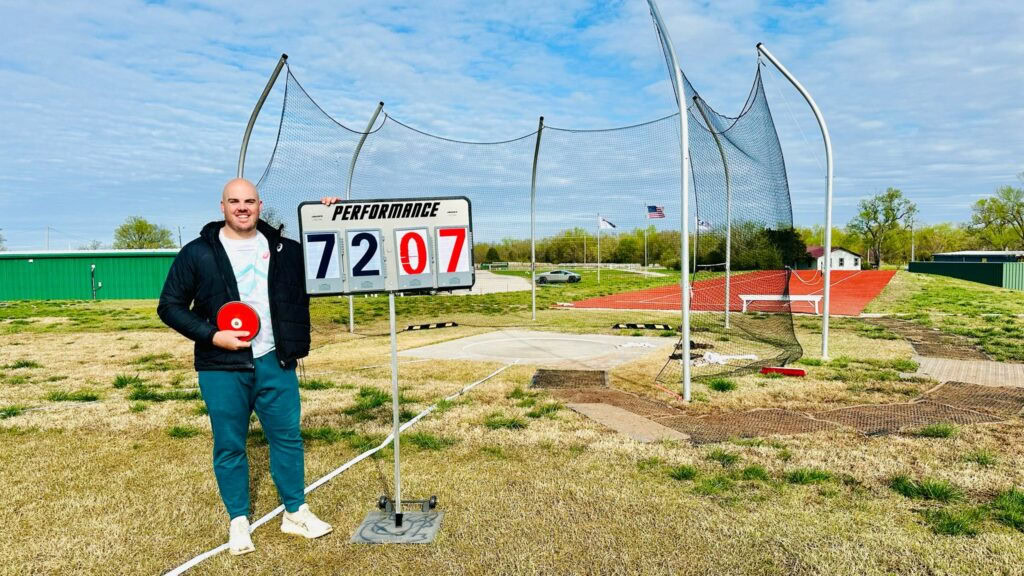
Again, it will still count for world rankings. But the standard itself must come from a traditional athletics facility.
For Australian throwers, this is less immediately relevant given the limited access to such venues domestically. Matt Denny, who has bypassed the Australian Championships for the past two seasons to compete in the US chasing records, is the exception. But it matters at a philosophical level: it draws a line between what World Athletics considers a legitimate qualifying environment and what it regards as a performance-optimised venue that may not reflect the conditions of actual championship competition.
All Tracks Are Equal. But Some Tracks Are More Equal Than Others
What emerges from a full reading of the Beijing qualification document is a clear and deliberate philosophy: World Athletics is tightening the definition of what counts.
The standards are harder. The venues that count are fewer. The competitions that validate a mark are more strictly defined. The pathway through the rankings rewards those with access to high-level competition across the full calendar year.
In isolation, each change has a reasonable justification. Category C competitions offer genuine officiating standards, timing certification, wind measurement and drug testing protocols. Indoor tracks produce performances that aren’t directly comparable to outdoor ones. Standalone throwing venues may produce marks in conditions that don’t replicate what athletes face in a championship final.
Together, though, they create a landscape where not all competition is equal: where the same time, run by two different athletes on the same day, may count for one and not the other based solely on where they were standing when they ran it. At the extreme, a world record can be set, but not count for an entry performance.
For Australian athletes and coaches, the Beijing 2027 qualification cycle demands an even more strategic approach from the very start of the 2026-27 summer season. Identifying the specific competitions on the domestic and international calendar that sit at Category C or above is no longer optional background knowledge: it is the foundation of all qualification planning.
The road to Beijing runs through very specific places. Knowing which meets are on that road, and which ones aren’t, is now half the battle.
The World Athletics Championships Beijing 2027 will be held from 7–15 August 2027 at the National Stadium. The qualification period for most track and field events opens on 23 August 2026.
Before then, the Commonwealth Games selections, due to be made after qualifying closes at the end of the month, will be most athlete’s focus.