
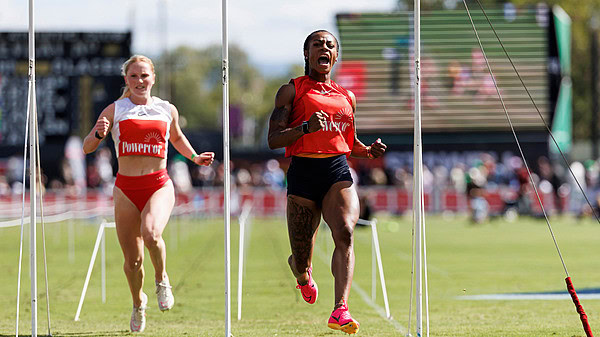


In 143 editions only seven men have ever won the Stawell Gift off a handicap mark of 4 metres or less.
Cover image by Luke Hemer courtesy of Stawell Gift
The last to do so was Ryan Tarrant, who won off 3.75m in 2023.
This Easter – albeit with almost all of Australia’s top athletes skipping the event to prioritise next week’s Australian Championships in Sydney – sees 9 of the 165 men line up under the 4m mark in the iconic 120m event held in the Victorian town of Stawell. Similarly the women’s Gift features 3 of 104 women off a mark of 4m or less.
So what are their chances of winning?
The theory
The idea of handicapped races is that all athletes are provided a ‘mark’ to even out differences in ability. Athletes who are slower receive larger mark: a head start, covering less distance in the race.
In theory, each athlete then has an equal chance of winning.
So with 165 men and 104 women in the Gift fields, arguably there’s 9/165 = 5.5% (men) and 3/104 = 3% (women) chance of an athlete off a mark of under 4 metres winning.
That’s actually pretty close to what historic results indicate: that 7 in 143 years is 4.9%.

The handicapping process
Part art, part science, this is a human process and fallible. The bookmaking ring at Stawell would be a very dull place if everyone was able to be precisely handicapped with an even chance. Starting odds of $1.01 on each runner?
The fact that there’s a viable bookmaking market that looks quite different to that should be sufficient to make the point that its not an even field (notwithstanding that major bookmakers no longer offer odds before heats are run: an indication of their confidence in the process and risk they otherwise absorb). The reality is that while all sprinters are equal, some sprinters are more equal than others.

And when you think about it, what the punters are really assessing at Stawell isn’t who they think will win, but how wrong they think the handicapper is. From that, some athletes will have a much greater chance of winning. Of course, they then have to do it, which is still not an easy task, with the pressure of the rarified atmosphere of the event sometimes getting to the ‘favourites.’
There’s also a benefit – in the form of a ‘lift’ of a 0.5m for athletes who have one major Gift races in the lead up to Stawell – which generally doesn’t benefit backmarkers, as they are less likely to compete in those events, prioritising instead Track Classic events.
Much of the handicap process is designed to address a fundamental tension: the handicapper tries to produce an even field, but each athlete has an incentive to hide their true ability.
If you want to read the exact detail of how fields are handicapped, you can here on the Victorian Athletic League website. The process is designed to address a fundamental tension: the handicapper tries to produce an even field, but each athlete has an incentive to hide their true ability (e.g. $40,000 each for the winners of the men’s and women’s Gifts, more than a majority of Australia’s top athletes team make in a whole year within the sport).
If an athlete might receive a handicap that is more generous than their ability, they will have a greater chance of winning. Some athletes take advantage of that situation, ranging from ensuring they race exhausted in lead in events, to as complex as orchestrating a betting plunge with their training stable at the event. On one hand, there’s the possibility of activities that could be a criminal offence (since 2013 it’s been illegal in Victoria to corrupt a betting outcome of a sporting event). On the other hand, there’s something about the anti-authoritarian, Australian larrikin culture, that absolutely embraces the underdog beating the system. This dynamic is part of what makes Stawell unique in athletics and Australian sport.

The history
Until 1984 in Australia, if you ran in a ‘professional’ athletics event for prize money, such as the Stawell Gift, you risked being banned from ‘amateur’ athletics. In theory, no athlete in the history of the Olympic Games, IAAF (now World Athletics) or associated competition (‘amateur’ athletics) ever received appearance fees or prize money for their performances, or they were banned from the sport. We could digress on the merits of this, or rather the lack thereof, and how this was routinely circumvented in practice, but that’s a topic for another day.
However, what was clear was that that to overtly race for money was not on. So Australia’s top sprinters, of Olympic talent, didn’t race the Stawell Gift for much of the event’s history. That changed in the early 1980s where athletes like John Dinan (1980 Gift winner) and the late Chris Perry (1982 Gift winner) were allowed to race in amateur ranks, with both ultimately gaining selection in the 1986 Commonwealth Games. Conversely, athletes from the amateur ranks such as Dean Capobianco won the Stawell Gift in 1990.
Nowdays, the term ‘pro’ is as a misnomer as ‘amateur’ is for Australia’s elite athletes. The community that runs Gift events throughout the year are as grassroots as any sport gets, with some prize money on the side. But all roads lead to Stawell, where sometimes the two cohorts converge, with a material prize.
This year, Australia’s top talent feels a 5% chance at $40,000 is far less valuable than performing at their best in the Australian Championships, which will be a key factor for Commonwealth Games selection. 400m runner, Cooper Sherman, is the only current Australian representative entered in the Gift, and only one of Australia’s top 30 fastest men or women over 100m this year line up (Jasper Thomas, 29th at 10.49, running off 2.5m).
Sha’Carri Richardson embraces grass (at Stawell)
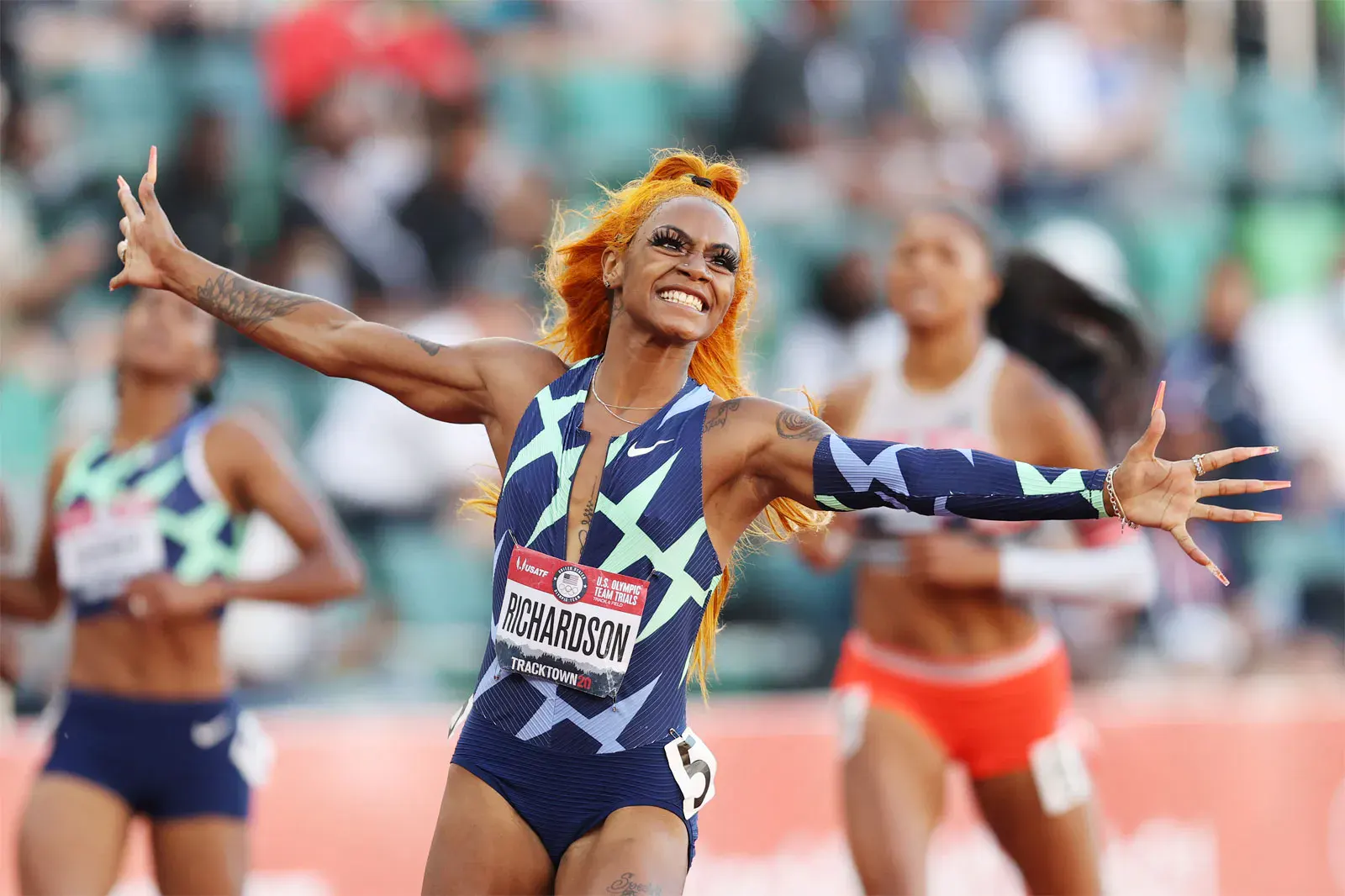
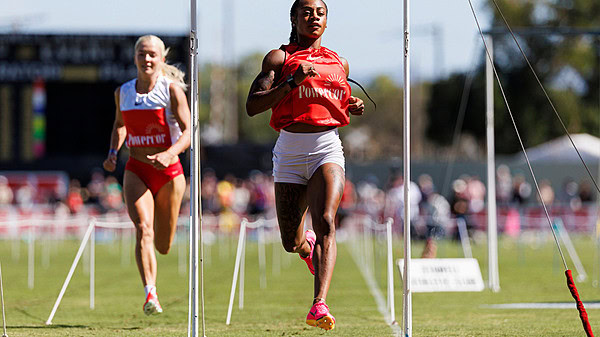
Flamboyant USA sprinter Sha’Carri Richardson is the headline act this year, off scratch in the women’s gift. The fifth fastest woman ever (10.65s), Olympic silver medallist over 100m in Paris, and gold medalist in the 4x100m, Richardson is equally well known for missing the 2021 Games due to testing positive to marijuana after dominating the US trials, and for her brushes with the law in the US with partner Christian Coleman, who headlines the men’s race from scratch. Coleman’s a 9.76 man and the 2017 world champion, and is also the world record holder over 60m.
Richardson is viewing the event as ‘glorified practice’ and is confident of victory. Her form is unknown, with her 2025 season the only indicator: she opened and closed her season in Tokyo, with a 11.47 second run in May and a 10.94 second 5th place at the World Championships in September. She’ll have plenty of chasing, with almost half of the field handicapped at the limit. 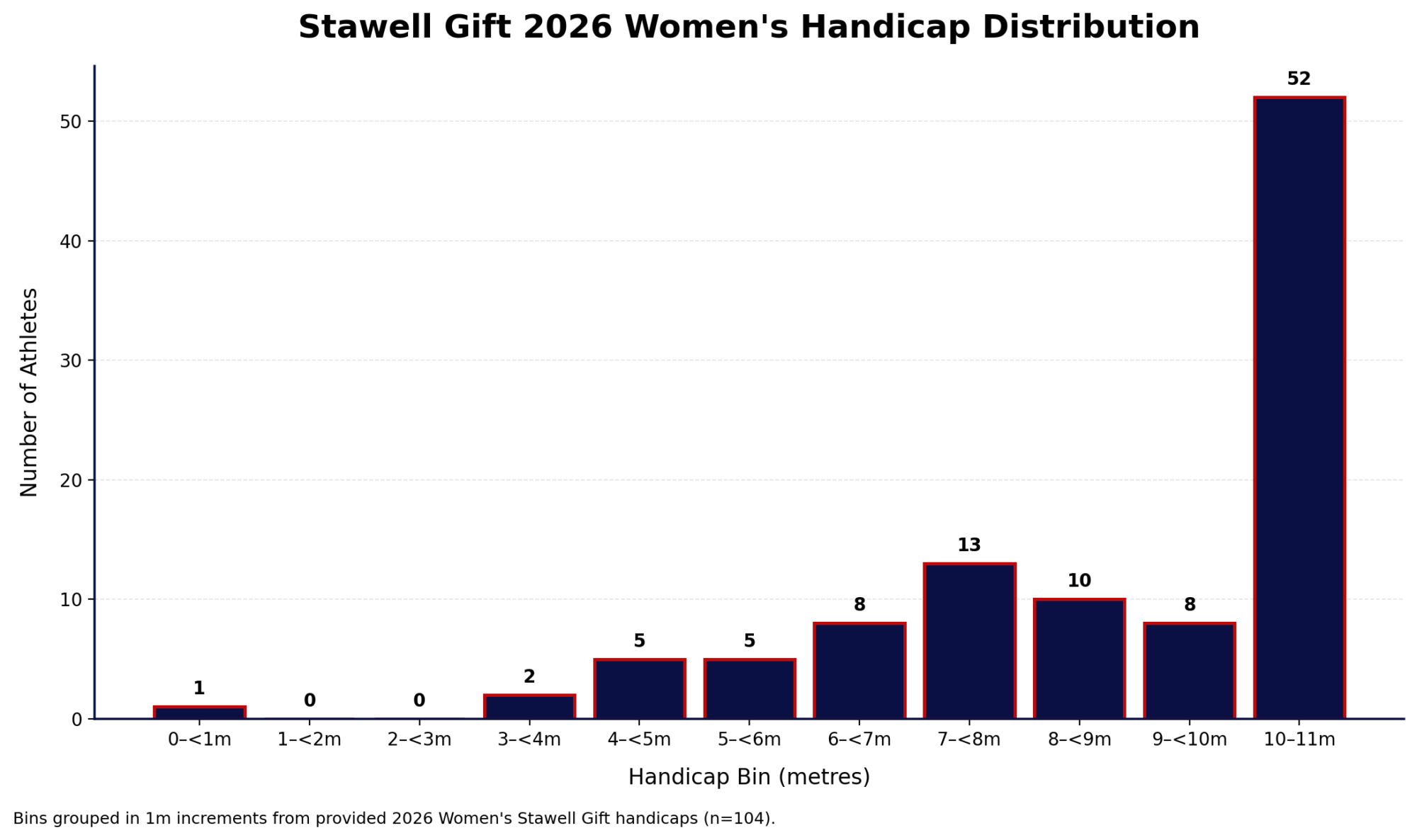
For Coleman it’s a more typical distribution of handicaps he is up against, with two-thirds of the field having marks between 6 and 9 metres. 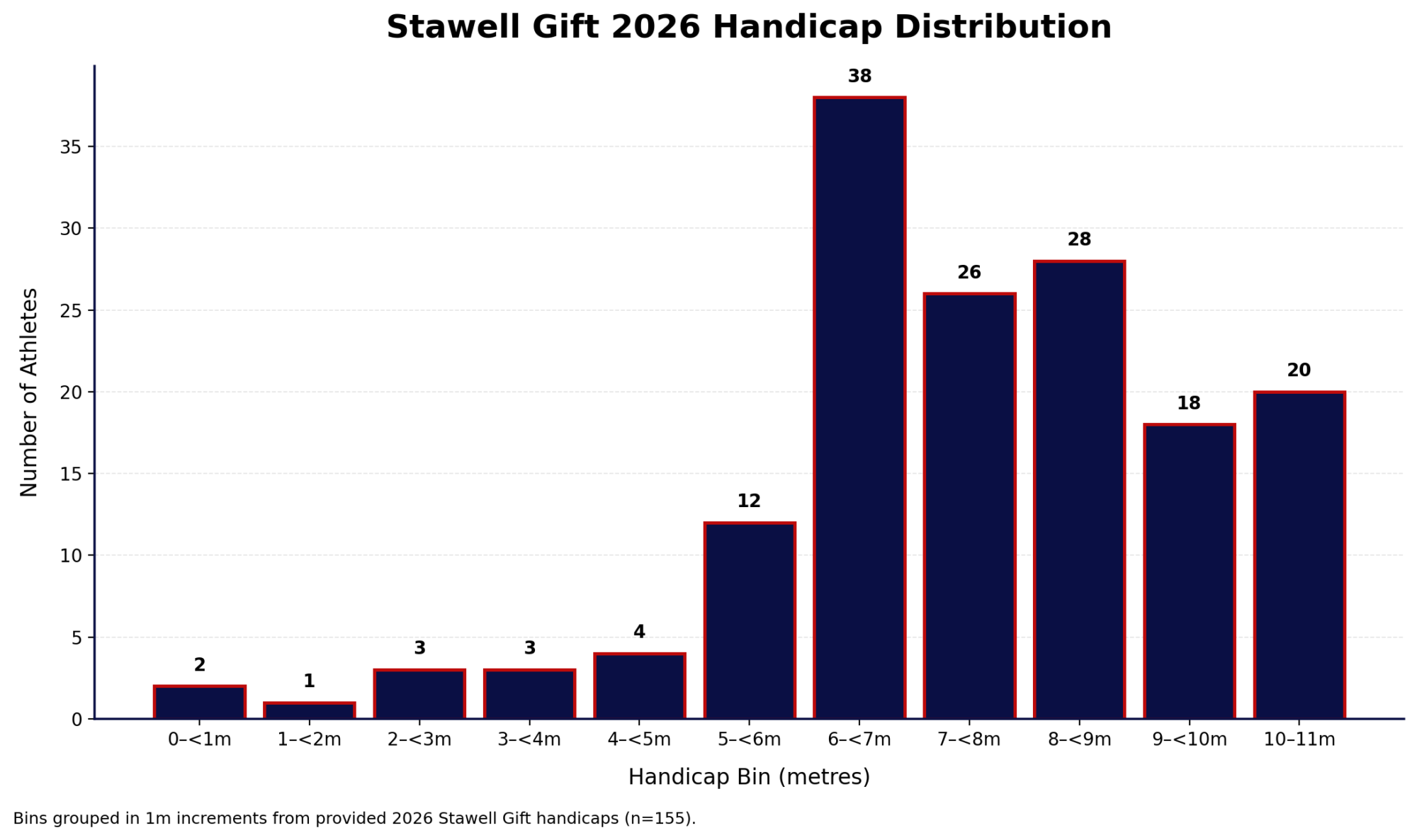
The heats of the Stawell Gift are run on Easter Saturday with the final held Easter Monday.
Athletes who have won the Stawell Gift off a mark of 4 metres or less
MEN
- Jean-Louis Ravelmanatsoa: Scratch in 1975
- Joshua Ross: Scratch in 2005
- Warren Edmonson: 1.25m in 1977
- Dean Capobianco: 2.25m in 1990
- WJ Millard: 3 yards in 1878
- Ryan Tarrant: 3.75m in 2023
- George McNeill: 4m in 1981
WOMEN
- Melissa Breen: Scratch in 2012
- Bree Rizzo: Scratch in 2025
- Jennifer McGibbon: 4m in 2001