
From John Landy in 1956, to the chaos of the 2000 Olympic trials, to the controversy of the 2026 Australian Championships, Australian middle-distance history has a habit of turning on moments where races unravel.
Not cleanly. Not predictably. But in ways that reveal something deeper about the athletes involved.
Because in championship racing, it’s never just about the fall. It’s about what happens next.
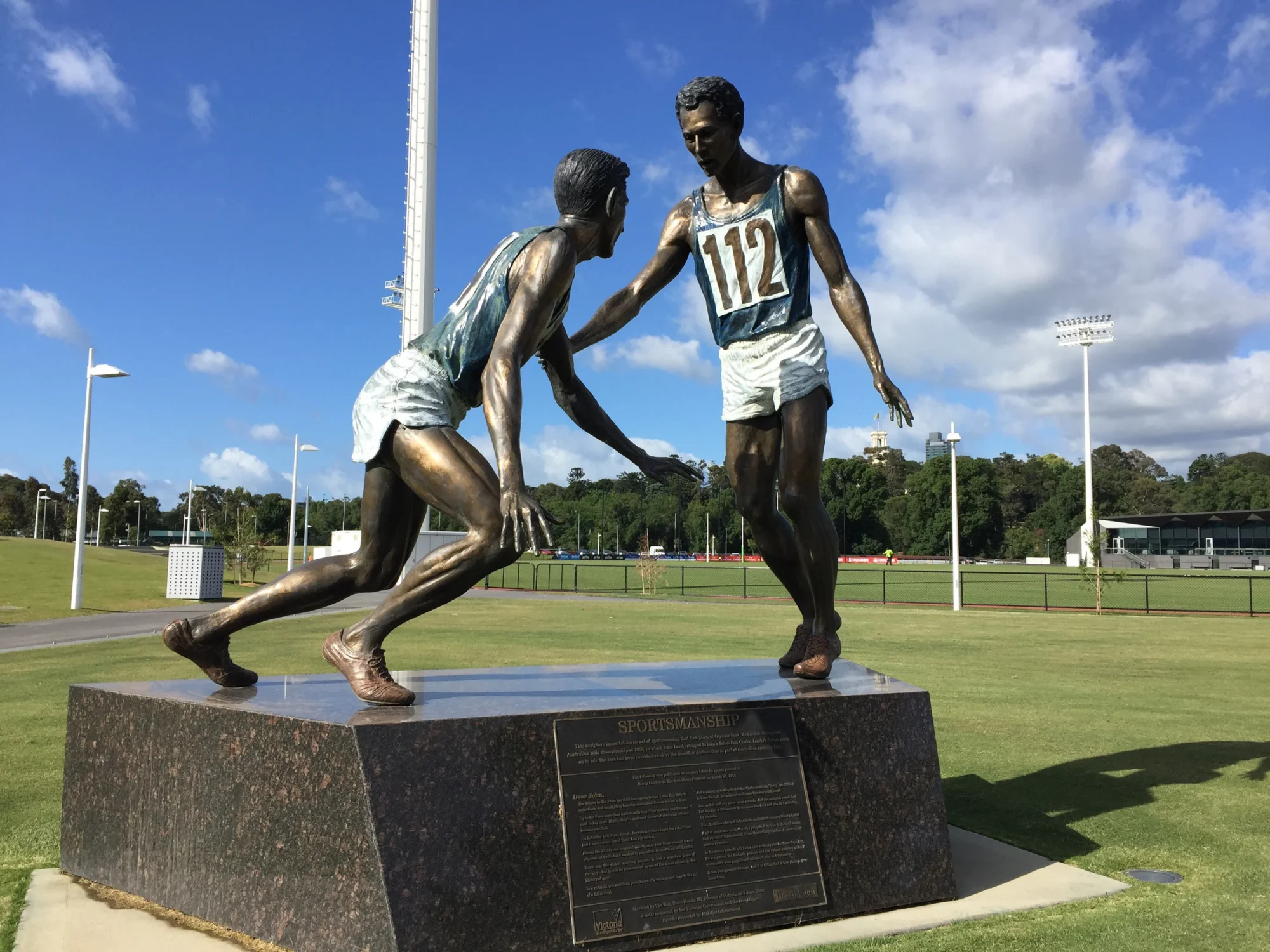
The gold standard: Landy’s moment of grace
The mile at the 1956 Australian Championships was more than just a race: it was the centrepiece of a nation preparing for a home Olympics.
Landy arrived as the world record holder, already etched into history as the second man to break four minutes. Olympic Park in Melbourne was primed for a performance befitting his stature.
What it got instead was something far greater.
On the final lap, Ron Clarke fell heavily to the track. Landy, in full flight and contention, stopped. Not hesitated. Stopped. Concerned he may have spiked Clarke, he turned back to check on him before resuming the race.
Then, in one of the most remarkable finishes in Australian sport, he chased down the field and won.
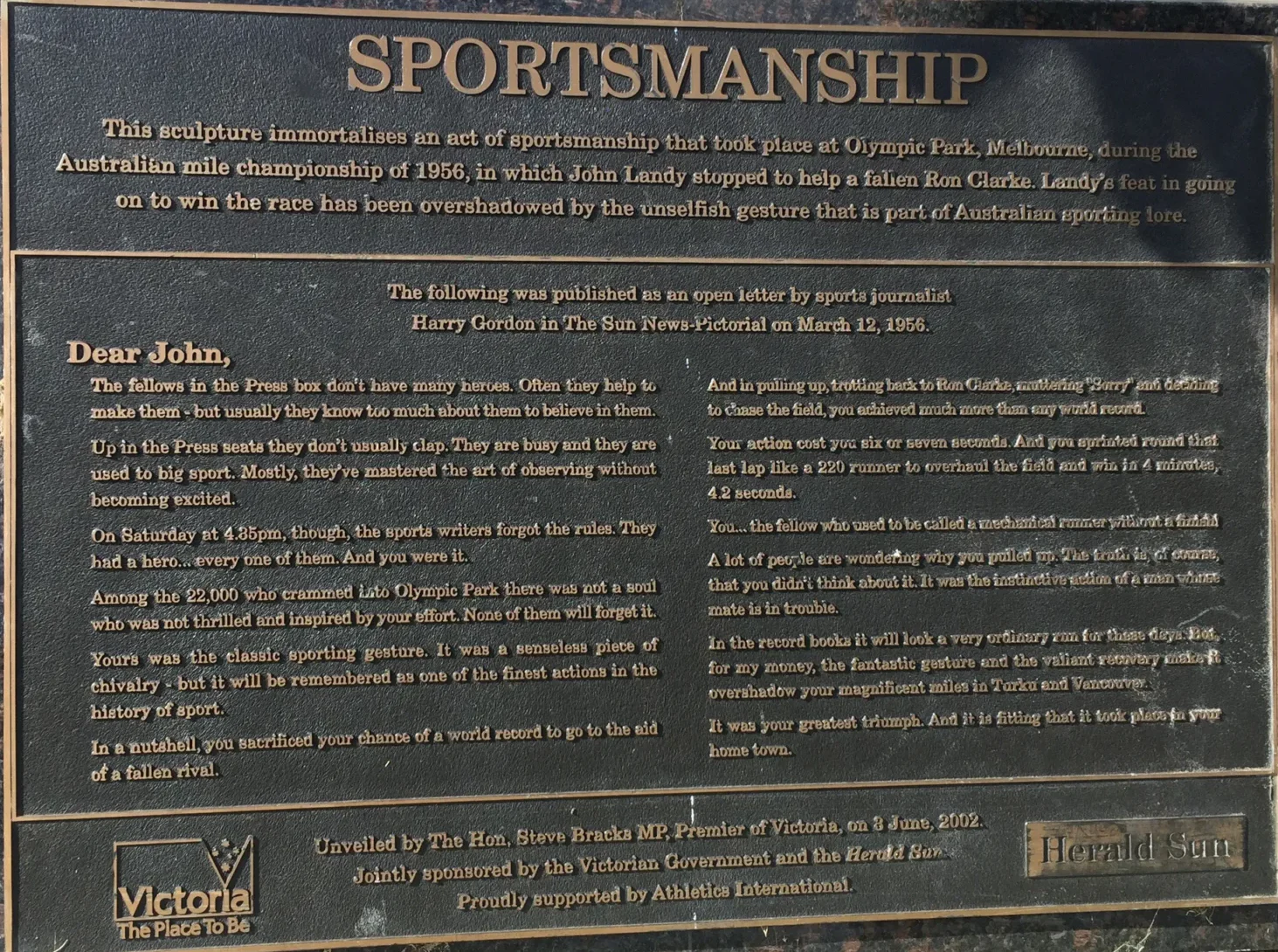
It was an act of instinct, of integrity, and one that would define his legacy as much as any time he ever ran. Immortalised in bronze and celebrated decades later, it remains the benchmark for sportsmanship.
Sydney 2000: When it all boiled over
Fast forward 44 years, and the Olympic stage returned to Australia. But this time, the defining 1500m moment was far less graceful.
At Sydney’s Olympic trials, a young Craig Mottram was charging for the line when South Australia’s Nick Howarth made an aggressive, high-risk move up the inside. Contact was inevitable. Mottram hit the track.
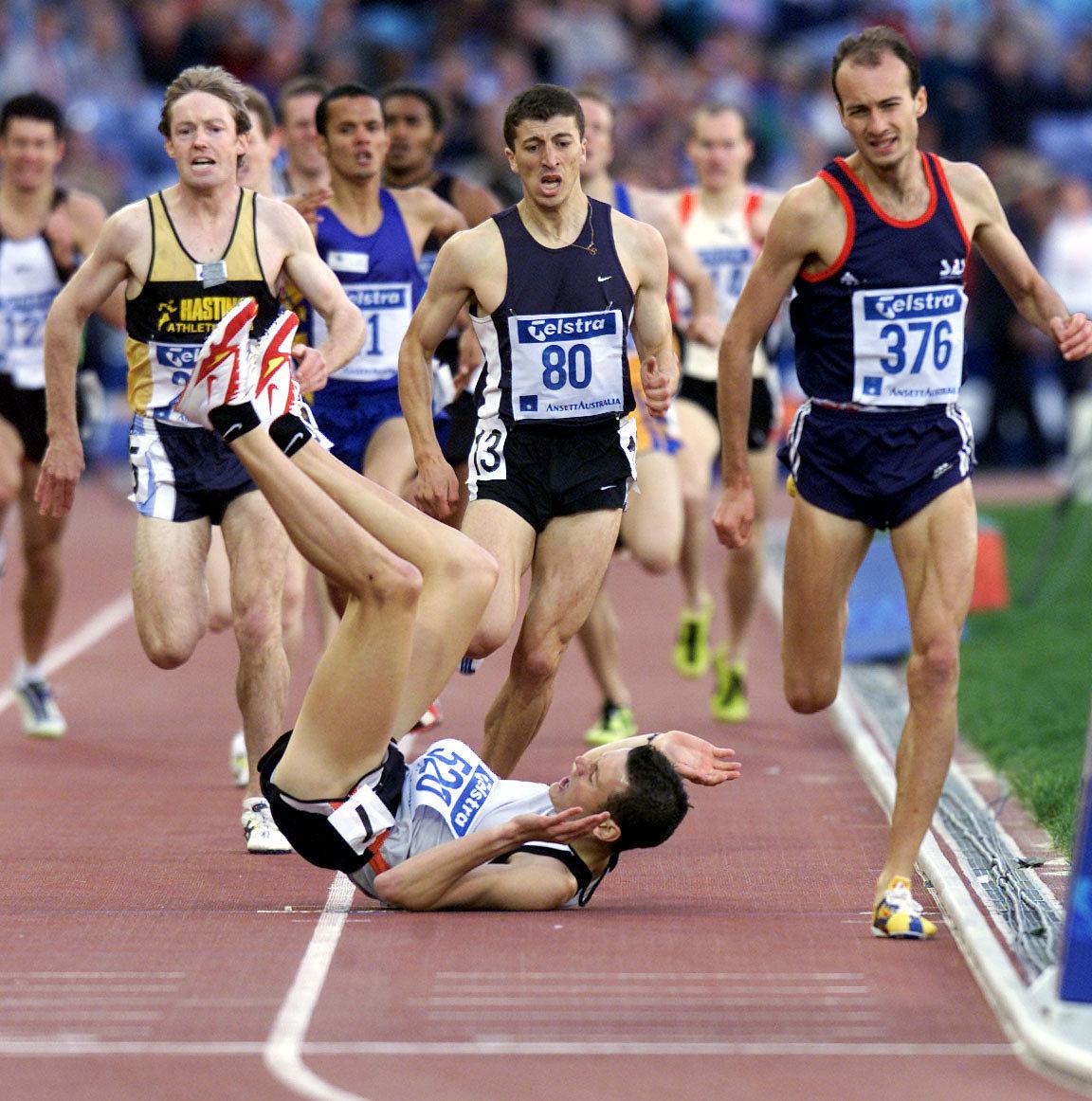
What followed was chaos.
Howarth was disqualified. The selection trial status of the race was declared void. Protests, appeals, and heated exchanges spilled beyond the finish line, so much so that athletes had to be physically separated. Mottram ran the 5000m 55 minutes later to preserve a chance for selection in that event, uncompetitive due to fatigue.
A week later, the 1500m race was rerun in Adelaide.
Youcef Abdi crossed the line first — again — but didn’t have the qualifying standard. Howarth, despite the earlier disqualification, did. He was selected. Mottram, for a time, considered switching allegiance. Shaun Creighton handed Mottram his 5000m place to only contest the 10000m in Sydney, giving Mottram his Olympic debut.
Careers diverged from there. Mottram would go on to global success. Howarth’s Olympic campaign, and career, ended in the heats. Abdi missed Olympic selection again in 2004 and stepped up to the steeplechase, finishing 6th in 2008 in Beijing.
A fall had changed everything. Not just in the moment, but in the trajectories that followed.
2026: A race that split the sport
And now, the latest chapter.
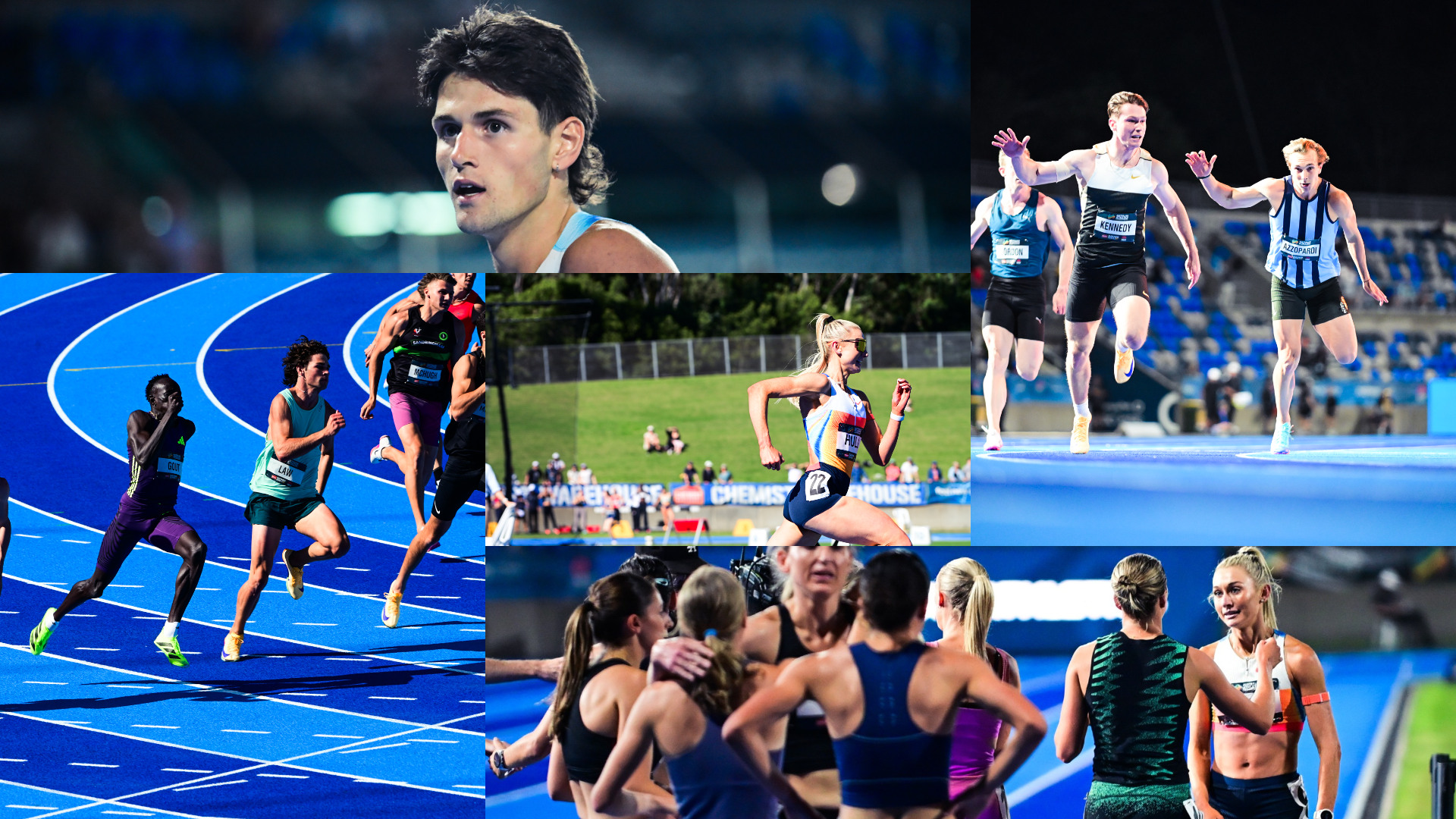
The women’s 1500m final at the 2026 Australian Championships will be debated for years: not for its pace, but for its flashpoint.
Mottram returns, this time as coach to prodigious talent Claudia Hollingsworth.
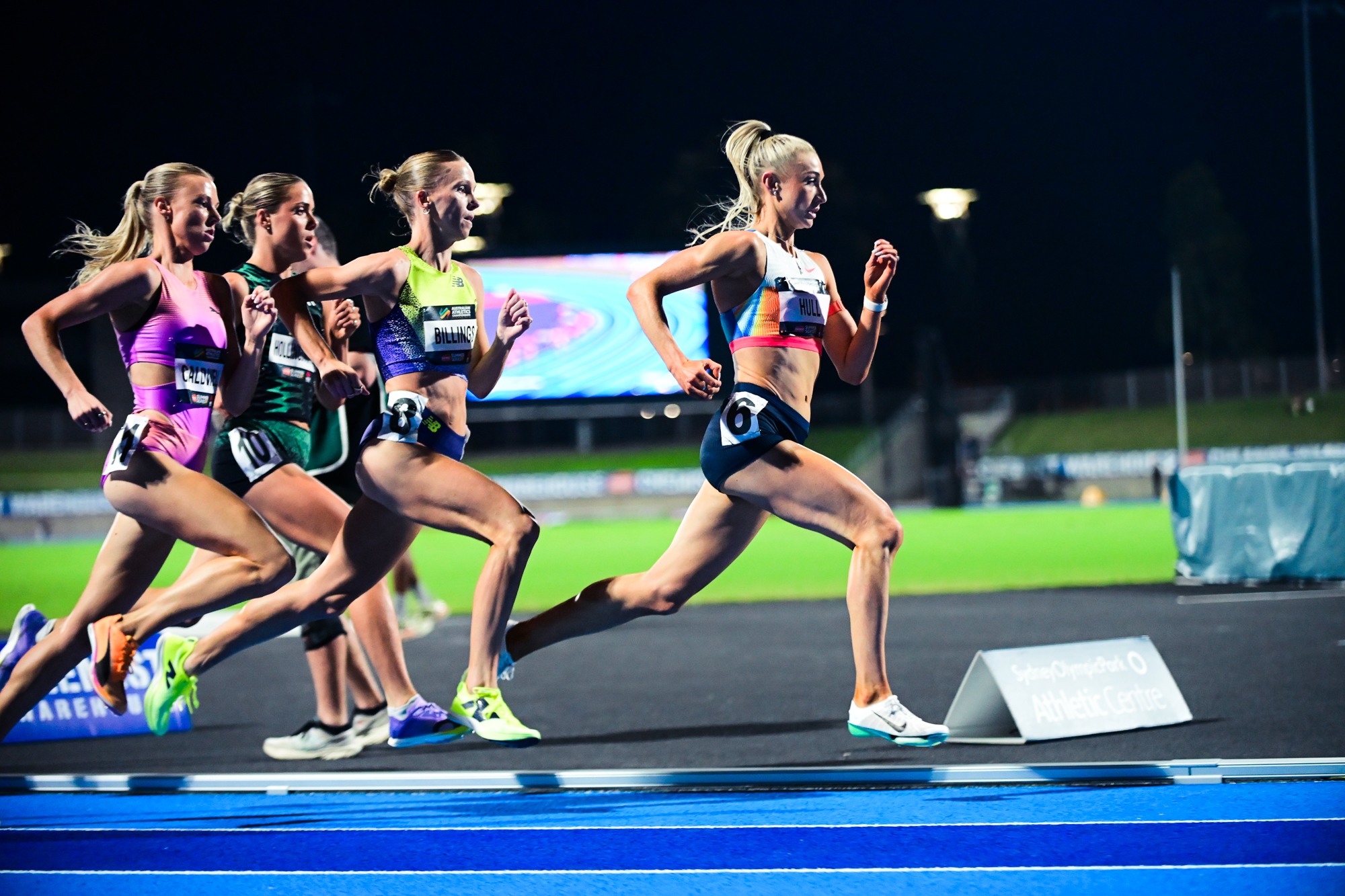
In a slow, tactical race, Hollingsworth found herself boxed in down the home straight. With no room on the inside, she shifted outward. In doing so, she clipped Jess Hull.
Hull — Olympic silver medallist and race favourite — fell heavily.
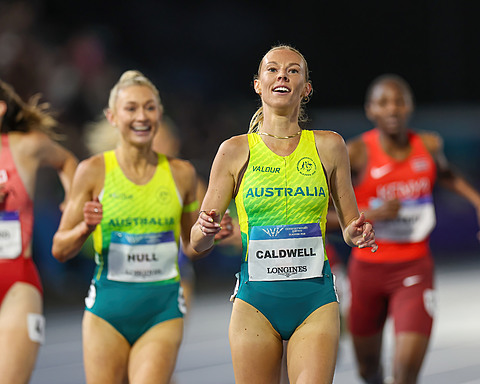
Behind them, Abbey Caldwell was checked and lost momentum just as she was building into her kick. Sarah Billings swept down the outside to catch Caldwell.
Hollingsworth crossed the line first. Hull picked herself up and finished 12th.
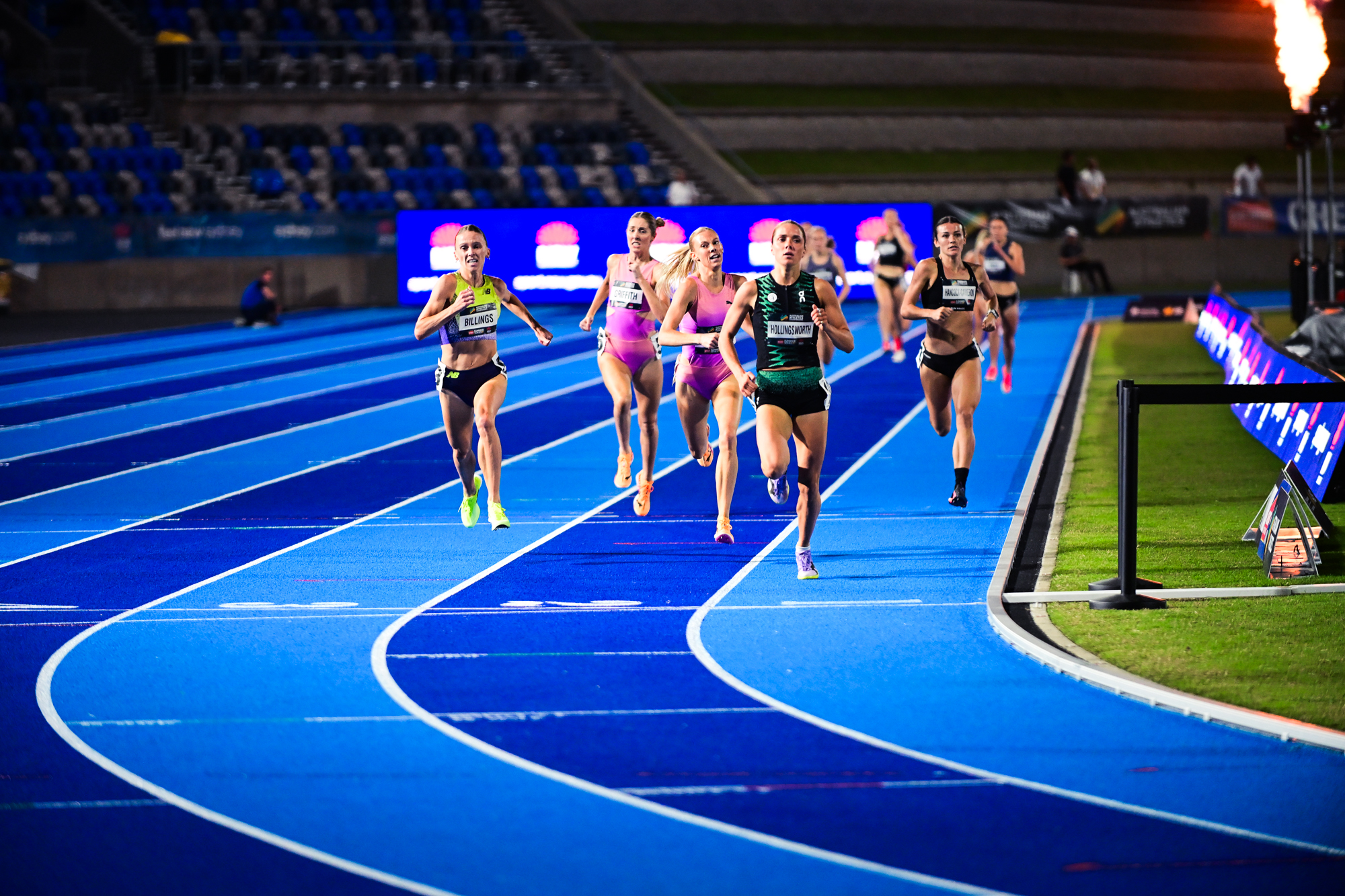
But the race didn’t end there.
Hollingsworth was initially disqualified following protests from Hull and Caldwell. Billings went to bed as national champion. By lunchtime the next day, the decision was overturned on appeal. The title was reinstated. A request for a rerun was denied.
The footage — particularly the head-on angle — only fuelled debate. Was there a gap? Did Hull close it? Was the contact avoidable?
There are arguments both ways. Only Hollingsworth was formally held at fault at any time, while Hull’s positioning was deemed within the rules across multiple reviews. Hollingsworth was ultimately cleared.
What isn’t disputed is this: the contact was accidental. The consequences were significant. And the interpretation will divide opinion long after the medals were handed out.
In their own words…
JESS HULL
“[I]it’s not to any fault of any athlete — it’s a bigger, wider circle that sometimes gets involved,” Hull told Wide World of Sports, speaking of Hollingsworth’s appeal.
“I think a lot of us would acknowledge it’s a DQ anywhere else in the world, but it isn’t here … You just want a fair race. If you get beat fair and square you can live with that.”
CLAUDIA HOLLINGSWORTH
“Yesterday’s race had its ups and downs, but ultimately they came to a unanimous decision and just moving on to the next race now,” Hollingsworth told the ABC.
“I never like to see any athlete go down, but it was a fair race and I obviously felt bad for what happened, and I hope she’s okay, but I’m alright.”
What came next
Yet, as with Landy and Sydney before it, the defining element wasn’t just the incident: it was the response.
There was no physicality or war of words.
No public tearing down of rivals.
Just measured responses. Respect. Perspective. An immediate apology in the heat of the moment from Hollingsworth and a gracious personal response from Hull.
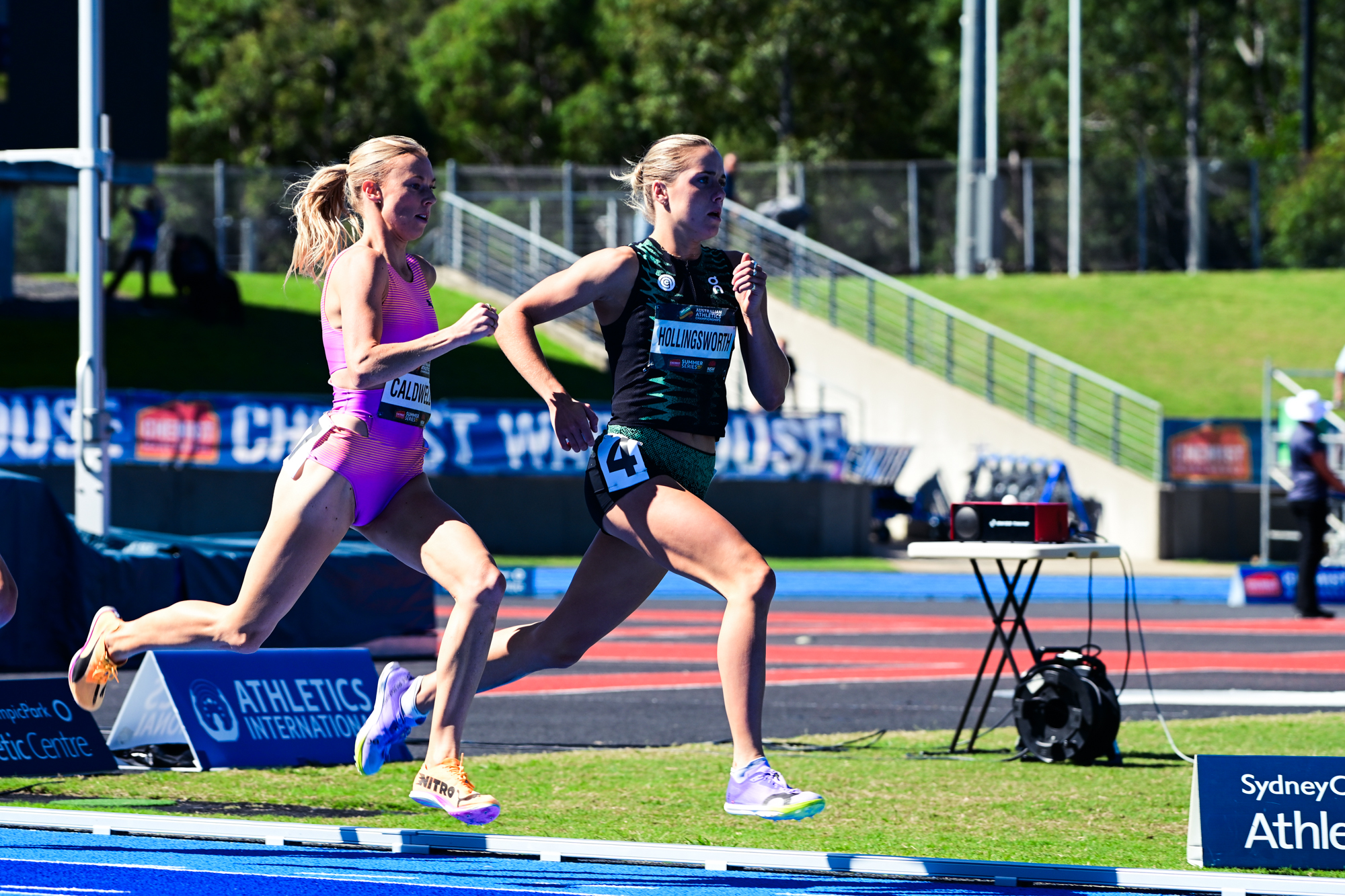
Hollingsworth, still processing the fallout from the previous night, returned to the track for the 800m, where Caldwell delivered a statement performance in the final to win in a sprint to the line. Some may call it poetic justice, but that risks underselling the quality of Caldwell’s run over two laps.
Hull, amid uncertainty about whether she would even race again that weekend, made a late call-room arrival for the 5000m. This time, she stayed completely out of trouble and delivered a clinical performance, kicking away with a blistering 61-second final lap for a popular victory for the NSW athlete.
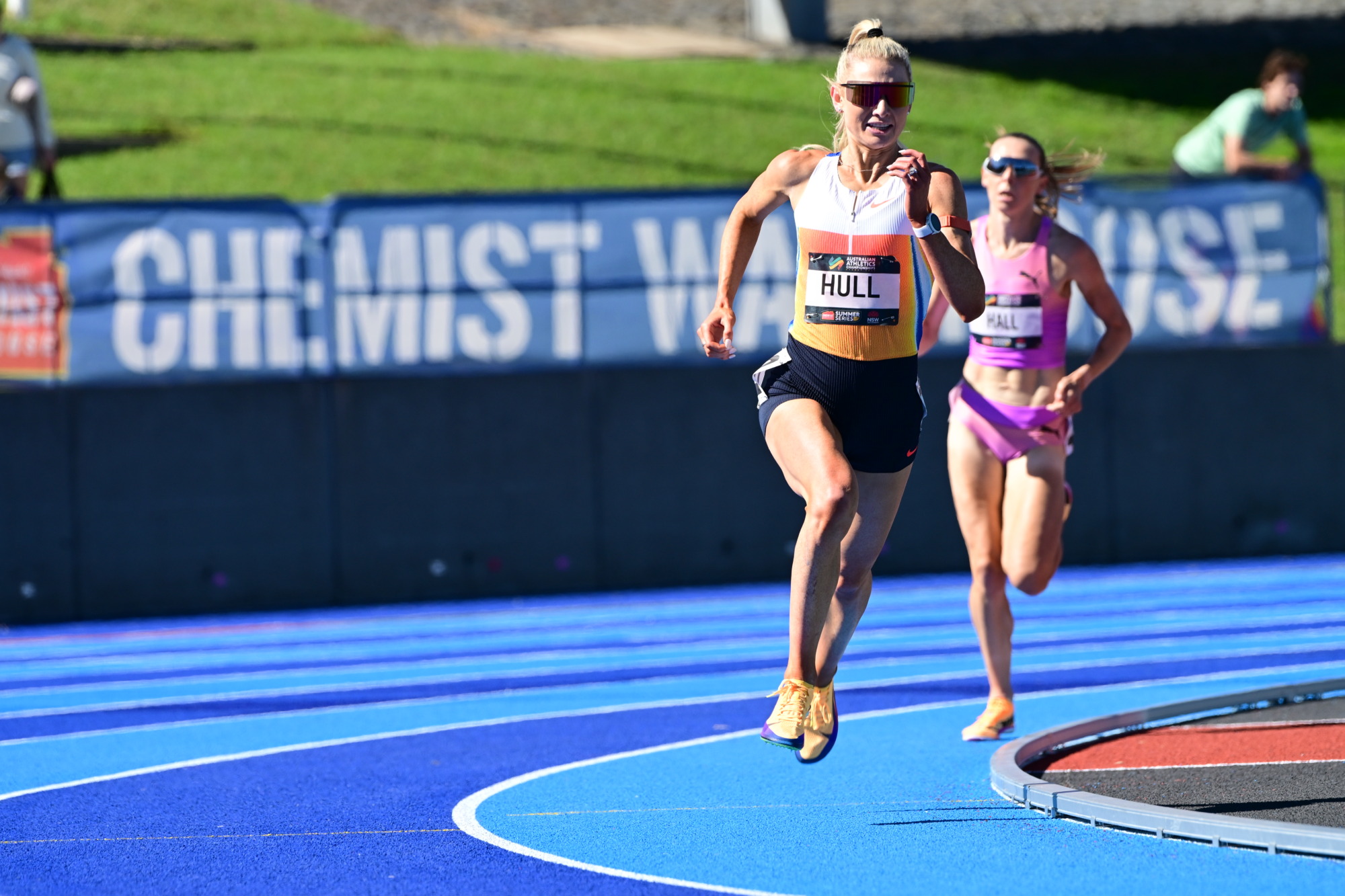
“I think the whole experience of it is special. From the moment I was in the call room there were kids waving at the call room to see if I was going to go and race, and that just makes you realise it’s so much bigger than you and it’s everything for them,” Hull said after the race.
“… I’m glad I had the shields on [glasses] because on the first lap when they were just going berserk for me I was tearing up. I was like, ‘Get it together’.”
Two athletes. Two responses. Both emphatic in their own way.
The through line
From Landy’s selflessness, to Sydney’s chaos, to the layered complexity of 2026 — the pattern is clear.
Middle-distance championships are unpredictable. They compress tactics, pressure, and personalities into moments where things can, and often do, go wrong.
But the legacy of those races isn’t defined solely by the incident.
It’s defined by what follows.
The 2026 final may not result in a statue cast in bronze. It may never achieve universal agreement.
But it has already revealed something enduring: two athletes — one at the peak of her powers, one rising fast — who, in the aftermath of a fall, carried themselves with composure and class.
And in time, that’s often what endures.