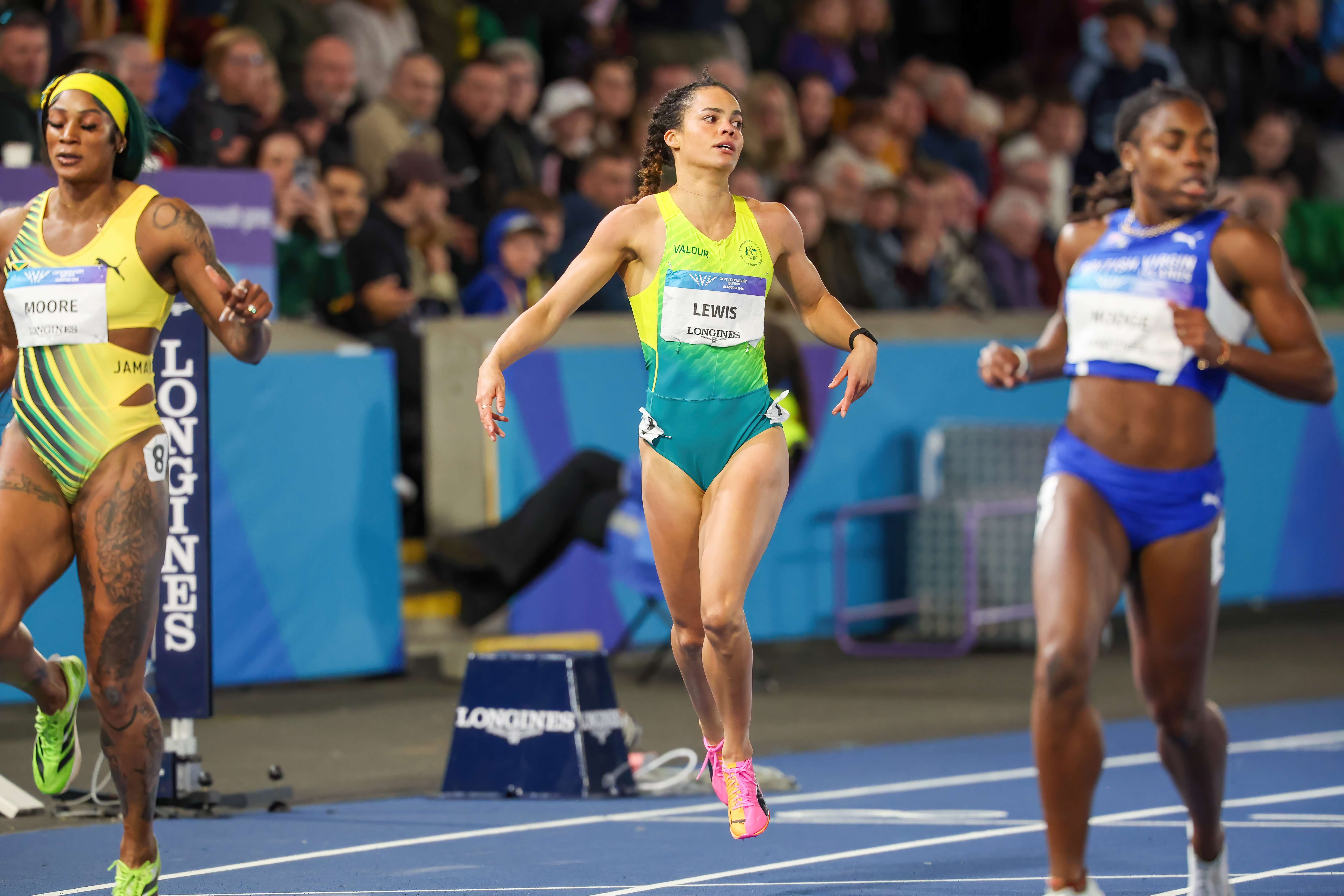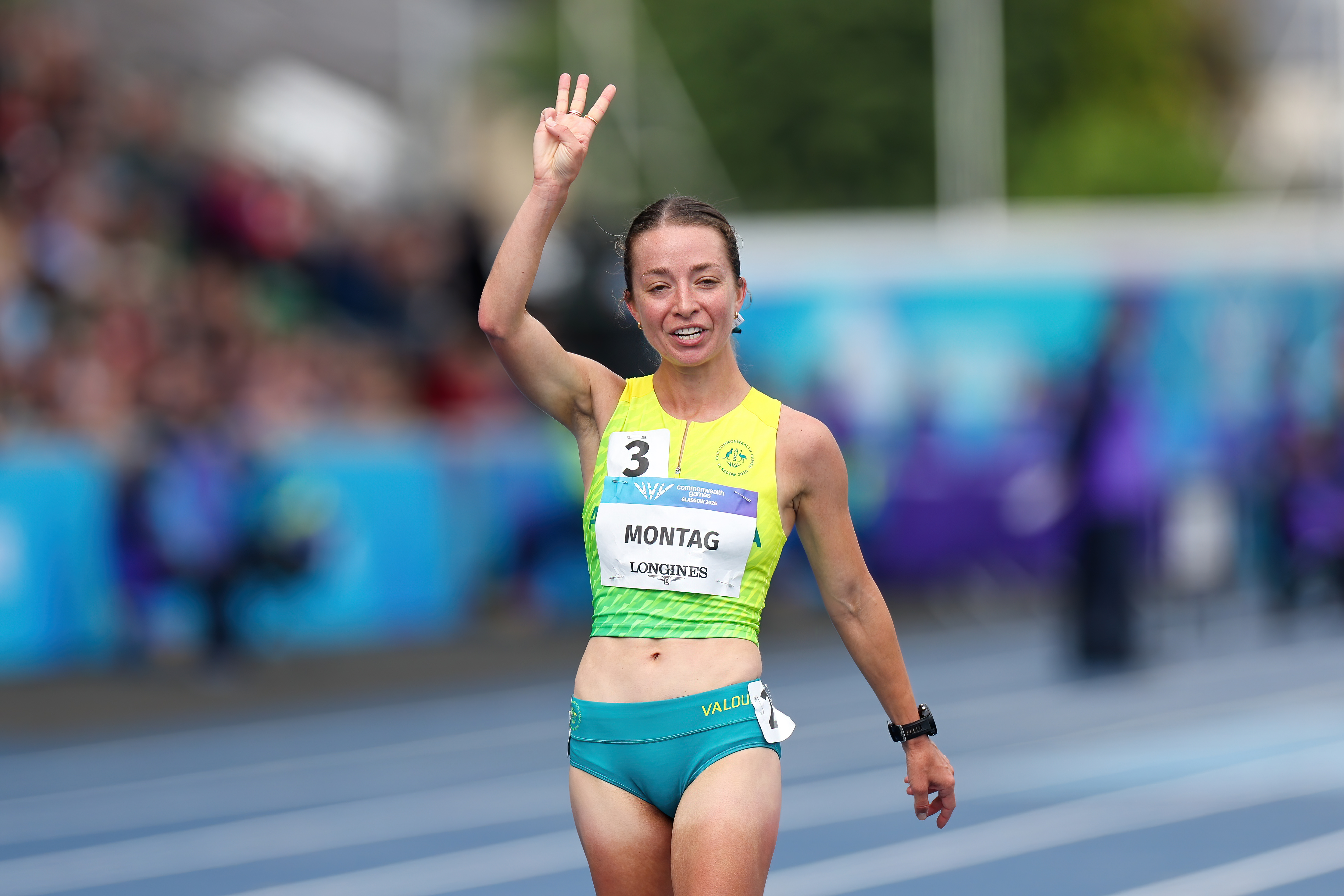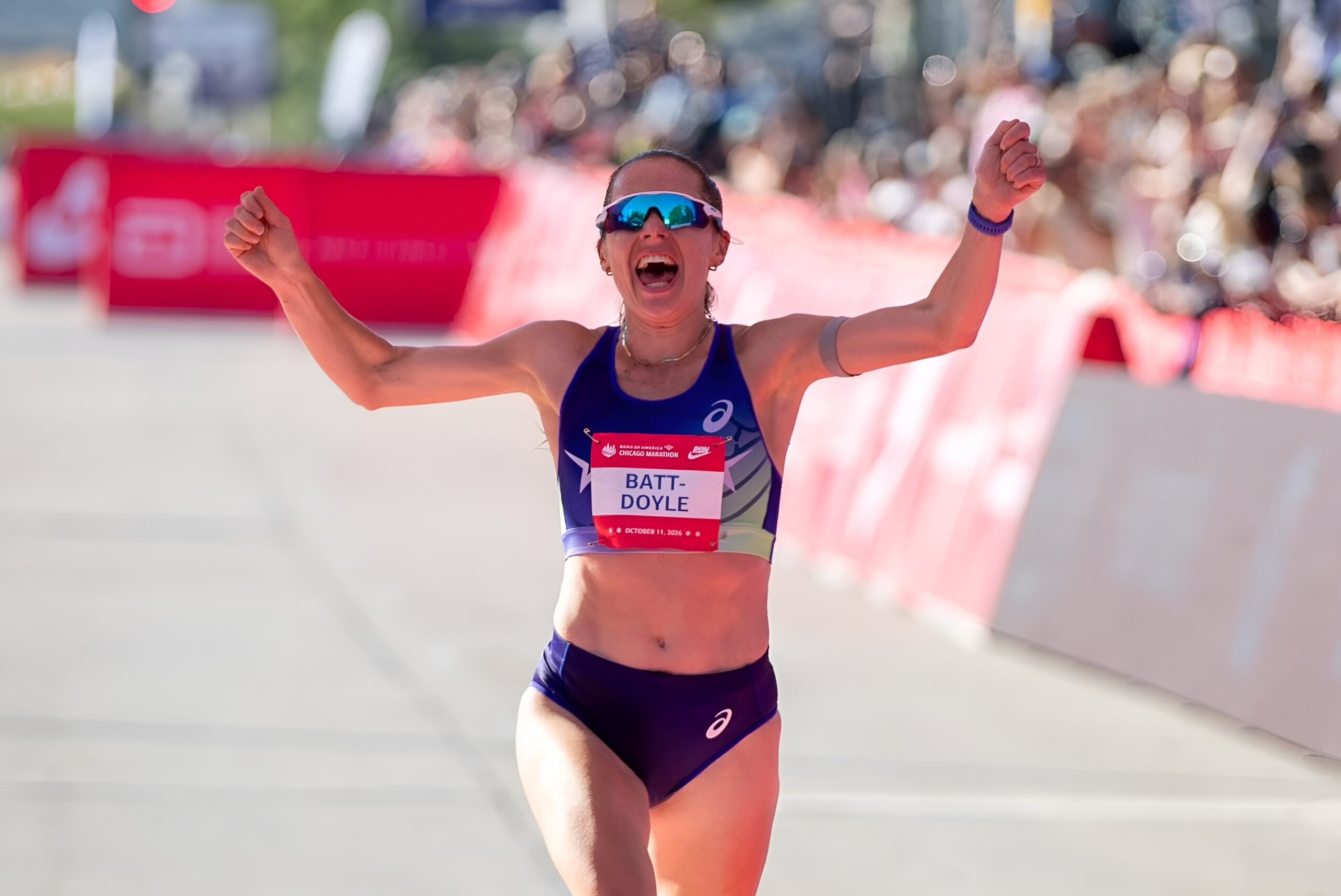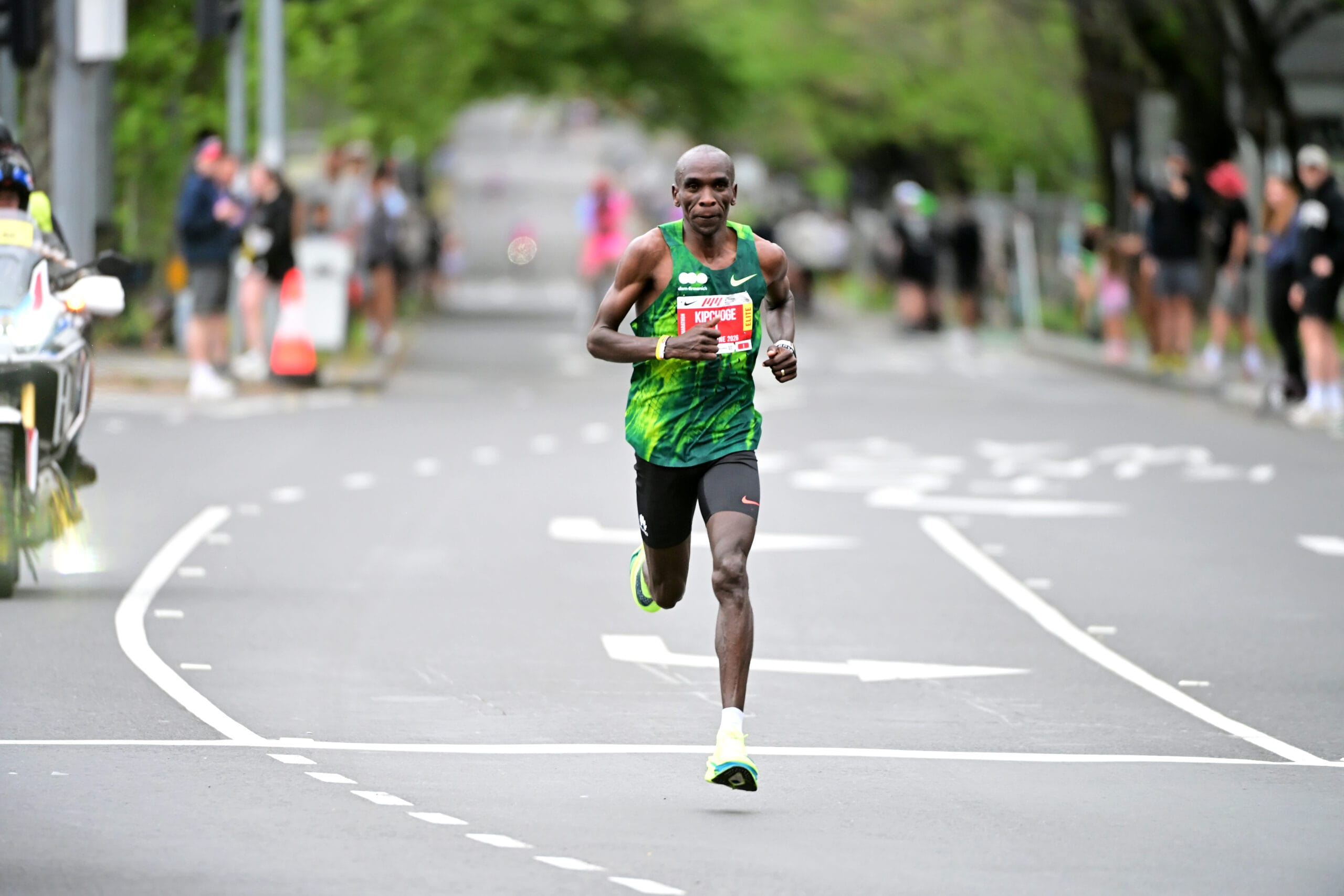

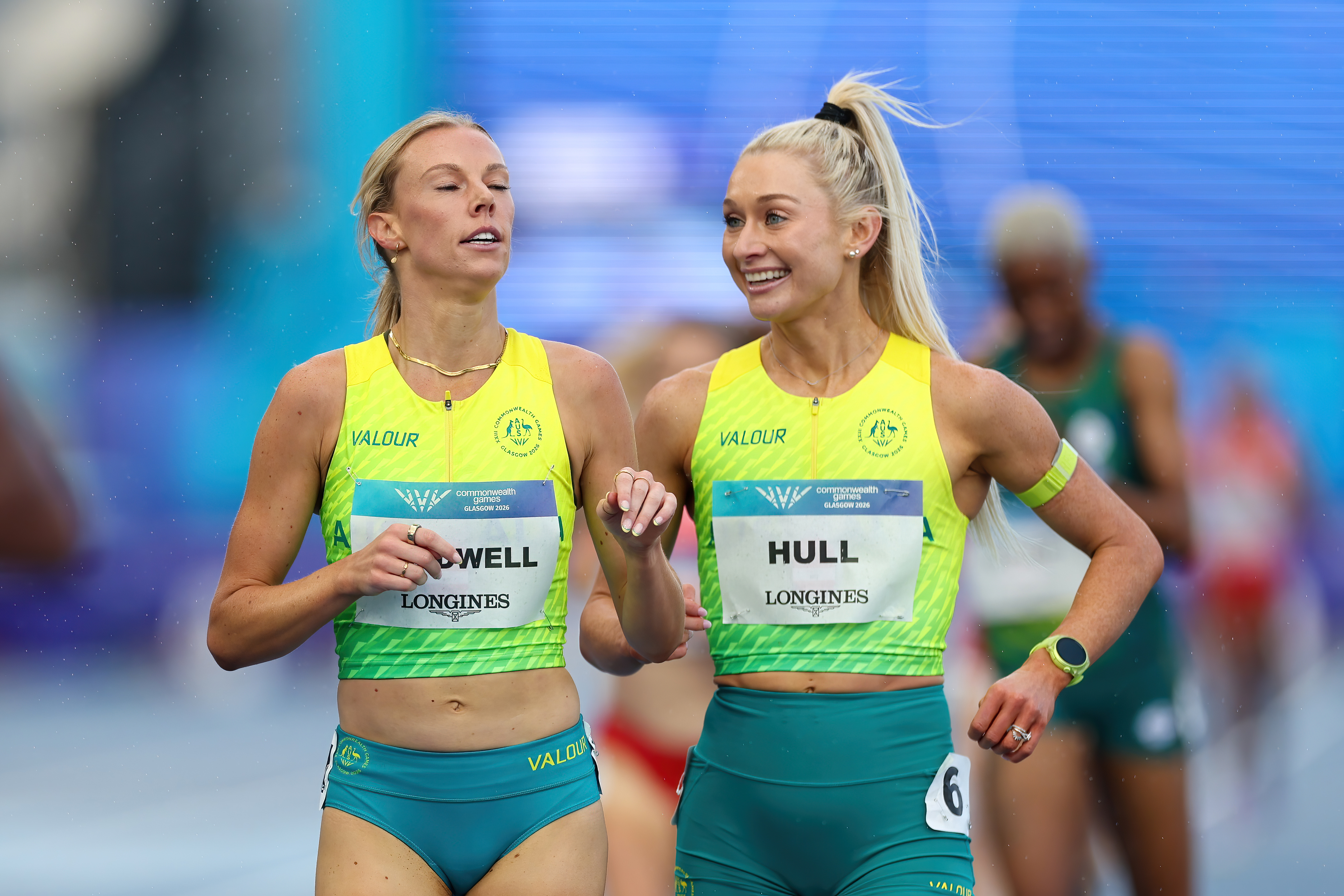
A rare sweep of the podium is possible for Jess Hull, Abbey Caldwell and Claudia Hollingsworth in the mile on the final night of the Commonwealth Games.
The trio qualified comfortably for the final, which is the last event on the program in Glasgow.
Previous Australian medal sweeps at the Commonwealth Games include 1938 in the women’s 220 yards and 1950 in the men’s triple jump. Most recently it occurred in the women’s marathon in 2002, where Kerryn McCann, Krishna Stanton and Jackie Gallagher filled the podium.
The heats were tactical affairs in the windy Scotstoun Stadium, with Hull second and Caldwell fourth in theirs, and Hollingsworth winning hers.
The times, 4:34.20, 4:34.87 and 4:31.17 respectively, are largely irrelevant, except for the latter being a PB for Hollingsworth over a distance she has rarely raced. The last laps too, don’t give away anything decisive: 61.6, 62.3 and 61.1
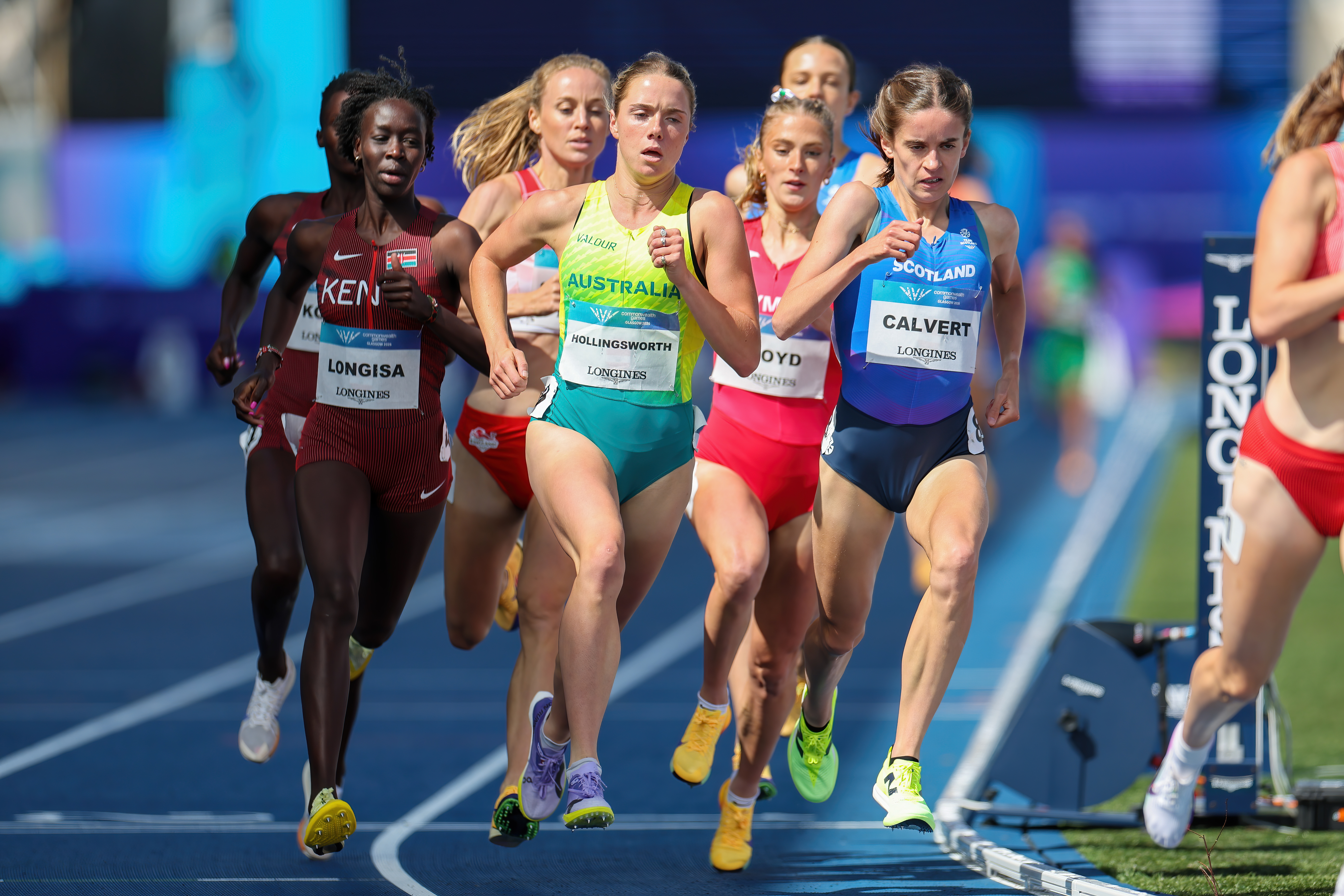
The three are among the favourites to capture the inaugural women’s mile, (women only ran as long as 880 yards when the Games were imperial distances in 1966). Australia has never won over the metric mile, one of just three events along with the triple jump and steeplechase, with the best finish being Sarah Jamieson’s silver in 2006.
The race will be fascinating, with each having strengths.
Hull is the class of the field – now a medallist at every possible championship an Australian can contest* after her silver in the 5000m – and a year or two ago, a fast race would clearly have been the 29-year-old’s to win against Caldwell and Hollingsworth, courtesy of her 3:50.83 PB in 2024 and 3:52.67 season’s best in 2025.
*Excluding the Oceania Championships but including the NSW Championships, which she last contested in 2014.
But both Caldwell and Hollingsworth are now sub-four-minute athletes. Caldwell broke through with 3:56.12 against a world-class field in May, while Hollingsworth ran 3:58.09 in what was effectively a time trial at the Box Hill Classic during the domestic season.
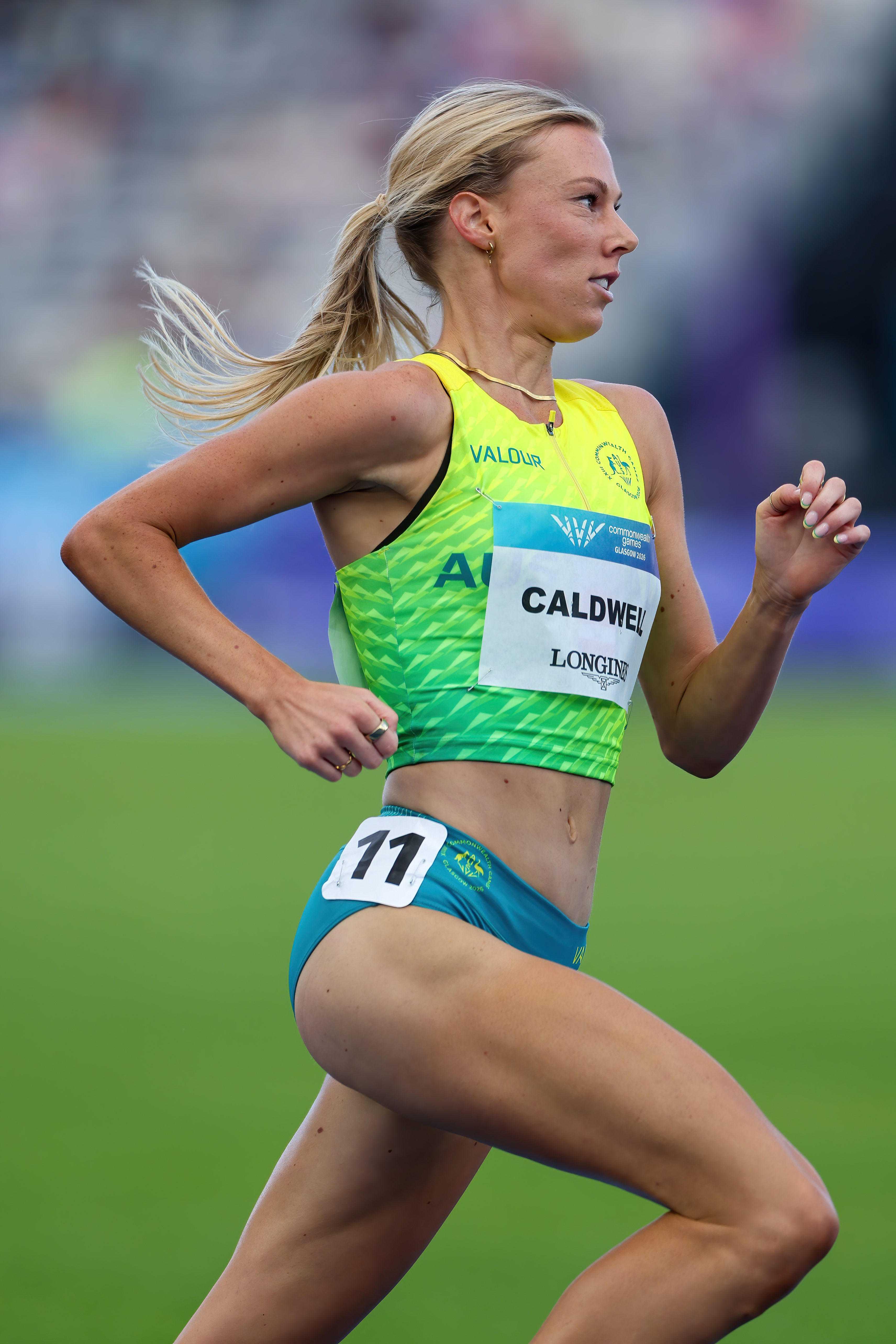
Caldwell is perhaps the more dangerous, with the 800m national champion having a Diamond League victory to her name and a stinging kick. Hollingsworth is also a strong finisher with a deceptive change of pace, and she brings more physicality to her running than the others – a trait that has occasionally been her downfall, and occasionally the downfall of others. She was disqualified in the semi-finals of the 800m at the 2024 world juniors after stepping inside the track following a physical altercation, and she caused the fall at this year’s Australian Championships that brought down Hull and impeded Caldwell. Hollingsworth was disqualified, then reinstated.
The magic of the mile is that there’s enough time for multiple tactics. A simplistic view would be that if the pace isn’t fast that Hull will favour a wind-up over the final two laps, Hollingsworth over the final lap and Caldwell as late as possible, but all have the versatility to adapt.
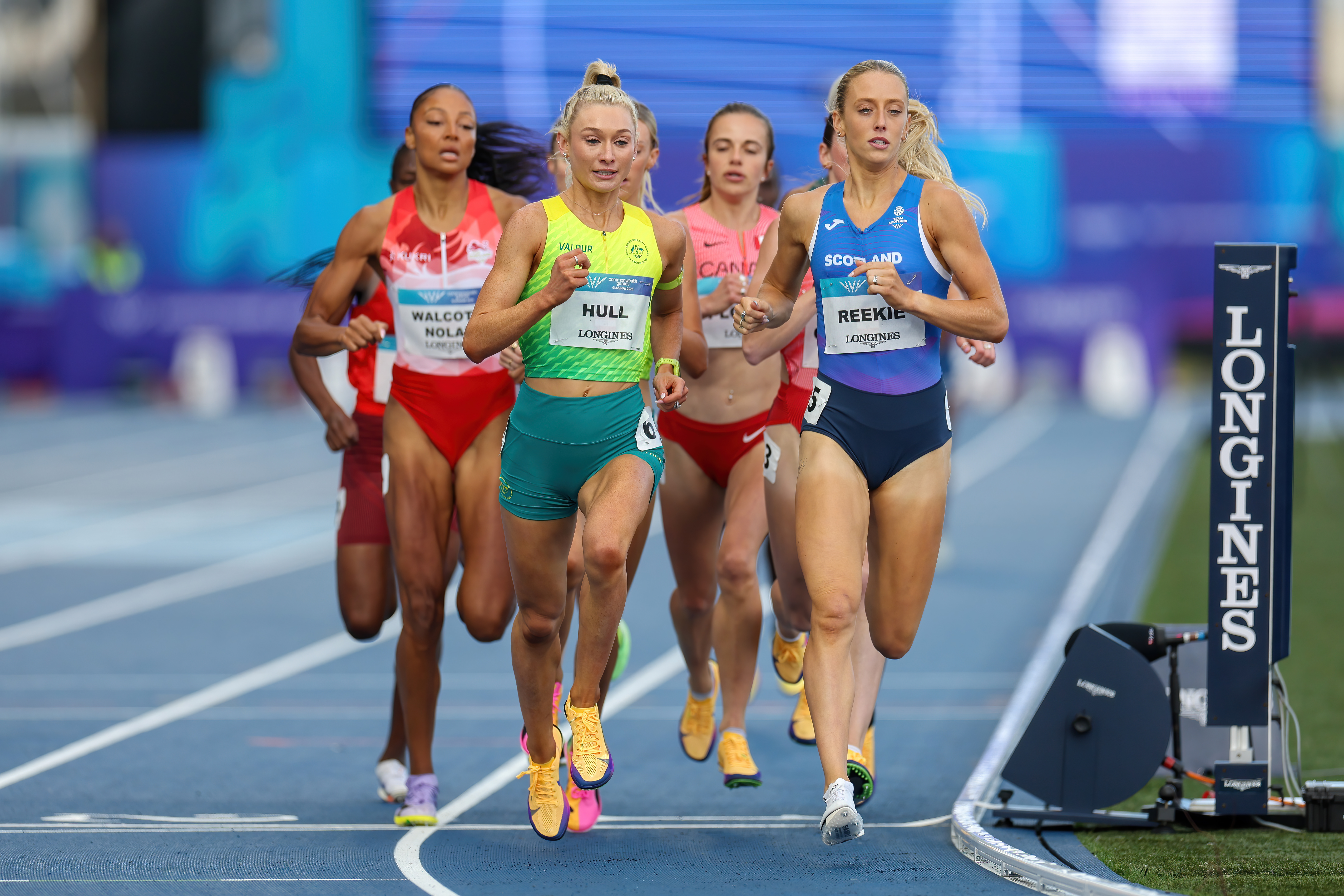
There’s also the tactics that others will bring to the race. Kenya’s Teresiah Gateri looked strong in winning the heat that Hull and Caldwell contested, while her compatriot Rosemary Longisa is championship hardened as the current NCAA champion. Scotland’s Jemma Reekie, a 1:55.61/3:58.65 runner, is the fastest over 800m in the field and will have the support of a home crowd.
Couldn’t script it better… Kerr vs Myers
The Commonwealth Mile, as the mile at these Games are being billed, couldn’t have been designed better. Drawing on a history of great mile and metric mile contests – from Bannister vs Landy in 1954, to Kip Keino in 1966 and Filbert Bayi in 1974 – the set up is clear: new world record holder against the next generation.

Josh Kerr, 29, boldly set the mile world record last month at the London Diamond League in a metronomic 3:42.66. It was a perfect run in perfect conditions, with great human pacing, wave lights and spikes specially engineered for the precise pace he was targeting in Project 222. He ran a 3:27.62 1500m PB en route.
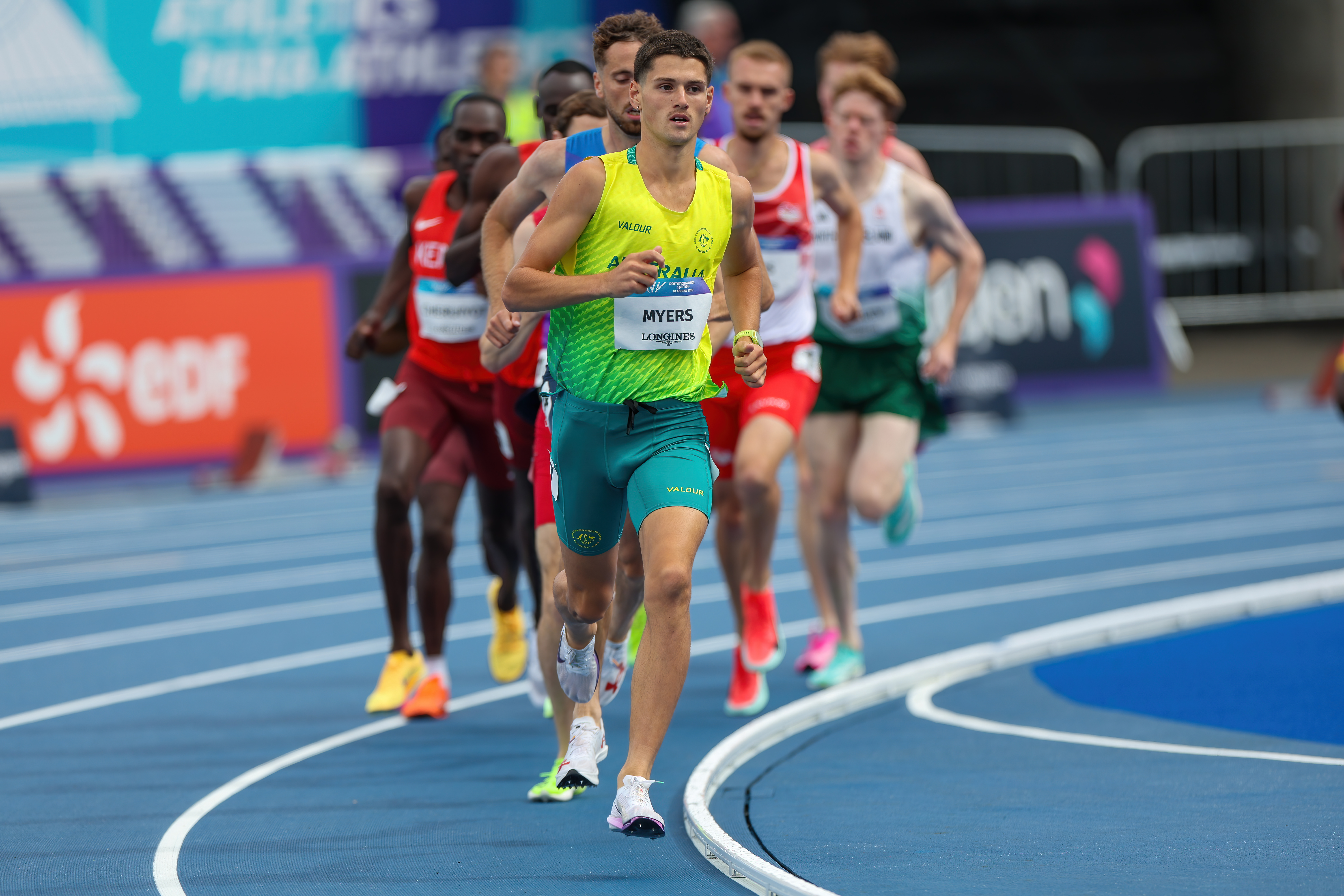
Cameron Myers, 20, didn’t race in London, but has been the form miler on the circuit, including Australian records of 3:28.00 1500m and 3:46.06 mile. And as a student of the sport, he knows that championship races are different.
“You have to deal with a lot more factors,” Myers said after his heat.
“I think we saw that at Paris 2024, Jakob [Ingebrigtsen] had run two seconds better than anyone else in the field, and he still wasn’t able to win. I think it shows you that championship racing is not about the time you have on paper; it’s how you execute.”
Cameron Myers
Kerr, of course, can execute. Not just a time trialist, he won the 2023 world title and has minor medals from the 2021 and 2024 Olympics, as well as twice winning the 3000m at the world indoors. Similarly, his compatriot Jake Wightman, was 2022 world champion and runner-up last year, while Kenya’s Timothy Cheryiout is the 2021 Olympic silver medallist and 2019 world champion.
Reigning 1500m champion Olli Hoare progressed to the final after a protest, but isn’t the athlete he was four years ago in Birmingham, where he set a Games Record. Similarly, Adam Spencer, who won bronze over 1500m at the World Indoors earlier this year, hadn’t raced between the Australian Championships in April and the heats. Nonetheless, they add to the rich tapestry of athletes in the final.
It should be a race for the ages.