
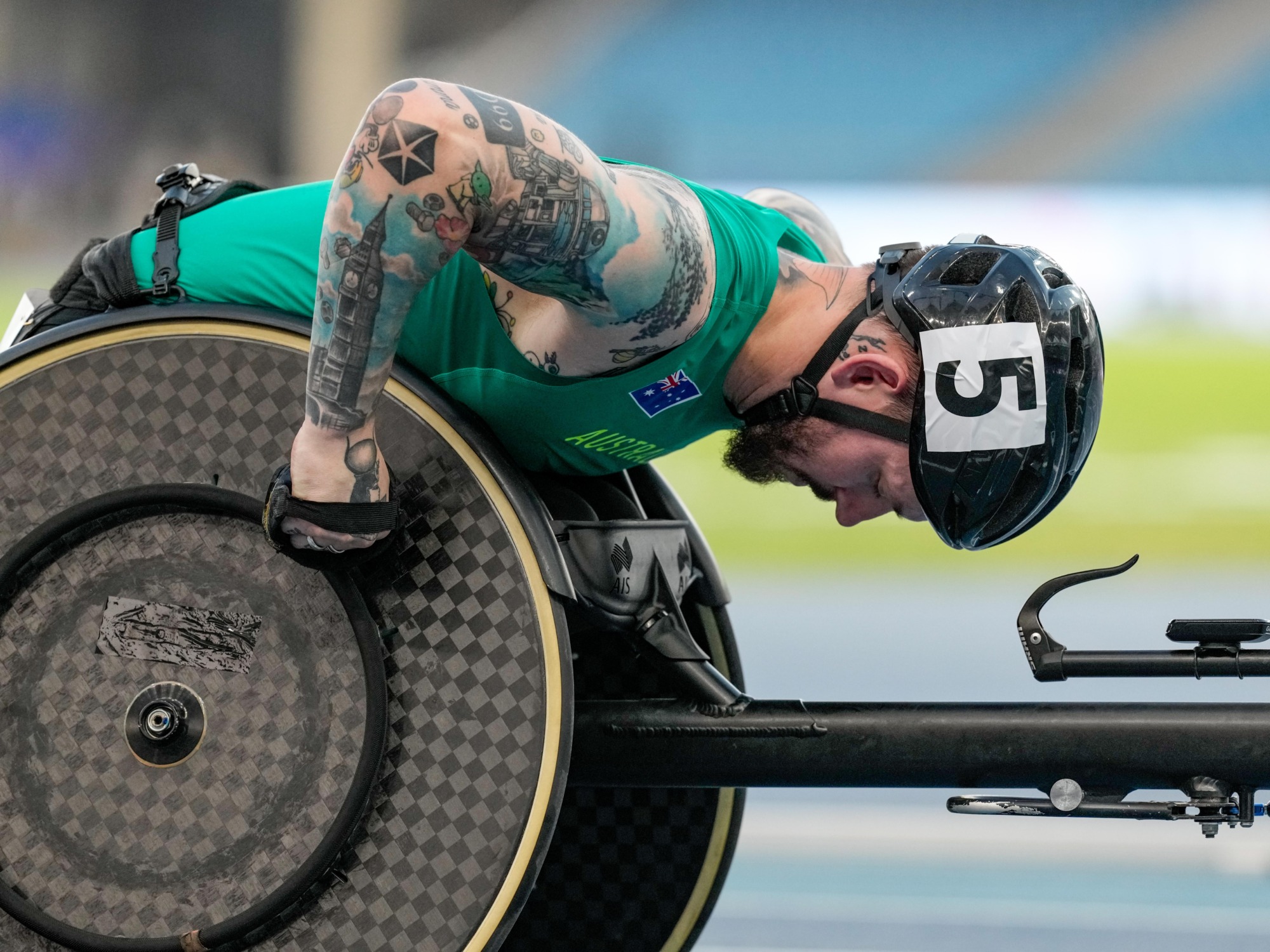
Three years ago, Rheed McCracken didn’t want to race anymore. After a decade spent amassing twelve global medals, none of them gold, the relentless pursuit of that top step on the podium had taken its toll. His personal life had deteriorated and for the first time in his career, he finished last in a major championship final. Not once, but twice.
“I was struggling with a lot of stuff,” McCracken says. “I was very lost, miserable. It just felt like I was letting people down. I was throwing it away really.”
Following that world championships in 2023, McCracken met with his coach Louise Sauvage. He thought it would be a normal review meeting, perhaps a tick-the-box exercise. But Sauvage had a different idea. She knew that something had to change.
“I didn’t think Rheed could keep going the way he was. I sat him down and said it was a decision he had to make, but he needed to change a lot of things in his life.”
Louise Sauvage
“It was his decision if he kept going. I believed in Rheed. I wanted him to believe in himself: that he could do this and that we could do this.”
McCracken remembers that meeting similarly. It not only changed his career, but his life too.
“She gave me a decision where she was like, ‘whatever you’re doing in your personal life isn’t good. I’ll help you get out of whatever situation you’re in, but I won’t work with you like this’,” he says. “She was really caring about it all, but she was just saying I couldn’t keep turning up this way. I couldn’t keep going the way I was going.”
Since that meeting, McCracken has resurrected his career. Within a year, he turned his life around to scrape a medal at the 2024 Paralympic Games. Another year and he had worked himself into career-best form. For a fleeting moment during the T34 100m final at the 2025 World Para-Athletics Championships, that elusive gold medal seemed within reach. Another miss, but he had never been closer.
This is the story of Rheed McCracken, one of the most decorated Australian track and field athletes in history. It’s a story of a little kid from Bundaberg with a big dream. A story still writing it’s fairytale conclusion, but one filled with the persistence and battles with self-mastery that we love so much about our sport.
A Kid from Bundaberg with a Dream
In an era of teenage athletics prodigies, we might have become desensitised to the absurdity of a fifteen year old Rheed McCracken debuting in front of 80,000 people at the 2012 London Paralympic Games.
Just three years earlier, an even younger McCracken had sat on a plane next to Sunrise TV-presenter David Koch. McCracken mentioned his dream of becoming a wheelchair racer and that his hero was three-time Paralympic gold medallist Kurt Fearnley. Months later, Koch flew the McCracken family to Newcastle to meet Fearnley and his coach Andrew Dawes.
“”He was only a scrawny little fella and he absolutely idolised Kurt,” Dawes remembers. “I didn’t think too much at the time because he was a tiny little kid from Bundy. But he wanted to do some training so I sent him up some programs via email to his Mum’s work and he kept turning up.”
McCracken took that opportunity with both hands.
“I don’t know if Dawesy actually offered to coach me, or it just happened,” he says. “Whatever he wrote on a program, I followed it to the letter. It was an opportunity to prove myself to people, and myself. I wanted to do something.”
That fateful meeting on the plane became a Paralympic dream realised in the blink of an eye. It all happened fast enough that McCracken had little time to overthink the enormity of the experience.
“Underneath the stadium, you can feel the energy and you can hear the crowd above you. That was new to me, but I just remember not having any fear.”
Rheed McCraken
“The population of Bundaberg at the time probably could have fit into the stadium, but I didn’t know any different.”
McCracken came away from those Paralympics with a silver and bronze medal in the T34 100m and 200m respectively. A few years later, McCracken made the move to Newcastle to fully immerse himself in the pursuit of a newly hatched gold medal dream. Still a teenager, another silver and bronze medal at the 2016 Paralympic Games still felt like a step forward in the perpetually improving world of Paralympic sport.
The Weight of Expectation
In 2017, McCracken made his first major breakthrough by shattering the T34 100m world record by clocking 14.80. He had bettered the mark of the greatest T34 athlete in history, Walid Ktila of Tunisia. Ktila would go on to become a 21-time global champion, a dominance that would play on the mind of McCracken at every major championships, including later that year.
“I put so much emphasis on [Walid]. I kept convincing myself that I didn’t know how to beat him. That he’s just going to win. I’m just going to turn up there and he’s going to win,” McCracken says regretfully. “All I wanted was to win a Paralympic gold medal, a world championship gold medal, but I couldn’t get past thinking that he was so good in those environments even if I’d beat him all season. I just couldn’t get past that.”
At those 2017 world championships, McCracken took silver behind Ktila again, clocking a time almost a full-second slower than the times he had laid down all season. He was gutted.
As the years passed by, the pressure McCracken placed on himself mounted.
“A lot of it came from being young, having success early on, and people just assuming it was going to happen for me. Winning gold was what I wanted, but I thought it was what other people wanted as well and I put that on myself,” he says. “It took me a long time to realise that all people really want is for you to be happy. I thought it was going to change my life and I don’t know if it will, I still haven’t won that gold, but I think about it now and I’m super proud of what I’ve done. At the time, I probably wasn’t racing for the right reasons.”
At the 2019 World Para-Athletics Championships and the 2021 Tokyo Paralympic Games, Ktila won gold to McCracken’s silver two more times. No matter how many times McCracken could get the upper hand during the regular season, he would fall short on the day that truly mattered. It had become a debilitating pattern that with each year had become harder to process.
McCracken knew he had to try something new, so he moved from Newcastle to Sydney to start afresh under the tutelage of Louise Sauvage who was fresh off coaching Madison de Rozario to two gold medals in Tokyo.
“I needed a change, I wanted something different. I trusted Dawesy 100% but I needed a change in my life,” McCracken says.
The upturning of one way of life in pursuit of another can be a tough transition. When improvement becomes the bare minimum expectation, every metre in training can become a burden if you let it. In reality, the flipping of one page to another does not automatically expunge the baggage of the past. For McCracken, the move initially created a new kind of pressure.
“I put a lot of pressure on myself again with the move and then I didn’t race well,” he says. “I was having a lot of issues in my personal life, which was reflecting in my training. I didn’t want to go to worlds, I was open about that. But I did it and it didn’t go well.”
For the first time in almost a decade, McCracken came home without a medal. Then came the meeting and Sauvage’s ultimatum: you’re either in or your out.
The Move That Changed Everything
It’s easy to imagine McCracken sitting their that day in a Sydney café, listening to those words. They would have stung, but deep-down he knew they rang true. That day, a great of our sport refused to let another great fade into obscurity.
The Rebuild
“It gave me the boost to change my life,” McCracken says. “From there, I did work really hard on myself with good people around me. I had an amazing team and we just focused on putting a really good year together.”
The rewards for this revolution of self did not emerge overnight. McCracken had to fight hard to regain his place in the upper echelons of his event. At the 2024 Paralympic Games, he still fell short of the T34 100m podium for the first time in his Paralympic career before an securing an unexpected bronze medal in the 800m a few days later.
“That was the hardest medal I’ve won,” he says. “When I was going onto the podium, I remembered thinking how not long ago I’d thought I’d never be here again. It had been so hard getting back, and I knew it was a long term game, but I soaked it up that day.”
Closer Than Ever
As the new Paralympic cycle commenced in 2025, McCracken began to build the momentum he had worked so hard for. Throughout the year, he set multiple Australian records at home and overseas.
“It’s the best I’ve ever raced, “ he says. “It was one of the most put together years I’ve had so far. I didn’t want it to stop.”
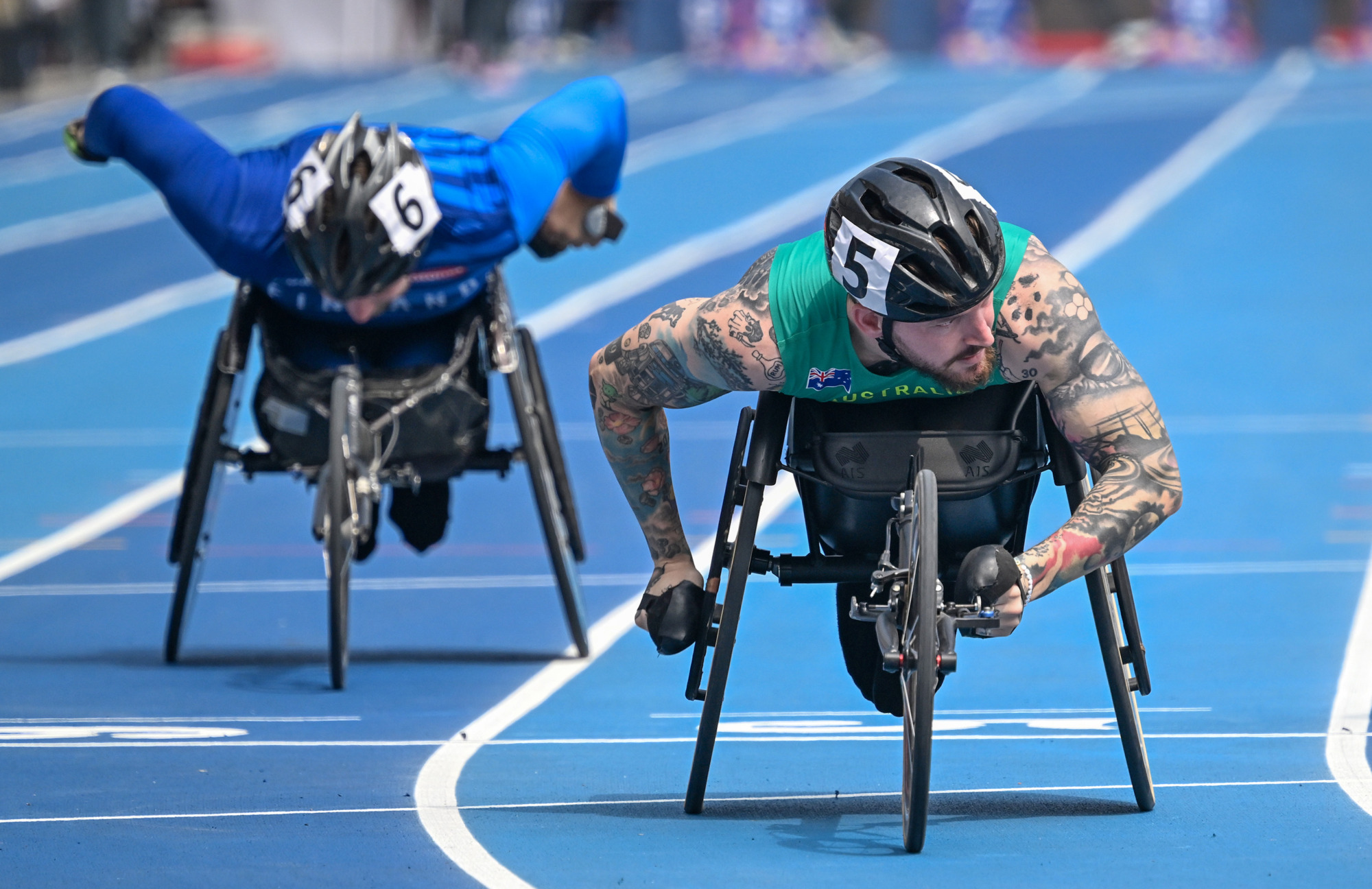
McCracken arrived at the 2025 World-Para Athletics Championships filled with confidence. A silver over 400m should have only added to that feeling, but when he crossed the line he felt discomfort in his chest. Scans would later reveal that he had broken his rib. On the precipice of his redemption moment, it all threatened to unravel.
“I couldn’t believe that I’d worked this hard, got this far, and this was going to be how my year ended,” he says. “But I just said f*ck it. I wasn’t going to let that stop me.”
This race might have been the perfect metaphor for a career spent overcoming self-doubt. That in the moment when self-doubt might have been forgiven, McCracken’s belief in himself had never been stronger. For ninety metres, with every desperate push of the wheel, the fairytale looked like it might come true. At long last, would he have the crowning moment he had fought so hard for?
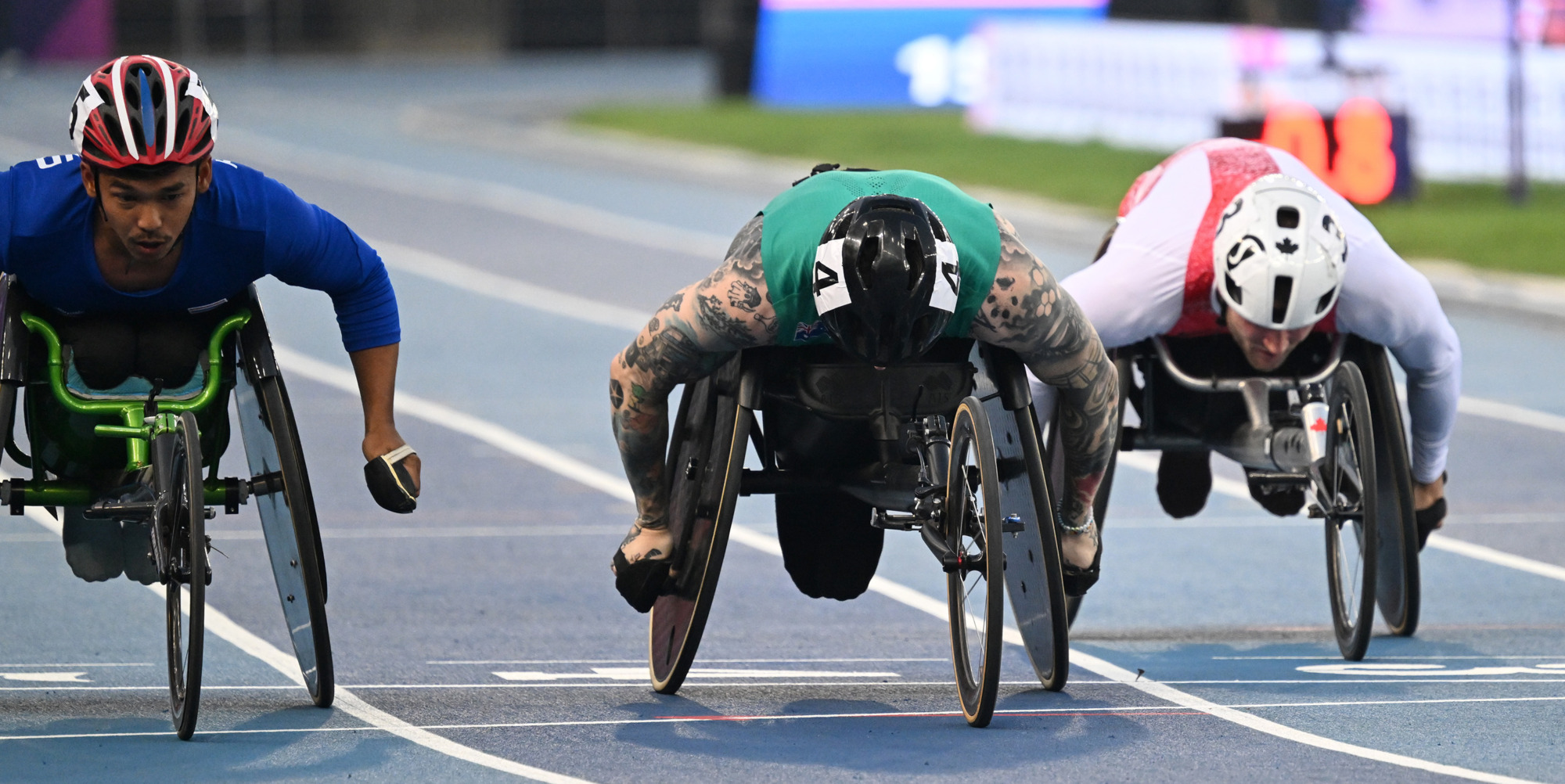
Those final metres played out in slow motion. It wouldn’t be Ktila that would deny him again, but a new rival flashing past on the line. Four one-hundredths of a second separated McCracken from the medal he had never won and the ones that he had now won fifteen times.
“There was a moment in that race where I thought I was going to win it,” he says. “From that moment, it fell apart. A gold would’ve topped off the perfect year, but I know I can build on that.”
Against the backdrop of where he had been just two years earlier, however, this was a result that will only serve to fuel the fire that burns like never before.
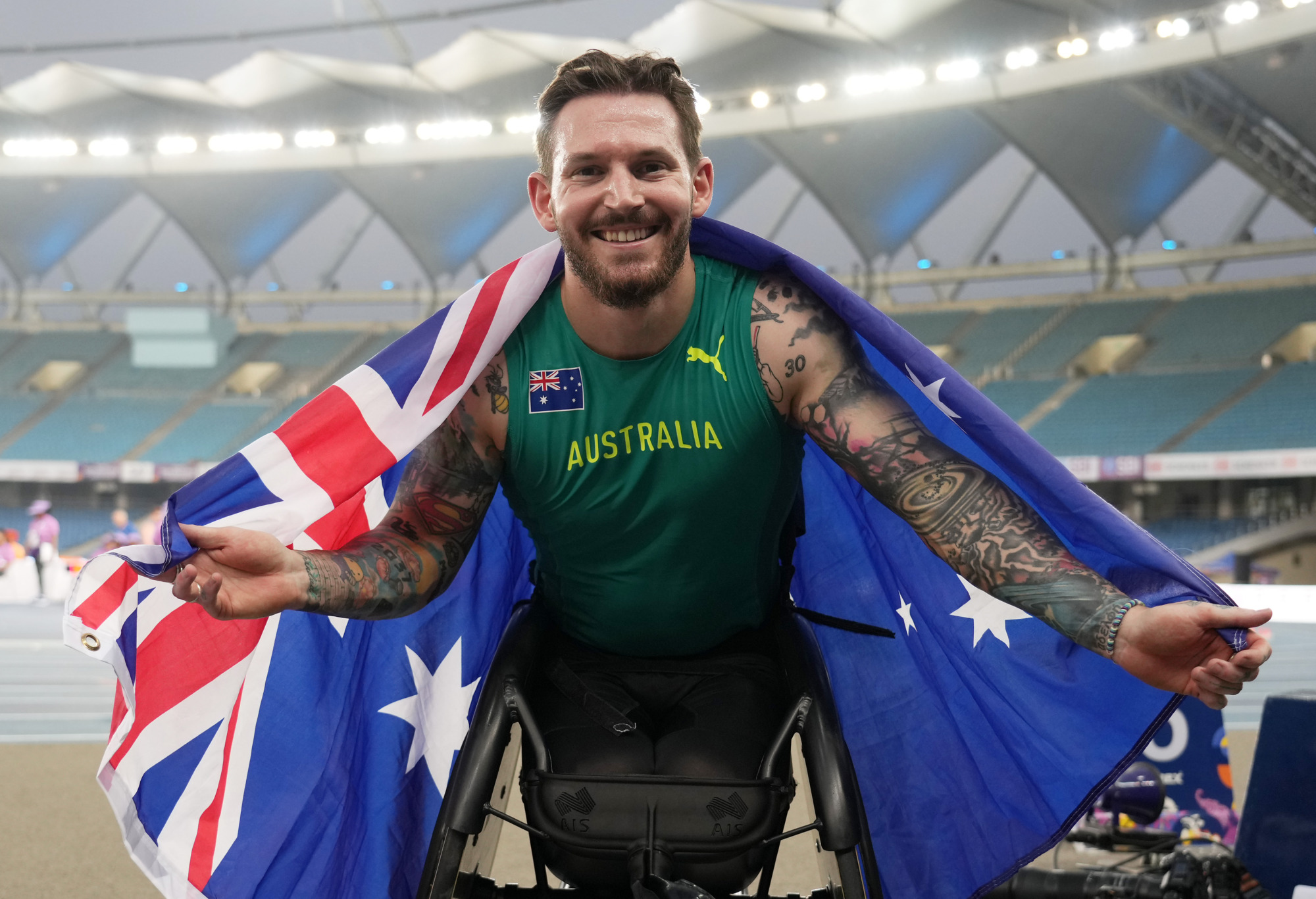
“He’s gone from strength to strength,” Sauvage concludes. “I honestly believe he can go to the next level. We’re gonna get that gold.”
For McCracken, he knows the momentum will only build while he continues to love the pursuit of the dream even more than the dream itself.
Although this is the end of this story, it’s not the end of his story.
And trust me, we are in for one heck of an ending!
Read Jaryd Clifford’s other features
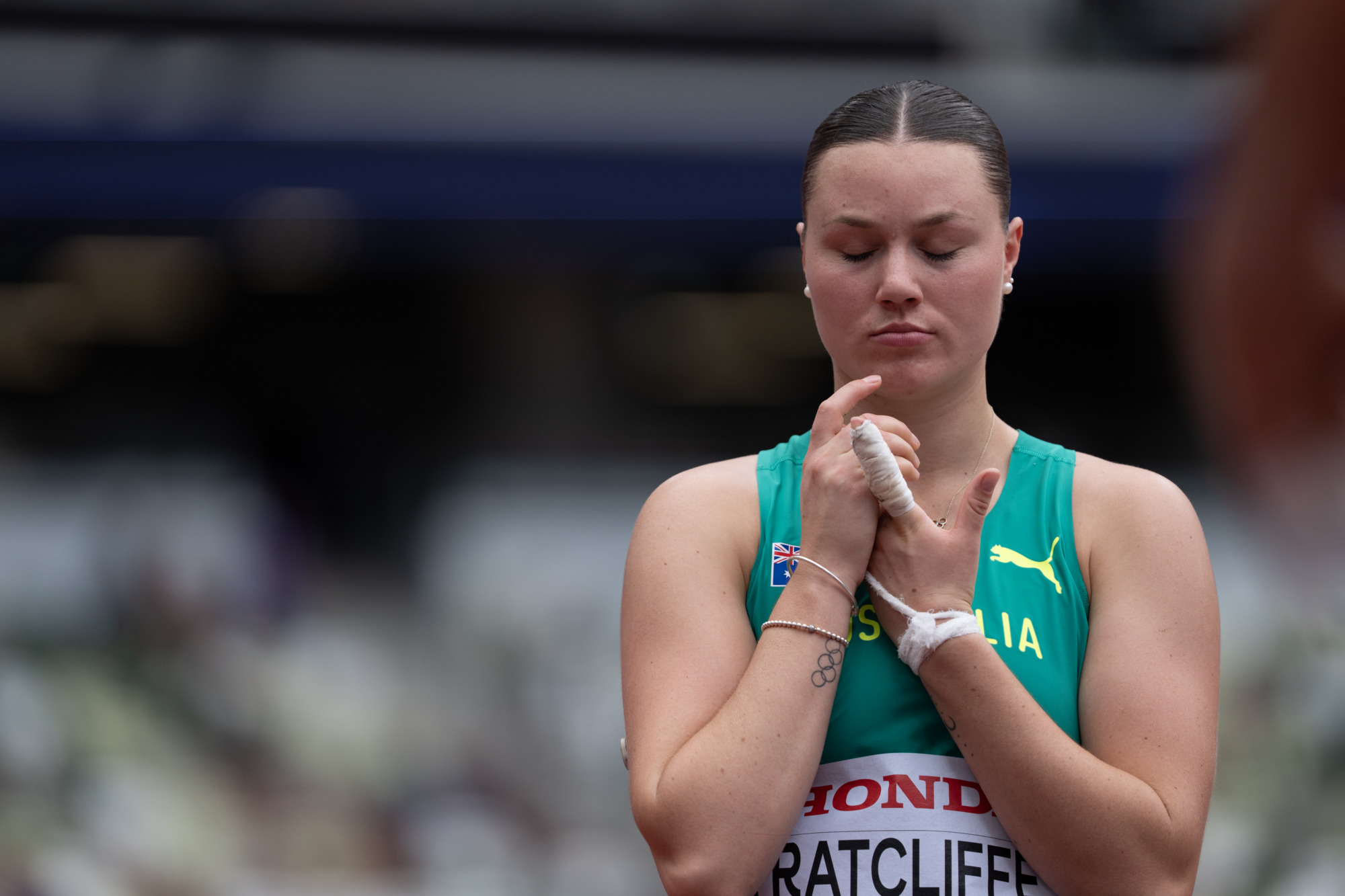
- Steph Ratcliffe: Strength, Struggle and the Making of an Olympian
 When Steph Ratcliffe steps into the circle, her world becomes simple. There is an elegance to the hammer throw, a rhythm of power and finesse. On the good days, she feels for the ball and moves with it, every turn an effortless execution of a dance she’s performed thousands of times before. The tension is perfect, the ball feels weightless. As it leaves her hand, she already knows its fate.
 - Rheed McCracken: Chasing Gold, Finding Himself
 Three years ago, Rheed McCracken didn’t want to race anymore. After a decade spent amassing twelve global medals, none of them gold, the relentless pursuit of that top step on the podium had taken its toll. His personal life had deteriorated and for the first time in his career, he finished last in a major championship final. Not once, but twice.