
The 2026 Paris Diamond League delivered the platform for new Australian record in the 1500m by Cam Myers and 800m by Sarah Billings.
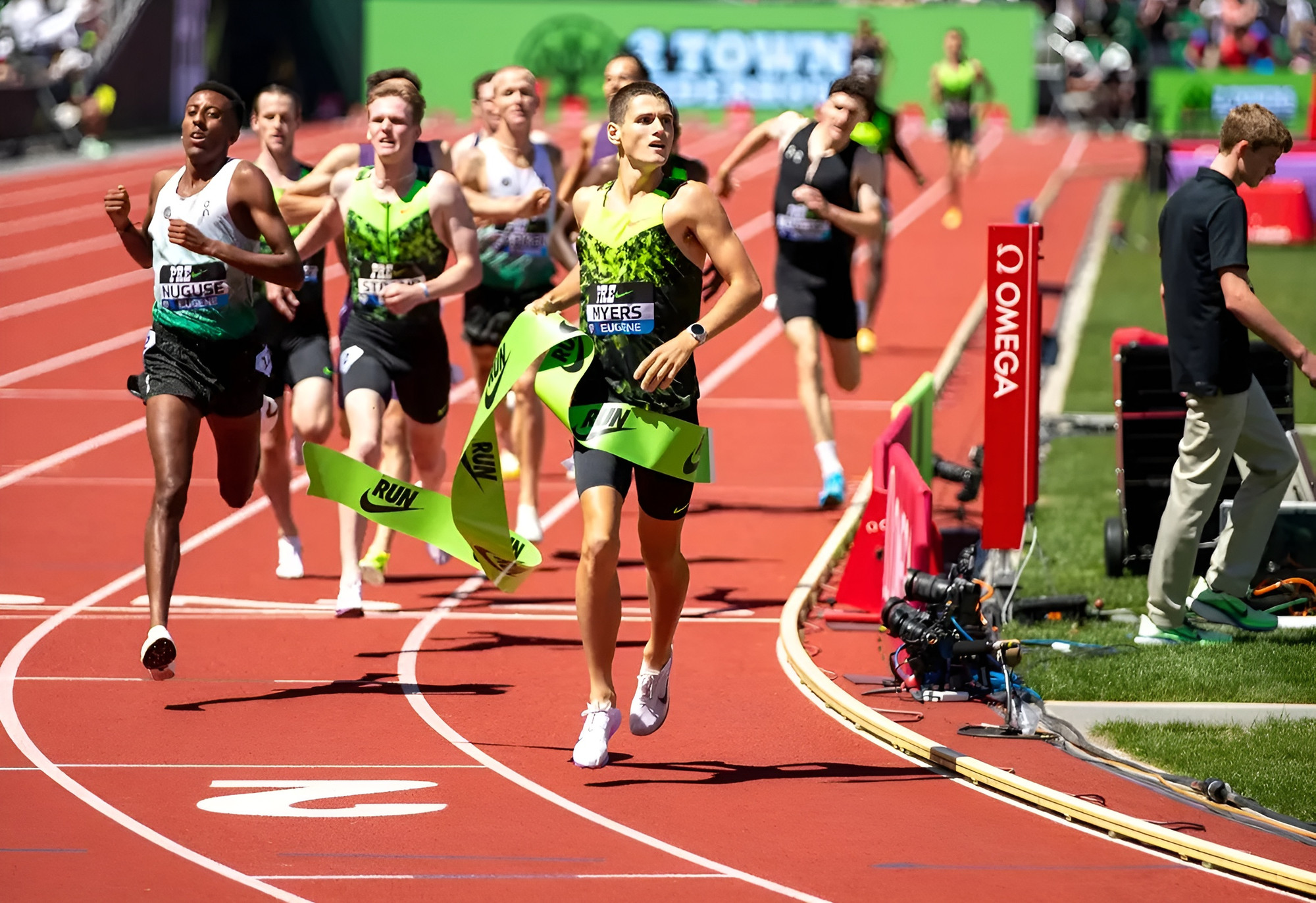
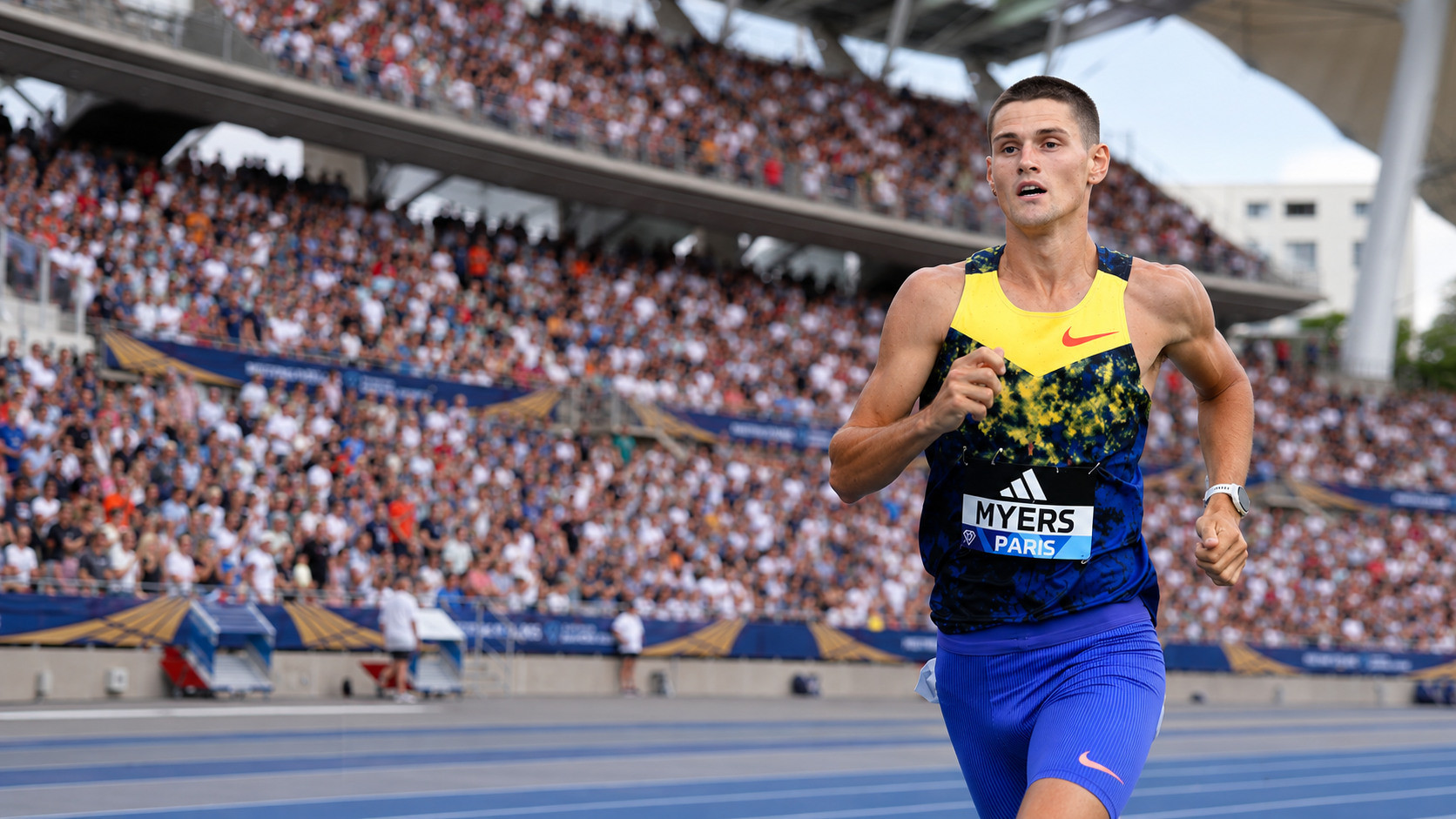
Myers improved his own world lead with the standout performance of his career to date, following the pacemakers before running away for a convincing victory in 3:28.00.
The run improved Olli Hoare’s national record of 3:29.41 from 2023 and places the 20-year-old 12th on the global all-time list.
| # | Mark | Competitor | Venue, Year |
|---|---|---|---|
| 1 | 3:26.00 | Hicham EL GUERROUJ | Roma, ’98 |
| 2 | 3:26.34 | Bernard LAGAT | Bruxelles, ’01 |
| 3 | 3:26.69 | Asbel KIPROP | Monaco, ’15 |
| 4 | 3:26.73 | Jakob INGEBRIGTSEN | Monaco, ’24 |
| 5 | 3:27.37 | Noureddine MORCELI | Nice, ’95 |
| 6 | 3:27.49 | Azeddine HABZ | Paris, ’25 |
| 7 | 3:27.64 | Silas KIPLAGAT | Monaco, ’14 |
| 8 | 3:27.65 | Cole HOCKER | Paris, ’24 |
| 9 | 3:27.72 | Phanuel Kipkosgei KOECH | Paris, ’25 |
| 10 | 3:27.79 | Josh KERR | Paris, ’24 |
| 11 | 3:27.80 | Yared NUGUSE | Paris, ’24 |
| 12 | 3:28.00 | Cameron MYERS | Paris, ’26 |
Myers ran away from local hero Azeddine Habz who faded for second in 3:29.80 and Great Britain’s Jake Wightman, third in 3:29.95.
“Getting the Australian record means so much because obviously Olli and Stewy were athletes that I looked up to a lot growing up. It’s just mental.”
Cameron Myers
“It’s nice to finally tick it off! I knew I had something good in my legs, so I’m glad I was able to show it,” Myers said.
“Having that exterior pressure on yourself to get a time takes away from the main part of the race, which is winning. It’s going to be huge for me going forward.”
Myers originally planned to return to Australia to tune up ahead of the Commonwealth Games and the rest of the European season, culminating in the inaugural Ultimate Championships, but instead will contest the Prefontaine Classic in Eugene next weekend.
The Canberran’s splits were impressive, through the finishing line at 41.3, 1:38.5 (57.2), 2:33.8 (55.3) and a 54.2 final lap; or alternatively through the start line at 55.6, 1:52.5 (56.9), 2:47.4 (54.9) and a 40.6 final 300m.
Myers run is exactly two seconds outside of the world record of 3:26.00 set in 1998 by Hicham El Guerrouj and is the closest that the Australian record has been to the world record since the 1974 Commonwealth Games, where Graham Crouch ran 3:34.42 for fifth behind the front running world record set by Filbert Bayi at 3:32.2 in what was a rewriting of the all-time lists of the day.
Herb Elliott (twice, 3:36.0 in 1958 and 3:35.6 in winning Olympic gold in 1960) and John Landy (3:41.8 en route to his mile world record in 1954) are the only Australians to have held the 1500m world record.
Landy and Elliott’s marks were dominant in their days and stayed within the top 10 on the Australian all-time lists for 22-years and 50-years respectively. Crouch’s mark remained in the top 10 almost as long, until 2023, while the man who followed him in the record books, Michael Hillardt, just slid out of the top 10.
Billings breaks through
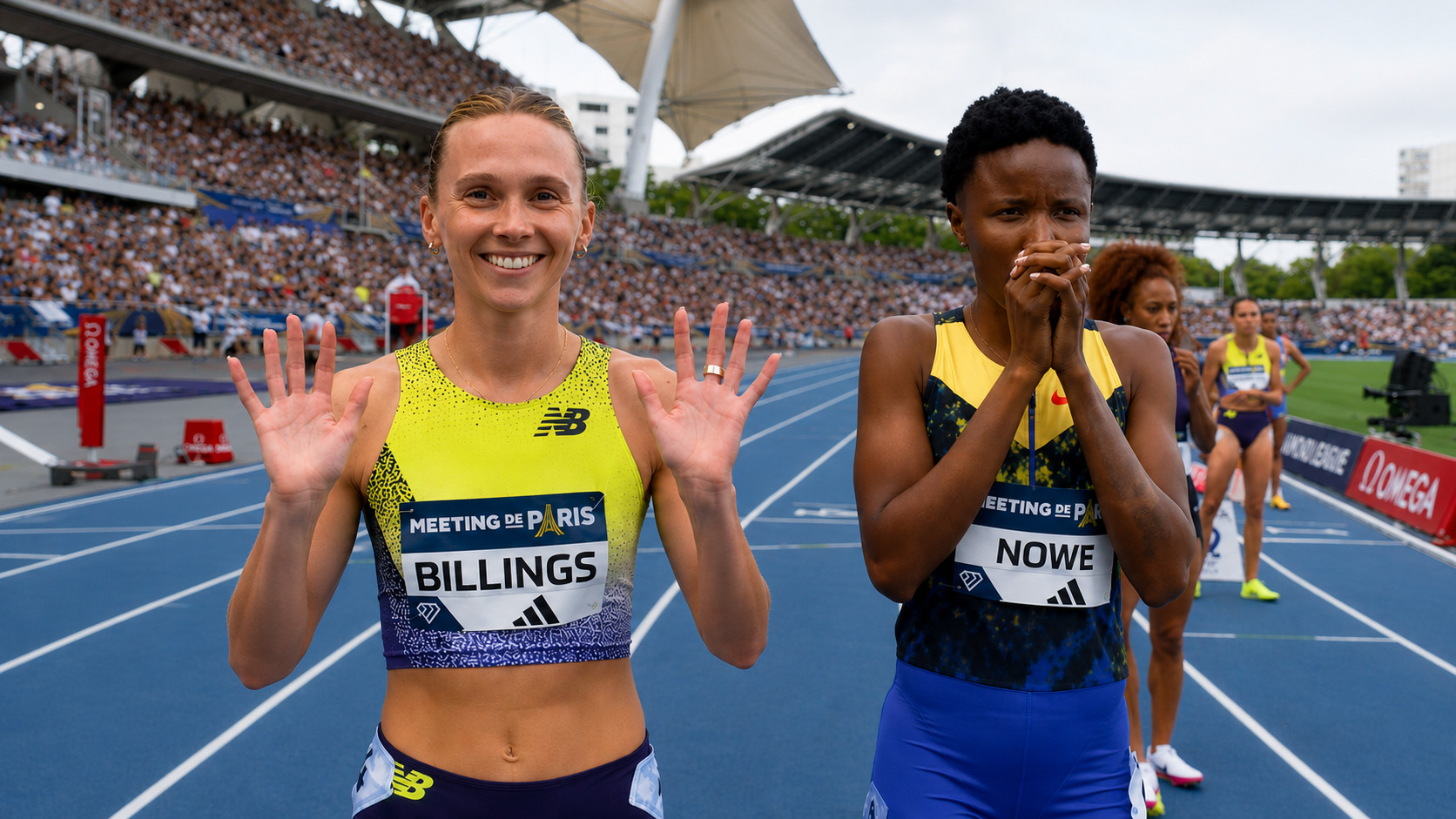
Sarah Billings has the relatively rare distinction of now being a national record holder, without having yet won a national medal over the distance.
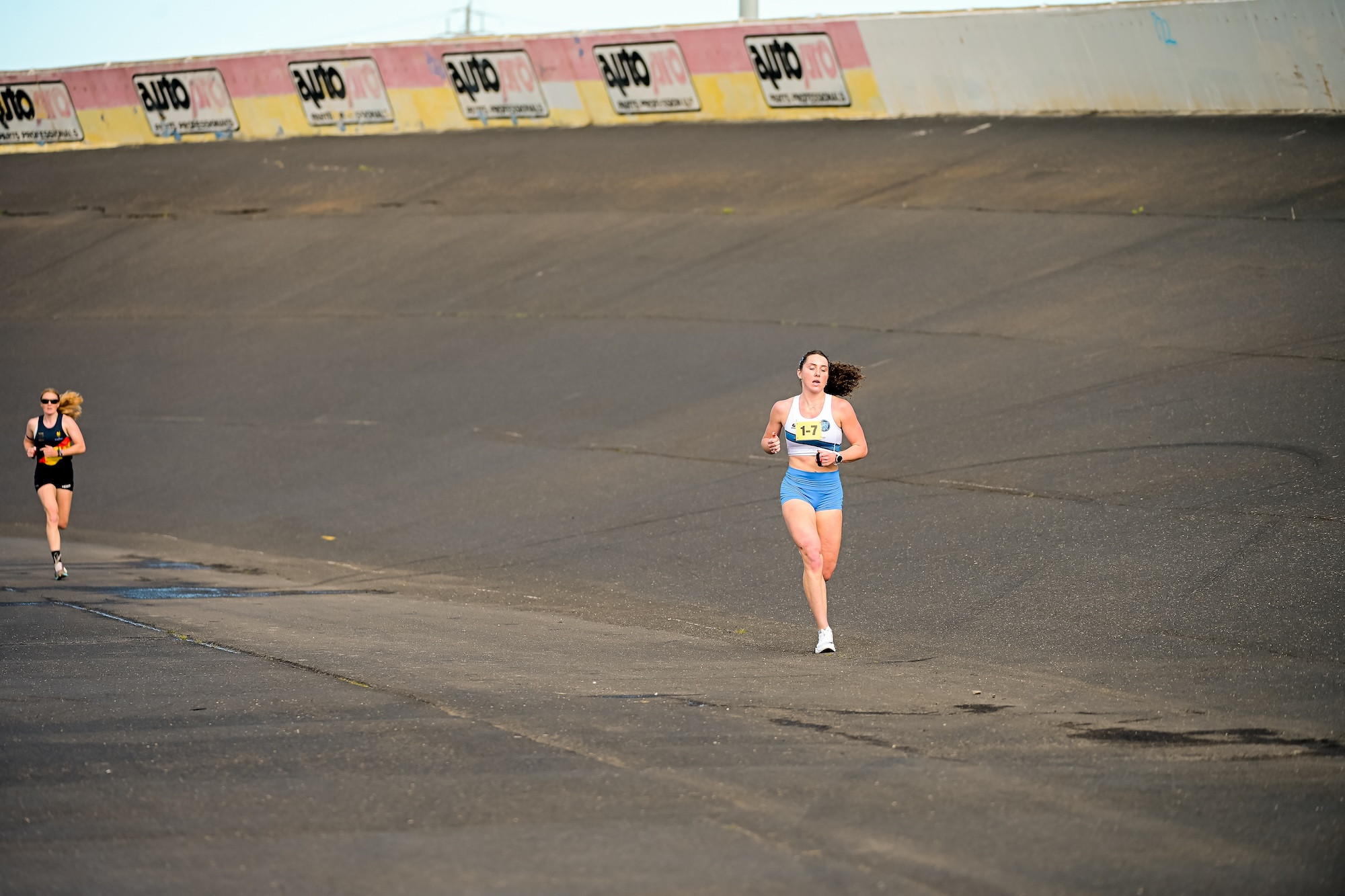
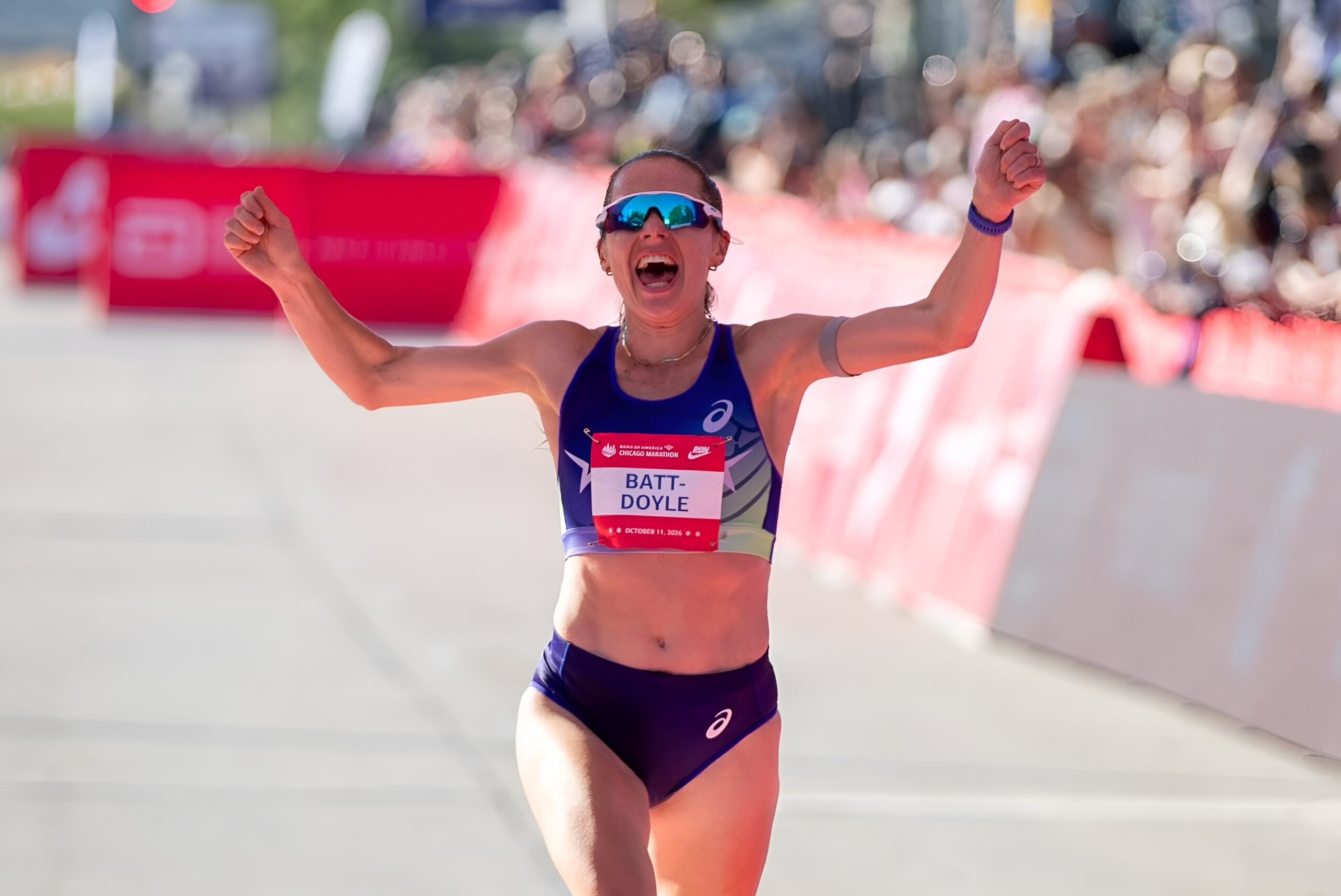
The 28-year-old clocked 1:57.01 for sixth in a deep 800m in Paris, where the top six all set personal bests, headed by Audrey Werro’s 1:53.80 attempt on the 1:53.28 world record set in 1983 by Jarmila Kratochvílová.
Billings’s time bettered the 1:57.15 national record set by Jess Hull at last year’s world championships.
The Victorian is the sole 800m representative in the Australian team for the Glasgow Commonwealth Games. She finished second in the controversial 1500m final at this year’s Australian championships, emulating the same placing the year prior, when she also won a bronze over 3000m.
“The depth of middle-distance in Australia is insane, so to run an Australian record when all the other girls are flying is just so exciting,” Billings said.
“When I was in my early 20’s, I was doubting whether I was an 800m runner or not. It’s nice to have kept with it because it used to be a scary event for me, but now I have heaps of fun doing it.”
Sarah Billings
Billings’s trajectory to world class distance runner has been a steady one, starting with raw speed (24.39s over 200m at 15 and 54.39s 400m as a 17-year-old) before stepping up in distance.
| Year (Age) | 400m SB | 800m SB | 1500m PB |
| 2012 (14) | 56.74 | ||
| 2013 (15) | 55.66 | 2:16.89 | |
| 2014 (16) | 54.73 | ||
| 2015 (17) | 54.39 | 2:09.67 | |
| 2016 (18) | 54.71 | 2:05.77 | |
| 2017 (19) | 54.69 | 2:03.66 | |
| 2018 (20) | 57.58 | 2:07.01 | 4:33.91 |
| 2019 (21) | 2:07.44 | 4:16.10 | |
| 2020 (22) | 2:06.29 | 4:12.78 | |
| 2021 (23) | |||
| 2022 (24) | 2:03.09 | 4:09.73 | |
| 2023 (25) | 2:01.66 | 4:06.77 | |
| 2024 (26) | 1:58.94 | 3:59.59 | |
| 2025 (27) | 1:57.83 | 3:59.24 | |
| 2026 (28) | 1:57.01 | 3:58.81 |
After a stagnant period, where for nearly the first two decades of the millennium only Tamsyn Manou and Madeleine Pape punctured the two minute barrier, the Australian all-time list has been continuously rewritten over recent years, including Charlene Rendina’s long standing national record of 1:59.0 being bettered five times in as many years, by four different athletes:
- Catriona Bisset 1:58.09 in 2021
- Catriona Bisset 1:57.78 in 2023
- Claudia Hollingsworth 1:57.67 in 2025
- Jess Hull 1:57.15 in 2025
- Sarah Billings 1:57.01 in 2026
Billings chance of a podium finish have been bolstered by news of Olympic champion Keely Hodgkinson bypassing the Commonwealth Games to focus on the European Championships. Olympic bronze medallist Mary Moraa will also not be in Glasgow, not being selected in the Kenyan team, nor will her world championship finalist cousin Sarah Moraa. However, their compatriot, reigning world champion Lilian Odira, will line up.