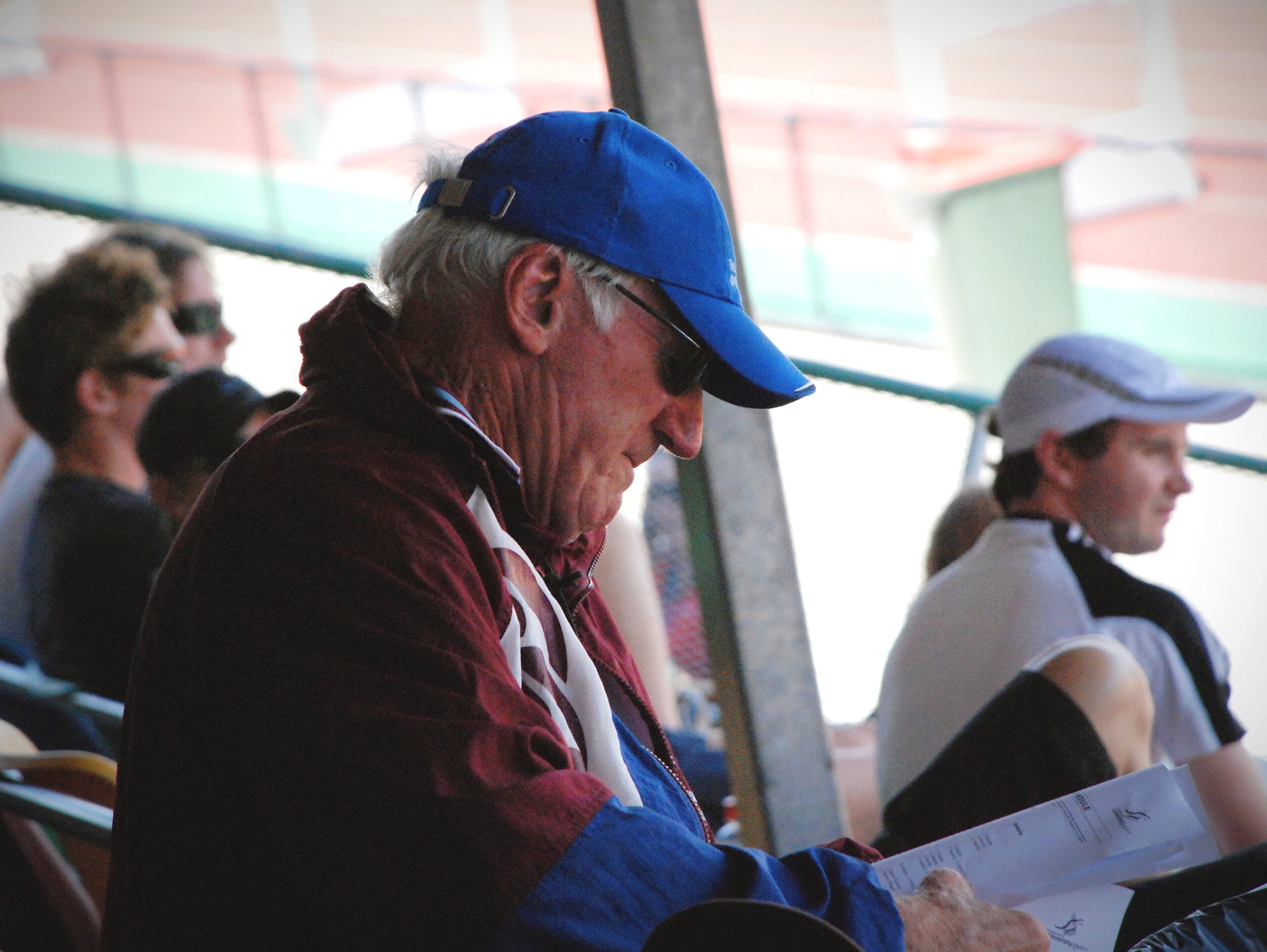
He took Robert de Castella from the Xavier College team to a world marathon title, and for a generation his methods shaped how Australia trained its distance runners.
Pat Clohessy AM, one of the most influential figures in the history of Australian distance running, has died aged 93.
Robert de Castella shared the news on Instagram, saying his coach, mentor and friend had passed away peacefully with his family by his side. “Like a second father, I am blessed to have had this great man mentor, guide and inspire me with his generosity, care, & wisdom,” de Castella wrote. “We are so fortunate to have known this great man.”
Clohessy was born on 16 May 1933 and grew up in Muswellbrook and Tamworth in country NSW, where his father was the town postmaster. He came to the sport relatively late, joining Muswellbrook Athletics Club in 1953. Within a year he had won the 880 yards and the mile at the NSW Country Championships, both in record time.
He moved to Sydney to run for Randwick Botany Harriers, where he became a friend and team-mate of Allan Lawrence, the 1956 Olympic 10,000m bronze medallist. It was Clohessy who urged Lawrence to apply to the University of Houston. Lawrence was nearly 27 and had never finished high school, but was still granted an athletic scholarship. At Houston he set world indoor records at two and three miles and won the 1960 NCAA 5000m, before becoming a successful coach in what would be his adopted homeland. Clohessy studied and lectured at Houston himself, and won the NCAA three miles in 1961 and 1962 and the AAU three miles in 1963.
At 29, late in his running career, Clohessy made the Australian team for the 1962 British Empire and Commonwealth Games in Perth. He ran both the mile (4th in his heat in 4:10.94) and three miles (7th in 13:42.19). In the longer race he finished behind New Zealand’s Olympic champion Murray Halberg, with Ron Clarke also ahead of him.
Back home, Clohessy became a teacher and athletics coach at Xavier College in Melbourne, where he stayed for 16 years. One of the schoolboys in his team was Rob de Castella. With Clohessy as his coach, de Castella went all the way to the top of world marathoning. He won in Fukuoka and Boston and Rotterdam, took Commonwealth gold in Brisbane in 1982 and again in Edinburgh in 1986, and won the inaugural world championship marathon in Helsinki in 1983. Few coach-athlete partnerships have run unbroken from a school team to a world title.
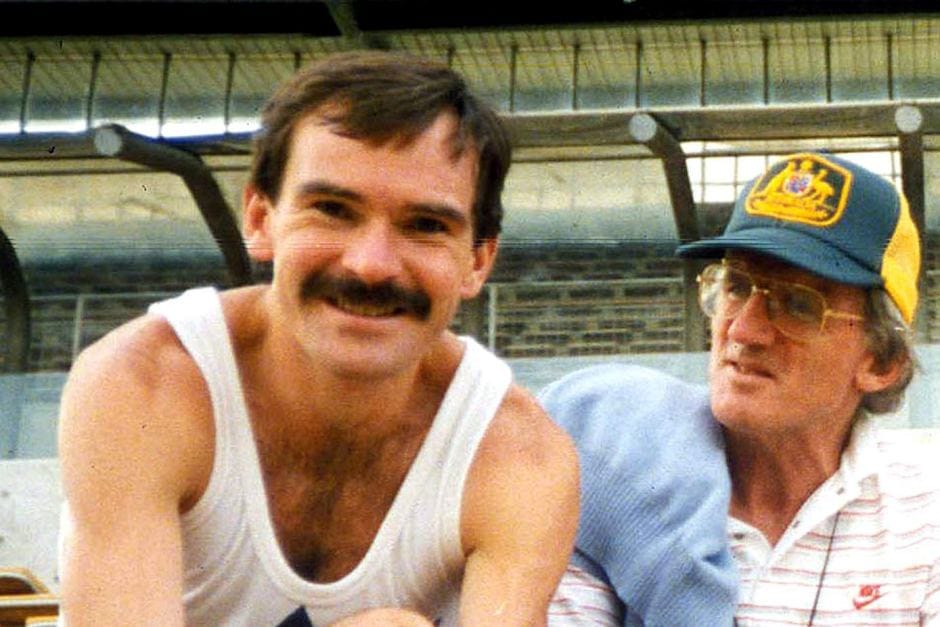
Clohessy’s influence also reached well beyond the athletes he coached himself. Many branches of Australian distance running’s family tree pass through him. John Landy’s early encouragement was the spark that turned him to coaching. His urging sent Allan Lawrence to Houston, where Lawrence stayed on to coach for the rest of his life. He passed his methods to Rob de Castella and to Chris Wardlaw, and Wardlaw then used and adapted the same system to coach Steve Moneghetti, Kerryn McCann and many others. For a generation, the way Australians trained for the distance events was largely the way Clohessy trained his runners.
The approach started with his group at Xavier College, and overseas it is often called Australian “complex” training. The shape of the training week stays much the same all year, the changes between base building and peaking are subtle, and consistency counts for more than big swings in workload.
In 1983 Clohessy was appointed distance running coach at the Australian Institute of Sport, one of the Institute’s early professional coaching appointments. Over the next 11 years his Canberra group was the engine room of Australian distance running. It included Simon Doyle, ranked No. 2 in the world over 1500m in 1990 and 1991, and national record holders Shaun Creighton (3000m, steeplechase and 10,000m), Krishna Wood (née Stanton, 3000m and 5000m) and Susan Hobson (marathon), along with Pat Carroll, Andrew Lloyd, Pat Scammell and Matt Favier (who after athletics headed up the AIS from 2012-2017).
He was a national team coach at the 1980 Moscow and 1984 Los Angeles Olympics and at the 1983 and 1987 World Championships. In 1984 he joined the inaugural board of the Australian Sports Commission. The Distance Running Commission he championed advised the AA board in its early years and ran seminars and clinics for coaches.
Those who worked with him remember both his kind manner, supportive nature and approachability, while also recognising his leadership as an advocate who never let up. He pressed administrators, meet directors and race organisers for more racing and more team places for athletes at every level. He then insisted just as fairly that athletes and their coaches be ready when those chances came. He kept in close contact with the national selectors and gave them a constant stream of advice, which was always realistic. He also cared about his athletes beyond the track and pushed them to keep studying while they trained.
At the end of 1993 he announced he would leave the AIS for an Athletics Australia role in Brisbane. From 1998 he was based at the University of Queensland, where he was head coach of the home club for many years. He used that position to help revive university athletics, and he especially enjoyed the rivalry with the Sydney University and Melbourne University. He kept coaching well into his eighties, guiding athletes of all ages, and he was still sending runners into national teams, with 800m runner Brittany McGowan among his later charges. He had coached at the very top of the sport, and he chose to spend his later years at the grassroots.
His honours included Membership of the Order of Australia in 1988 for service to sport as a track and field coach, induction into the Sport Australia Hall of Fame in 1997, the Australian Sports Medal in 2000, life membership of Athletics Australia, and appointment as a Life Governor of Athletics Australia in 2014.
In 1994 the Australian Sports Commission published a book about him, edited by his former athlete Susan Hobson. Its title, Pat Clohessy: athlete, coach, mentor, sums up his career and a huge part of his life, well.
Inside Athletics extends its deepest sympathies to Pat’s wife Moira, daughter Maria, his family, and the many athletes and coaches whose lives he helped shaped.