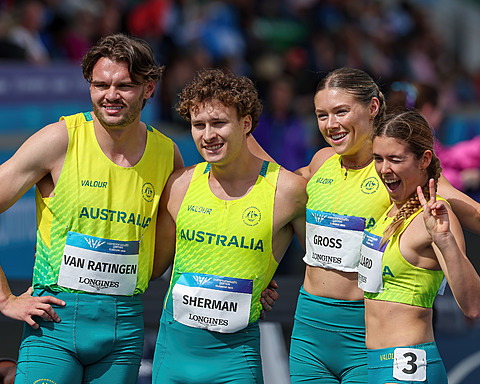


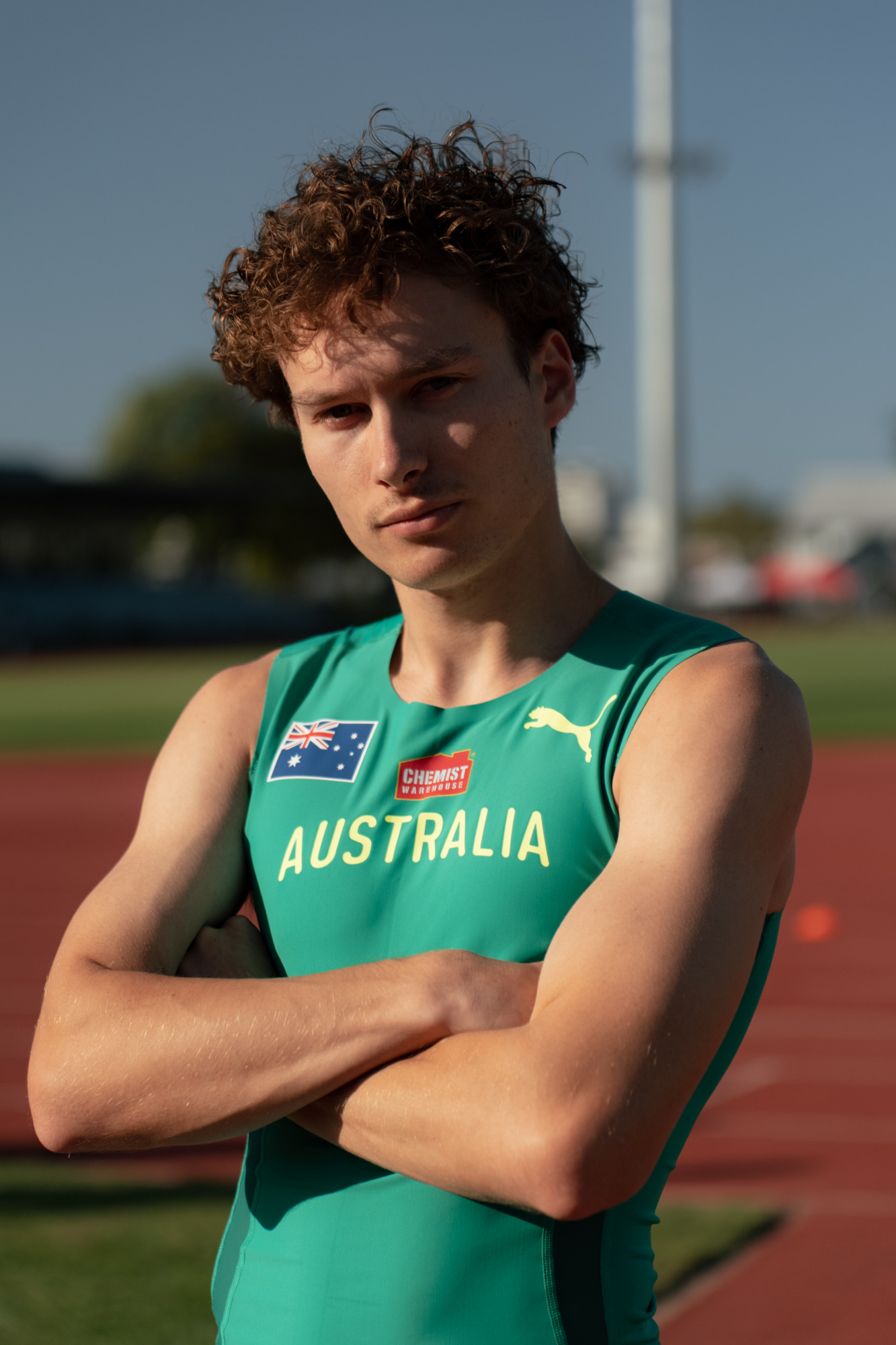
Cooper Sherman still sounds mildly surprised when he says it out loud. Not because he didn’t believe he could do it, but because breaking 45 seconds carries a particular weight in Australian 400m running. It’s a barrier that separates “very good” from “this is going somewhere”.
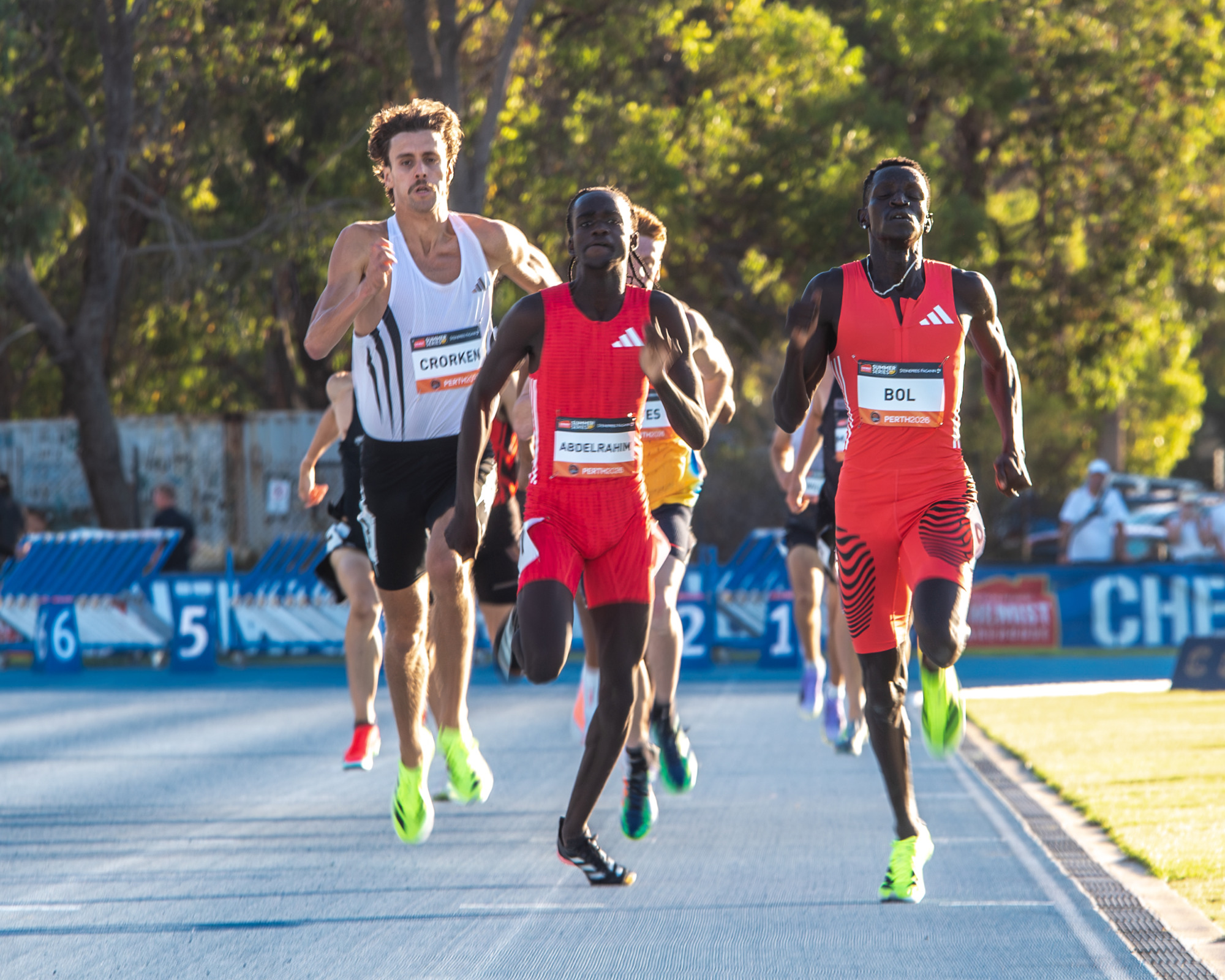
Cover photo by Michael Hall for Inside Athletics
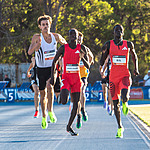
On the weekend, the 21-year-old Victorian ran 44.85, exactly meeting the Commonwealth Games qualifier. He did it with the kind of matter-of-fact clarity that’s starting to define the new generation of Australian 400m men.
And it wasn’t a perfect race, he says. That’s the scary part.
“I was expecting it, but I also wasn’t because obviously I’d never run that fast before,” Sherman told us the morning after the race. “You’ve got to execute everything perfectly… but I still surprised myself seeing the time. Then you hear it over the speaker and I’m like, ‘Oh my God, I can’t believe I’ve just done this.’”

Sherman is from Ballarat. He’s not sponsored. He’s still living at home. And he’s doing what so many elite athletes quietly do between major meets: working out how to pay for the next season.
That tension sits underneath the breakthrough: the sport is moving fast, the times are falling, the relay is humming again — and some of the next generation of top athletes driving it are still chasing part-time work.
The kid who played everything… then chose the stopwatch
Sherman’s pathway doesn’t begin with a single sport identity. It begins with a kid who tried to play all of them.
“From a young age I’ve always played every sport I could possibly do,” he said. Footy for nine years. Soccer “at a national level for a couple of years”. Even table tennis, briefly. He loved competing — but the turning point wasn’t a medal or a promise of selection. It was something simpler: athletics made performance honest.
“In footy you don’t… you don’t know because it’s a team sport,” he said. “When it’s running, you know the exact time you’ve run.”
At about 15, he won a state title in the 100m and reached the moment every talented teenage multi-sport athlete eventually meets: choose. Training clashed. Injuries from contact sport started to interfere with track. The decision was emotional — walking away from teams he’d grown up with — but it also felt inevitable.
“The more I thought about moving to running, the more it was like, ‘this is what I want to do’.”
He’s had three coaches along the way, including time with a “gift” set-up early on, then a coach who taught him how to enjoy the work, not just the racing. That mattered, because for a while the equation didn’t add up.
“I enjoyed competing but I didn’t enjoy training,” he admitted.
Eventually he moved under Neville Down (his current coach), drawn by sessions that looked “really hard” but also “enjoyable”. That word keeps coming up with Sherman. Fun. Enjoyable. The feeling of running fast. He doesn’t romanticise suffering; he talks about craft.
Why Gift running matters (and why it works for him)
Sherman is one of the athletes keeping a foot in both worlds: the traditional professional gift circuit and the “amateur” (sanctioned) season.
For him, it’s not a distraction. It’s preparation.
“The gift running… that’s definitely a critical part of my preparation,” he said, particularly in December when the major meets are thin. “There’s gifts every weekend… it’s like a premium training session.”
Because of handicaps, he doesn’t frame it as ego or a win-at-all-costs chase. He frames it as race reps — repeated, competitive, full-commitment efforts that teach an underrated skill for a 400 runner: backing up.
“I don’t care about winning. I’m just… I’ve always got a competitive race. I know I’ve always got to run my absolute hardest… trying to get three or six races in a day… it’s really good practice.”
For a developing 400m athlete, that’s gold: speed maintenance, competitive rhythm, and a mental habit of turning up when your legs aren’t fresh.
Two weeks off, then straight back in
After the World Championships in September, Sherman took two weeks off. Even that felt like too much.
“I was going to try and take longer, but I couldn’t wait.”
There’s a note of reality here too: he’s managing a sesamoid issue in the foot, something that “kind of affects me, kind of doesn’t.” He can still run fast — clearly — but it’s there in the background like a low-grade tax.
He came back in early season meets to check where he was at, without tapering, focused less on a time and more on the feeling. He’s a sprinter who believes in range.
“Doing 100s and 200s early on is really important for developing the base for your 400 training.”
It’s also why the 44.85 didn’t come from nowhere. The progression had breadcrumbs: a fast but sub-optimal race in Canberra, a biomechanical review, a clear belief that the result would come when the execution did.
In Perth, it did.
Even then, Sherman’s focus went straight to the detail. He thinks his 200m split was around 21.8, and he called it “still a bit slow for what I want to do”. Not because he’s unhappy — because he’s staring at upside.
“If I can still get to 44.8 in a less than idea split, I think that’s going to be at least another couple more PBs this year.”
A relay renaissance… and a record that disappeared
Sherman was born in 2004, the year that the Silver Bullets of John Steffensen, Mark Ormrod, Patrick Dwyer and Clinton Hill won Olympic silver in the 4x400m in Athens. Things had waned since then, but the Australian men’s 4x400m is suddenly relevant again — not as nostalgia, but as a current project with genuine momentum.
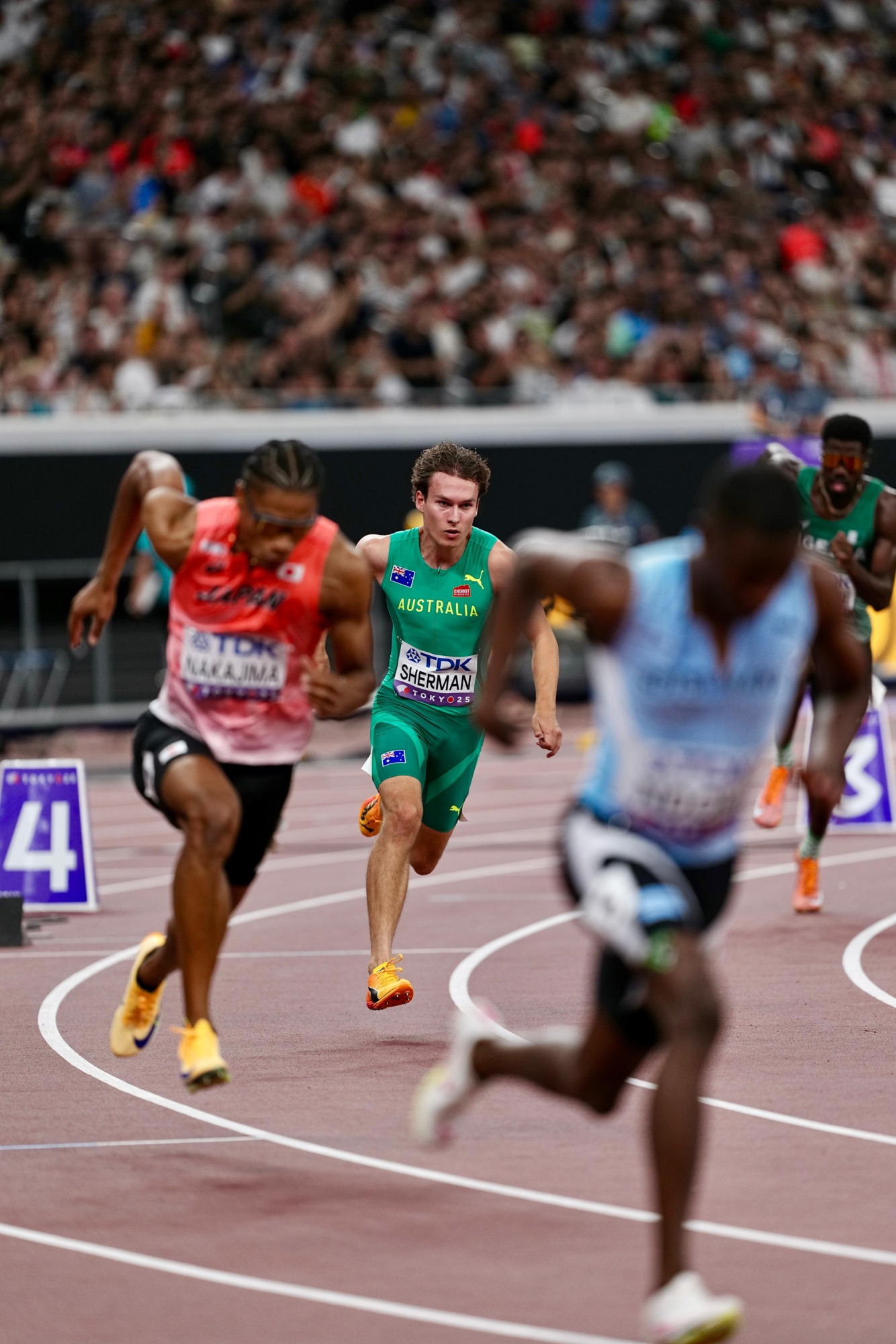
Sherman was part of the Australian relay quartet (he ran the opening leg in 44.98s) at the Tokyo 2025 World Championships that ran a time of 2:58.00 fast enough to break the long-standing Australian record of 2:59.70 set in 1984, only to have it wiped away by disqualification when Aidan Murphy stepped backwards in the changeover zone.
It’s the kind of moment that can fracture a team. Sherman describes the opposite.
“Obviously the foot outside the line doesn’t change anything to the time at the end of the day,” he said. “In fact… he’s obviously gone back, so it probably could have added to the time. So yeah, that time is obviously going to be possible in the future.”
Then he landed the line that captures the emotional whiplash of relay sport — and the mentality this group seems to share.
“At the time, it was… kind of like waking up from a good dream. Sometimes that’s worse than having a nightmare.”
No blame. No bitterness. Just a reset and a promise.
“We just said, ‘Okay, this happened. Let’s make sure it doesn’t happen again. And we’ll break the record by even more next time.’”
It’s a quietly powerful insight into why the relay is trending upward: talent is necessary, but cohesion is what turns it into medals.
Rivals, roommates, and a new standard
If the relay is a project, the domestic 400 scene is the engine. Sherman talks about the current group not as a rivalry defined by jealousy, but as an ecosystem defined by shared belief.
He’s been rooming with Tom Reynolds on trips. They joke all day, then “lock in” when the call room arrives.
“We’re all great friends,” he said. “If Tom beat me, I wouldn’t have cared. I’m happy that Australian 400m sprinting is so good right now.”
That’s not surrender: it’s perspective. Sherman is competitive (“I always want to be the best”), but he’s also clear-eyed: Reece Holder is flying, Aidan Murphy is there, and the depth is building. You can feel what’s shifted: the best Australians aren’t just trying to make teams. They’re talking about what those teams can win.
“I know there’s going to be a medal somewhere at a World Champs or hopefully an Olympic Games,” Sherman said. “Hopefully… definitely a record as well in the 4×4, officially break that.”
It’s the kind of sentence Australian men’s 400 running hasn’t been able to say — and mean — for a while.
The Ballarat singlet, on purpose
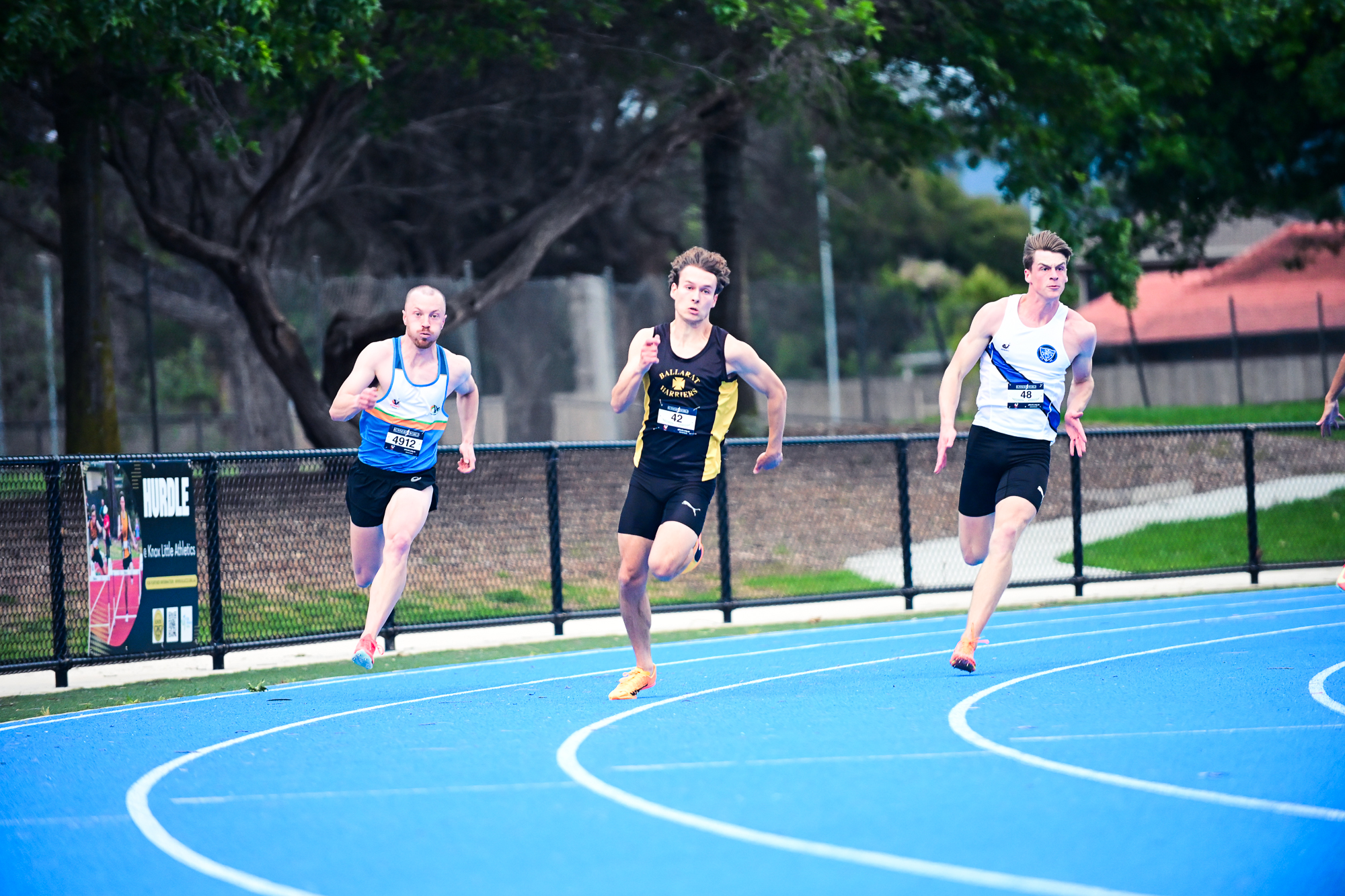
There was a moment on the broadcast that stuck: Sherman lining up in his Ballarat Harriers kit.
It wasn’t just what he had. It was a choice.

“I was given the Puma kit but I’m not sponsored… so I’m just going to wear my Ballarat kit. I’ll wear that as long as I can until something happens,” he said. “I’ll just embrace it and give everyone a chance to see where I’m from.”
Then, the sentence that explains why it matters to him:
“If I’m just from a country town in Victoria… it shows it doesn’t matter where you’re really from and what you’ve got access to, you can still get to where you want.”
That’s not branding. It’s identity.
The other life: study, money, and what comes next
Sherman finished an exercise and sport science degree last year. He’s now doing a remedial massage course as a stepping stone toward physiotherapy and he’s just landed a part-time job at SportsPower.
It took time to find work. He doesn’t dress that up.
“I’ve been struggling to find a job for the last little bit… I was starting to run low on some money.”
That’s the reality behind the breakthrough time: travel costs don’t care what you ran last weekend. And being unsponsored doesn’t pause your ambition: it just makes every decision a little heavier than it needs be.
For now, living at home in Ballarat helps. But change is coming, especially if he moves to Melbourne for physio study.
“Things will probably have to change soon.”
The next targets: range, speed, and LA
With the Commonwealth Games qualifier in hand, Sherman’s immediate priority is managing his foot and choosing his next race opportunities. He wants sanctioned PBs in the 100 and 200 — because some of his best runs at AV Shield meets haven’t counted.
Over 200m, he’s thinking 20.3–20.4 is where he’s at. Over 100m, he believes he can run 10.25 legally with the right conditions. And he sees that range as fundamental to his 400.
“I’m an advocate for diversity in the 400,” he said. “If you have a good 100 and a 200, you can definitely set yourself up for a good four.”
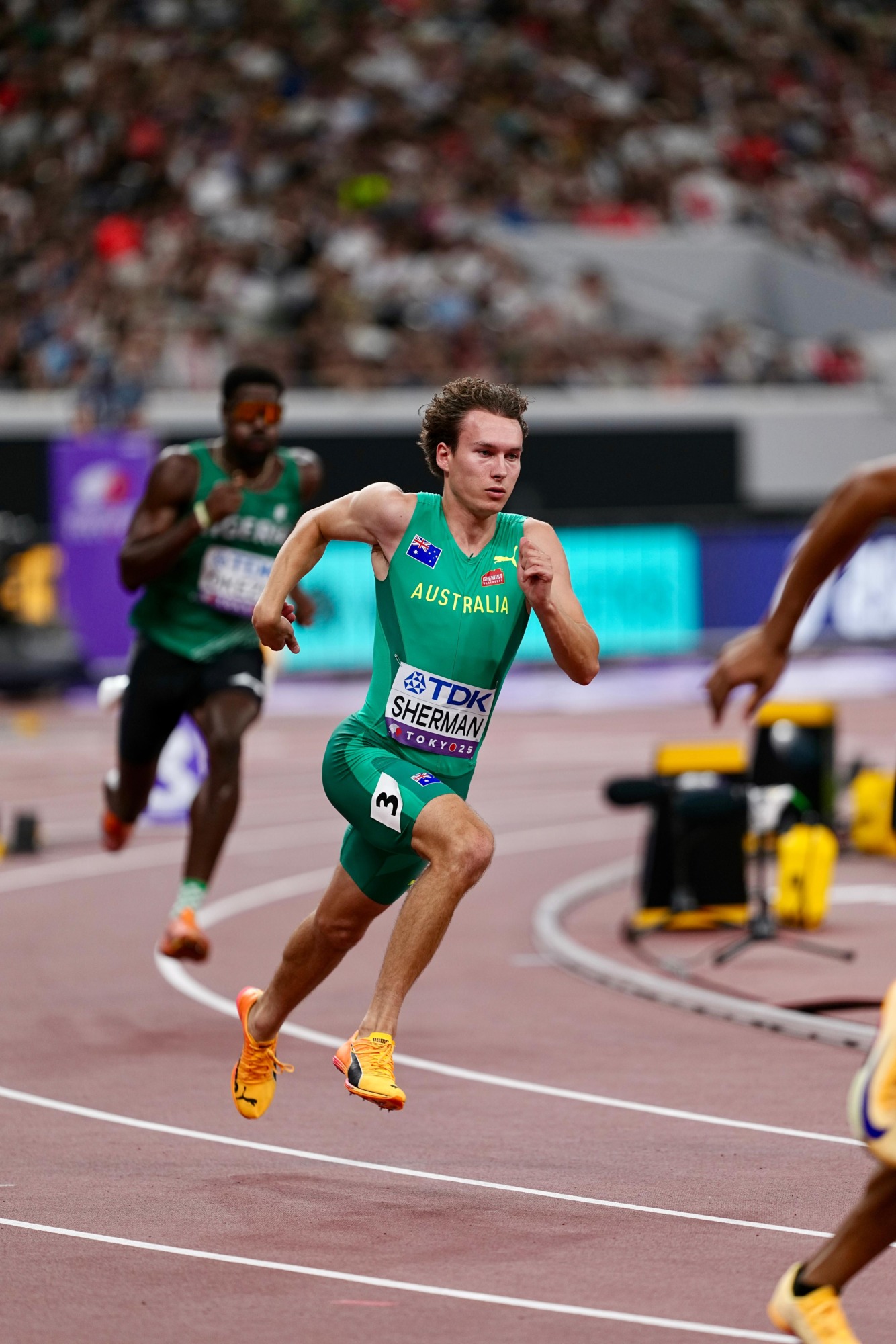
Beyond the season, he’s honest about the long game: the Australian record, Darren Clarke’s mark, sits in the distance — but it’s no longer abstract. He’s not claiming it; he’s aiming for the kind of time that makes it relevant.
His LA goal is simple, and serious:
“My goal for the LA Olympics is to try and make a semi-final. If I can get down to at least 44.5, I’d be happy with that.”
For now, 44.85 is the proof of concept — and a sign that Australian men’s 400 running is not just deep, but accelerating.
And the guy doing it in a Ballarat singlet, between study blocks and retail shifts, sounds like he’s only just started enjoying how fast things can move.