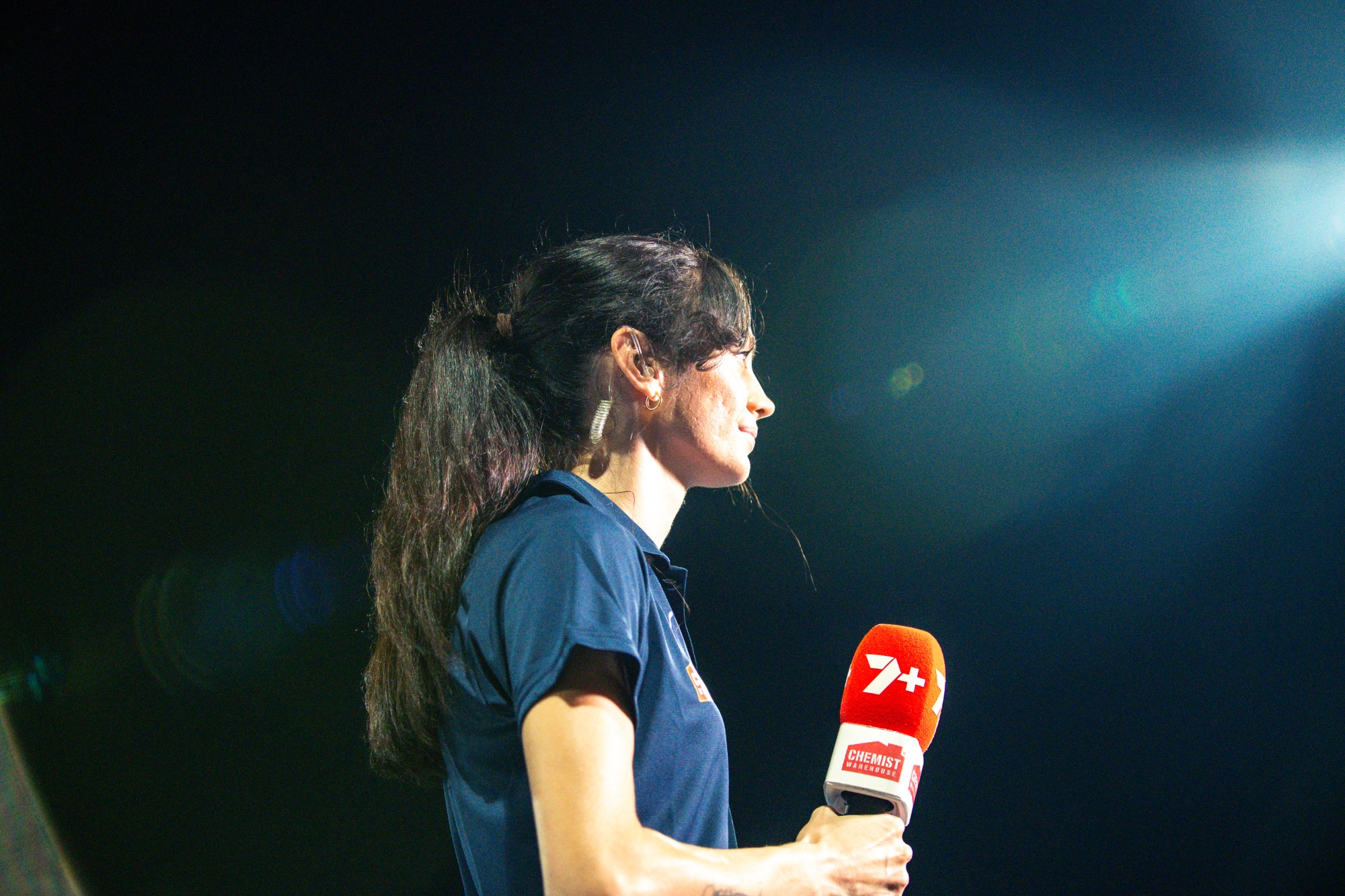


There’s a particular kind of honesty that only shows up when things don’t go to plan. And in Canberra, Mia Gross let the cameras roll right through it.
From the moment she arrived in Canberra, the signs were there. The heat. The hydration strategy bordering on military-grade. The nervous energy disguised as dancing. A sprinter preparing for a double — 100m and 400m — knowing full well the second one doesn’t forgive shortcuts.
The 100 metres came first. Clean start, sharp execution, and a tight finish in 11.49. Business handled. But it was always the 400 that loomed: the event she lives for, and the one she openly admits she may not have been ready for.
The science (and the suffering)
This wasn’t just a race, it was an experiment. Gross lined up for the one-lap test while having her lactate, blood pH and buffering capacity measured. Finger pricks before the warm-up. More afterward. The kind of data that doesn’t lie, even when the legs do.
She joked about “celebrating or weeping” afterward. The numbers suggested it might be both.
The race
Early on, it looked composed. Controlled. Familiar. Then came the wall…not a metaphorical one, but the unmistakable moment when the 400 introduces itself properly. The last 100 metres arrived like a piano falling from the sky.
Gross crossed the line in 55.1.
“I wouldn’t wish that last 100 on my worst enemy,” she said later, laughing — because sometimes laughing is the only option.
The lactate reading? Off the charts. Literally beyond what the machine could measure.
The decision
Dinner afterward was tacos and reality checks. By the next morning, the call was made: scratch the 200. Recovery instead. Ice baths, bike sessions, and an honest reckoning with where her fitness is right now.
And here’s the key part: she didn’t dress it up.
“I do not feel ready at all to compete,” she said.
“I wanted to rip the band-aid off and know where I was.”
She knows now.
The issue wasn’t courage. Or effort. Or intent. It was preparation. Training for ones and twos, then asking the body to survive a four. The 400 doesn’t care about excuses: it only reflects the work you’ve done.
The bigger picture
This was her first race against this group of women. First proper benchmark of the season. And while the result stung, the takeaway was clear: every race teaches you something… if you’re brave enough to look.
Gross has started seasons slower before. She knows that. She’s already faster than where she opened last year. The difference now is clarity.
If the 400 is the path forward, the training has to follow.
And if this vlog showed anything, it’s why athletes like Mia Gross matter to the sport: not just for what happens when it goes right, but for letting us see what it looks like when it doesn’t.
No polish. No spin. Just the work.
The season’s long. The band-aid is off.