

Australian athletics has entered a new era, with Little Athletics Australia set to formally join forces with Australian Athletics in a move that brings an end to more than 60 years of structural separation within the sport.
Following a series of meetings across both organisations, including a delayed Little Athletics Australia Annual General Meeting, in principle agreement has been reached for the sport to operate under the banner of Australian Athletics while retaining the Little Athletics brand, marking a decisive step toward a unified national structure.
From a governance perspective, the Little Athletics state associations that were not previously members of Australian Athletics will become associate members. Little Athletics Australia will wind up as a separate entity after a transition period.
The decision follows years of discussion, stalled reform efforts and growing structural divergence across the states, culminating in unanimous support for unification at recent meetings of both organisations.
An historic divide
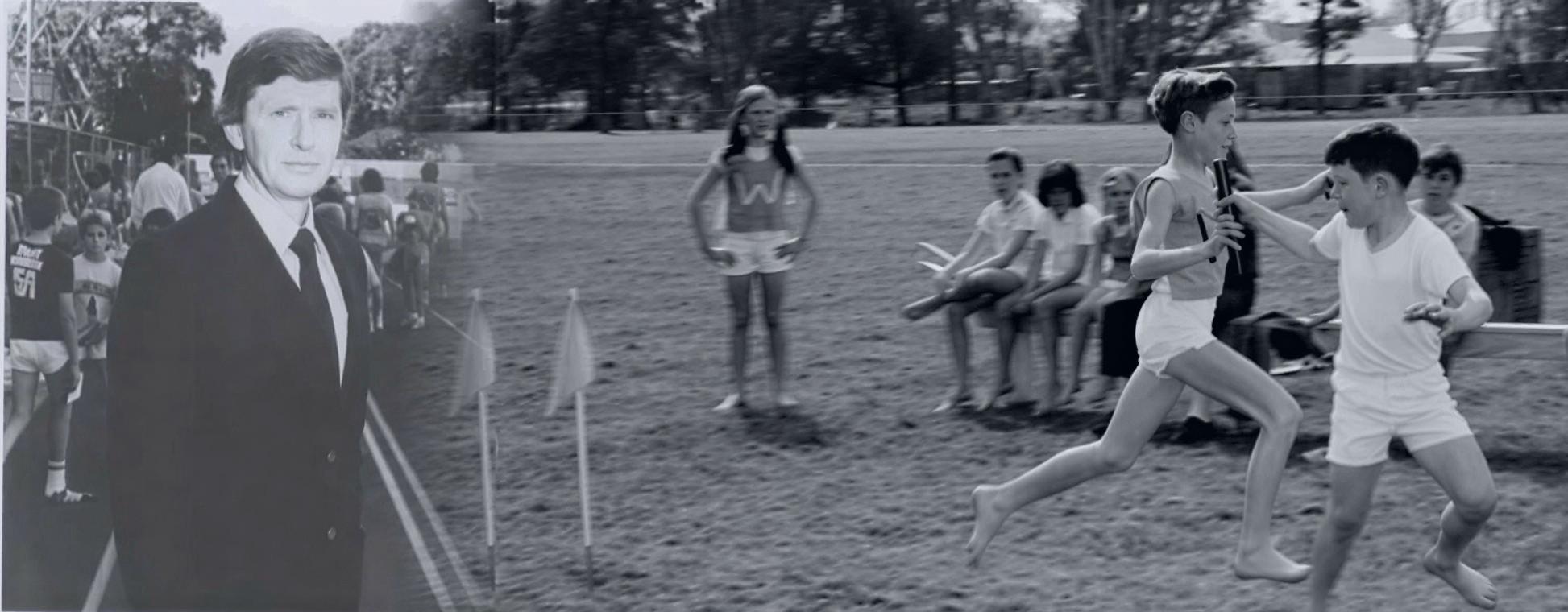
Little Athletics was founded in the 1964 by Trevor Billingham, the secretary of the Geelong branch of the Victorian Amateur Athletics Association (Athletics Victoria) at a time when the rules of the sport prohibited children from competing in organised athletics.
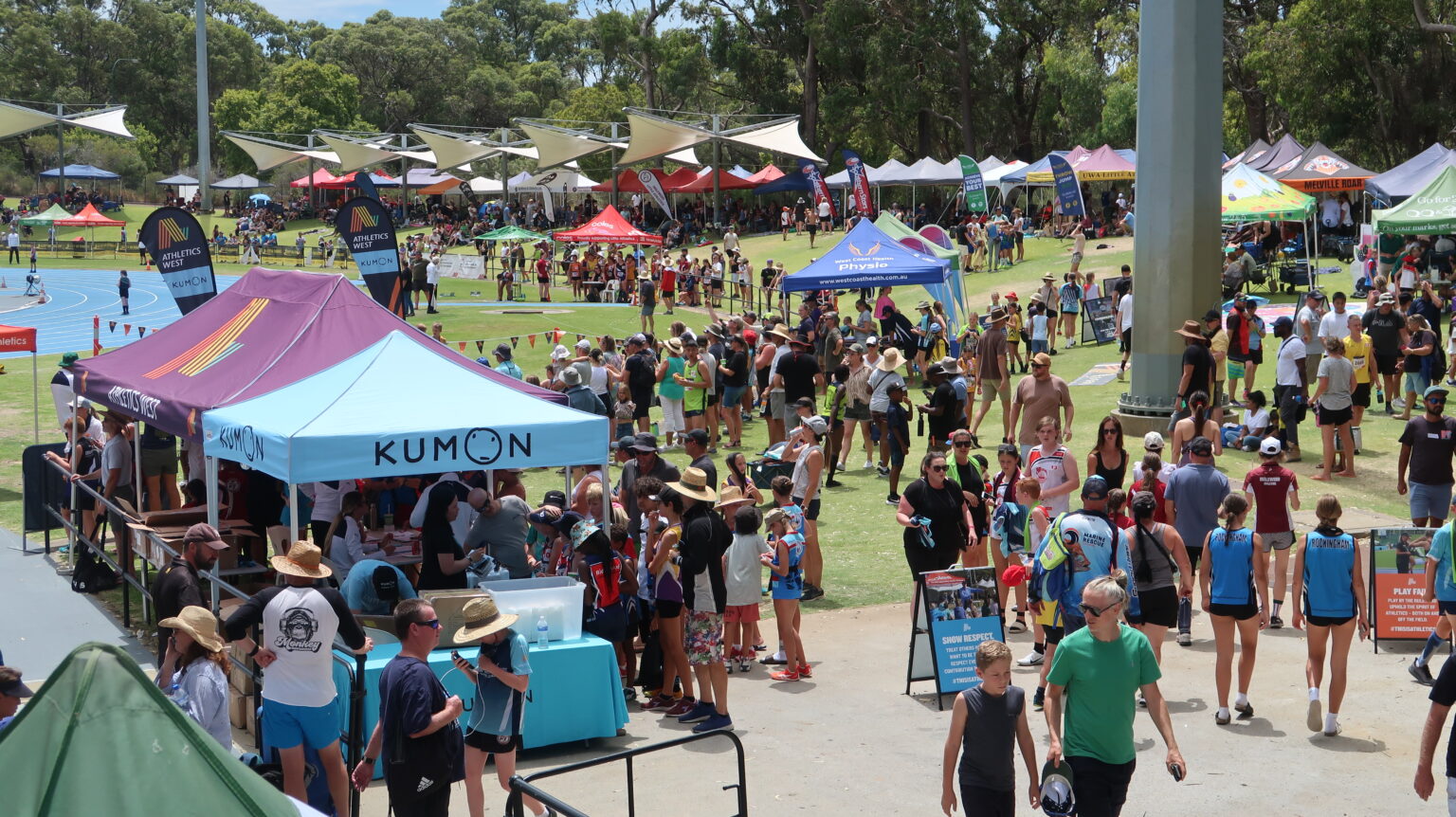
What began as a solution to exclusion quickly grew into one of Australia’s great community-led sporting institutions. Little Athletics became embedded in suburbs and regions across the country, built on volunteerism, family participation and grassroots development.
However, as the sport evolved, Little Athletics and the rest of athletics continued to grow side-by-side rather than together, with separate governance structures, strategies and national leadership.

Failed merger attempts and a changing landscape
Efforts to formally merge the two organisations have been attempted several times over the past decade, most notably in 2021, when a proposed merger received strong support from Australian Athletics’ member bodies but failed to achieve sufficient backing from Little Athletics state associations, despite the process being initiated by the Little Athletics Australia Board.

Since that time, the landscape of Australian athletics has shifted significantly.
- Athletics Northern Territory disaffiliating from Little Athletics Australia in 2021
- Capital Athletics forming in 2023 through the merger of Athletics ACT and Little Athletics ACT
- Athletics West, already the first merged state body in 2020, disaffiliating from Little Athletics Australia in 2024 due to duplication and a trademark dispute, resulting in $175,063 in unbudgeted legal and public-relations costs for Little Athletics Australia
- Athletics NSW and Little Athletics NSW implementing a single affiliation, membership and competition model in 2024, now encompassing almost 50,000 participants
- Athletics Tasmania and Little Athletics Tasmania moving to a joint CEO structure in 2025
- Australian Athletics and Little Athletics Australia announcing a joint venue of Brisbane for the Junior Championships in 2026

These developments fundamentally altered the national framework, creating practical examples of unification, or steps toward it, at state level and increasing pressure on the national bodies to follow suit.
From inevitability to action
Against that backdrop, unification increasingly became a question of when, not if.
And then it became how.
Signals of change started to show in recent months: Athletics West lodging a suspension to opposition in its trademark dispute with Little Athletics Australia on 7 October, and Athletics West’s former Chair, Tim Lyons, being elected to the Australian Athletics Board on 24 October.
The ultimate moments arrived this week, with Australian Athletics convening an Extraordinary General Meeting on Monday, followed by Little Athletics Australia’s AGM on Tuesday 16 December: held later than the five-month timeframe following the end of the financial year normally required under the Corporations Act.
“Our sporting landscape however continues to change and for us as a national organisation it has been a year of great reflection on what our role is within Little Athletics, what the future can look like and what is best for the continue success of Little Athletics across the country. Change to how we run our sport in the years to come is now imminent as I pen this report and it is important, I believe, that we all embrace this change as a positive step for Little Athletics and Athletics as a whole in Australia,” wrote Little Athletics Australia President, Sherrie Boulter, in the organisation’s Annual Report.
Where previous votes had been marked by division, the latest meetings delivered unanimous support, clearing the way for a new national structure. AA and LAA will now work through final details over the coming weeks with a shared ambition to finalise the structure and implementation plans to provide a further update by mid-February 2026.
Within six months of the implementation of unification, a Little Athletics Trust will be established to hold any residual funds of LAA. Trustees will be appointed by LAA in consultation with AA with funds made available for future growth of Little Athletics. LAA had $1.6M equity at 30 June 2025.
The move positions Australian athletics under a single national framework for the first time in more than six decades, aligning participation, pathways and governance across all levels of the sport.
EDITORIAL
Today Is a Great Day for Athletics in Australia
Today is a momentous day for athletics in Australia.
Not because of any single decision or organisation, but because the sport has chosen alignment, clarity and a shared future.
Athletics did not need:
Two national boards, with
Two separate strategies, employing
Two different CEOs, leading
Two separate teams
Working in parallel in the same sport
Not when we are, and always have been, one sport: athletics.
For too long, the separation between littles and bigs was treated as an untouchable tradition, rather than a practical question of what best serves participants, volunteers and the future of the sport.
That mindset had changed, and is now reflected in structure.
One sport, one pathway
Children do not experience athletics as two sports.
Families do not experience athletics as two sports.
Volunteers do not experience athletics as two sports.
They experience athletics as a journey, from competition, to personal bests, to lifelong involvement.
Yet for decades, governance structures failed to reflect that reality.
Little Athletics could not fully achieve its strategic ambitions without alignment to the organisation with holistic responsibility for the sport: Australian Athletics. Likewise, Australian Athletics could not genuinely claim to be custodians of the sport’s future while the majority of its participants sat outside its governance.
That disconnect was ineffective. Ultimately, it was unsustainable.
The hard work starts now
Unification is not the end of the journey: it is the beginning of a critical culture-changing period. The best parts of two separate traditions of the sport need to be embraced, just as the undesirable parts of two separate traditions need to be retired.
Structures can merge quickly. Cultures cannot, at least not without deliberate leadership.
Trust will continue to be built over time.
Roles will be clarified as the structure settles.
Volunteers must feel supported, not displaced.
Children must remain at the centre of decision-making.
And change will continue as the sport evolves.
If this moment is handled with humility and purpose, the sport has a once-in-a-generation opportunity to build a sport stronger than either organisation could have achieved alone.
A moment that matters
For 60 years, Australian athletics lived with a division born from necessity, then sustained by stubborn habit.
Today, that chapter closes and a new one opens.
What comes next will not be defined by legacy structures, but by a shared belief that athletics in Australia is better when it stands together.