
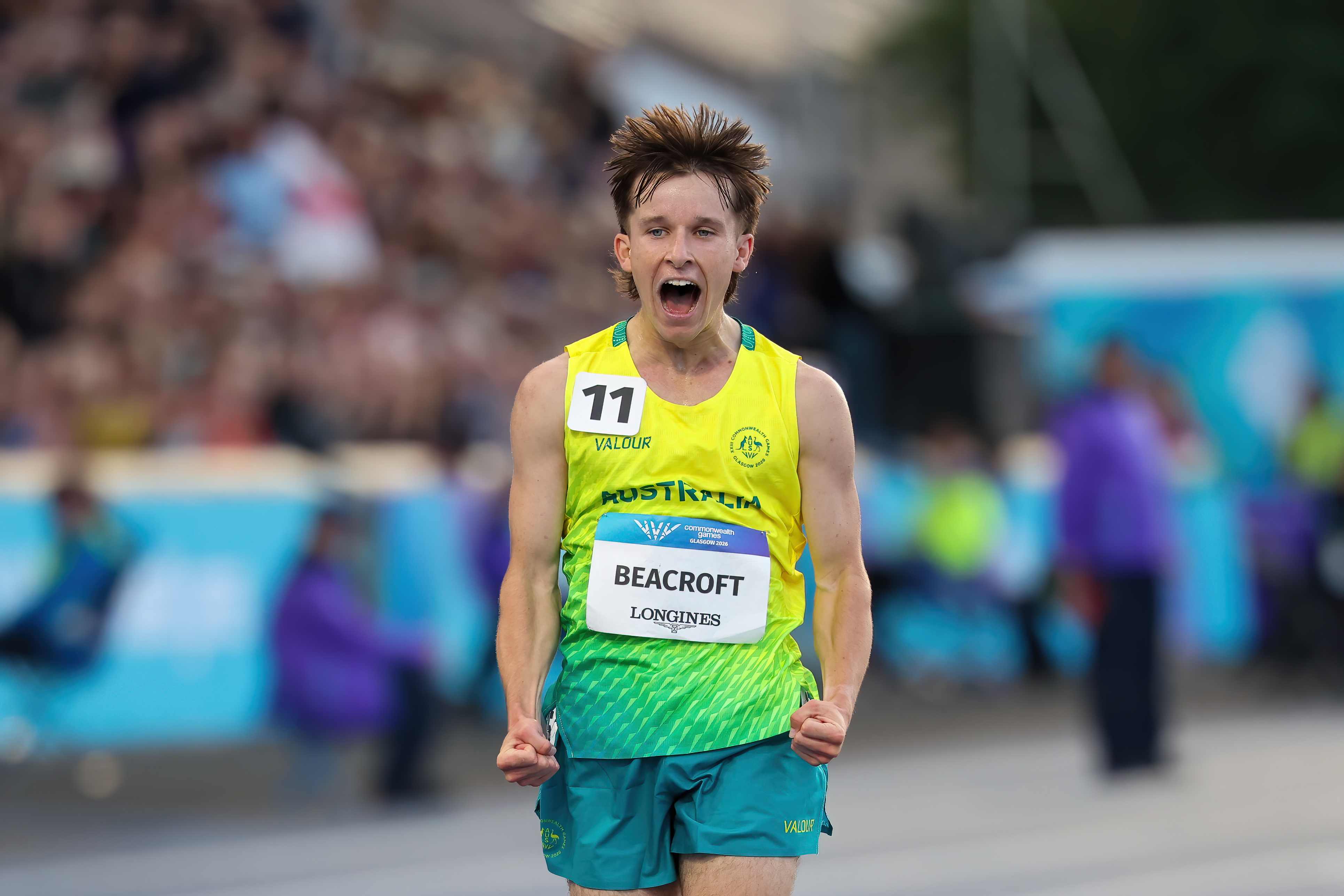
Australia’s 19-year-old world U20 record holder outkicked Kenya’s Stephen Kihu by just over a second at Scotstoun, while Declan Tingay’s medal hopes died in the penalty zone and Tim Fraser was disqualified.
The race that decided the Commonwealth Games 10,000m walk title lasted about 75 seconds.
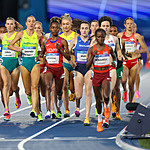
For 9,700 metres, Isaac Beacroft and Stephen Ndangiri Kihu had been locked together, the Kenyan sitting on the Australian’s inside and inviting him to do the work. Then, with 300 metres left, Beacroft went — and kept going — closing in 1:17 for the final lap to win in 38:45.51. Kihu crossed a second and a bit later in 38:46.57. Canada’s Evan Dunfee, the reigning 35km world champion and the defending Commonwealth titleholder from Birmingham, took bronze.
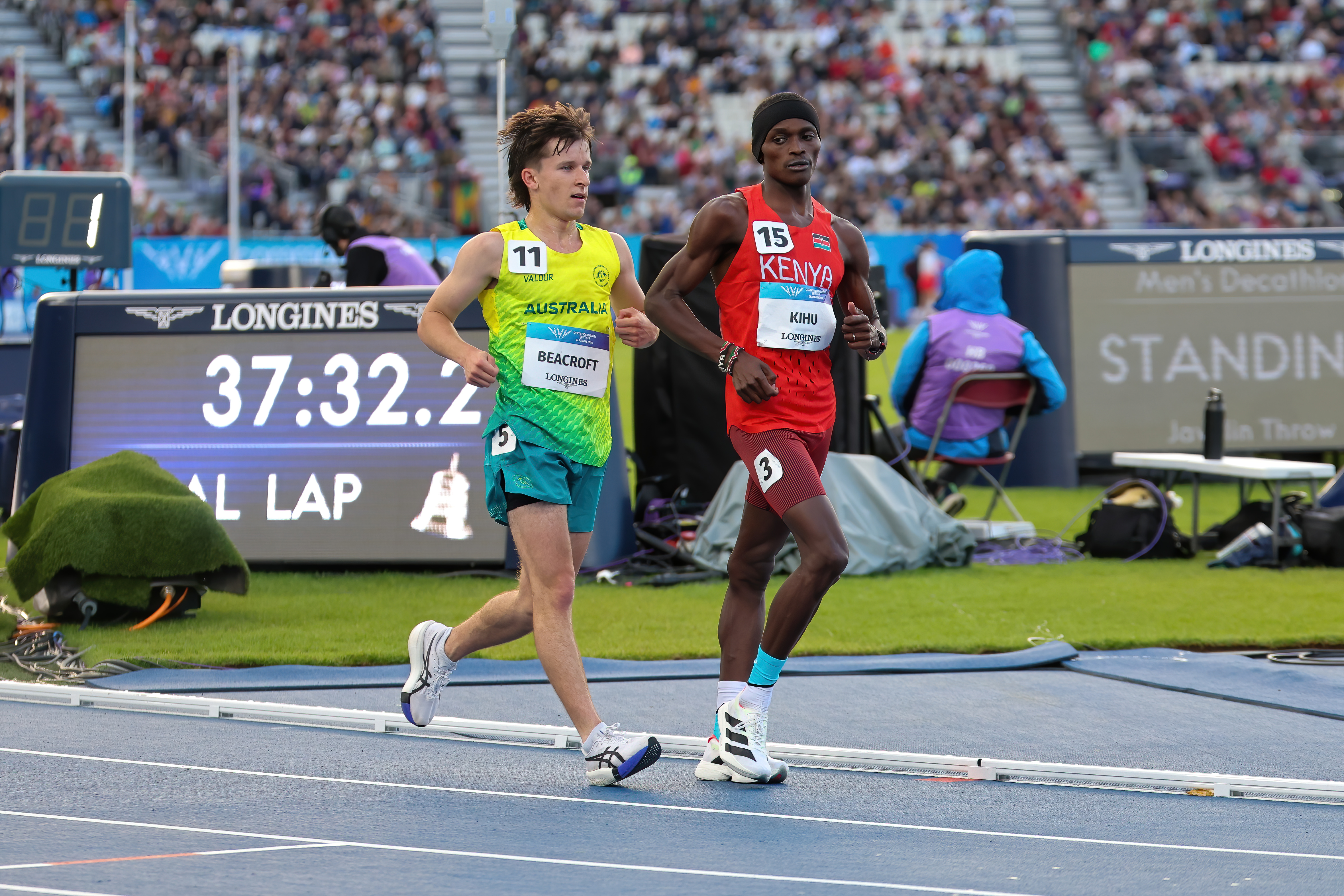
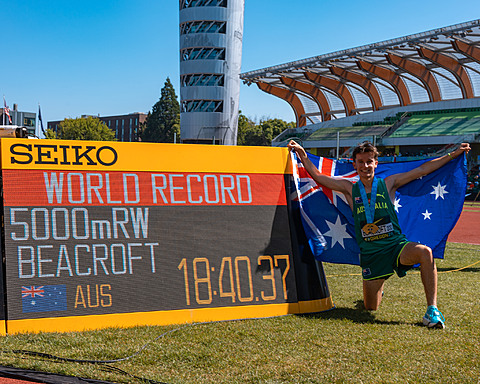
Beacroft turned 19 thirteen days before the final, and is Australia’s youngest male representative in the walk at a Commonwealth Games.
“Strategy-wise you’ve got the race to think about, and then you’ve got the final lap,” he said afterwards. “I thought it was going to be a pretty fast race after the first three laps, but then it slowed down slightly. We almost hit that 6km mark and the handbrake went on — we eased off a little bit.”
That lull was the tell. “As soon as it slowed down, and [Kihu] was kind of taunting me on the inside, I thought, ‘This is going to be a really fast finish.’ So I backed myself, as you can see, and I just wanted to give it my best shot in the end. I think it paid off very nicely.”
“I’d argue it’s actually more tiring than a 10,000m”
The closing lap gave Beacroft the number he has been waiting to hand to the sceptics.
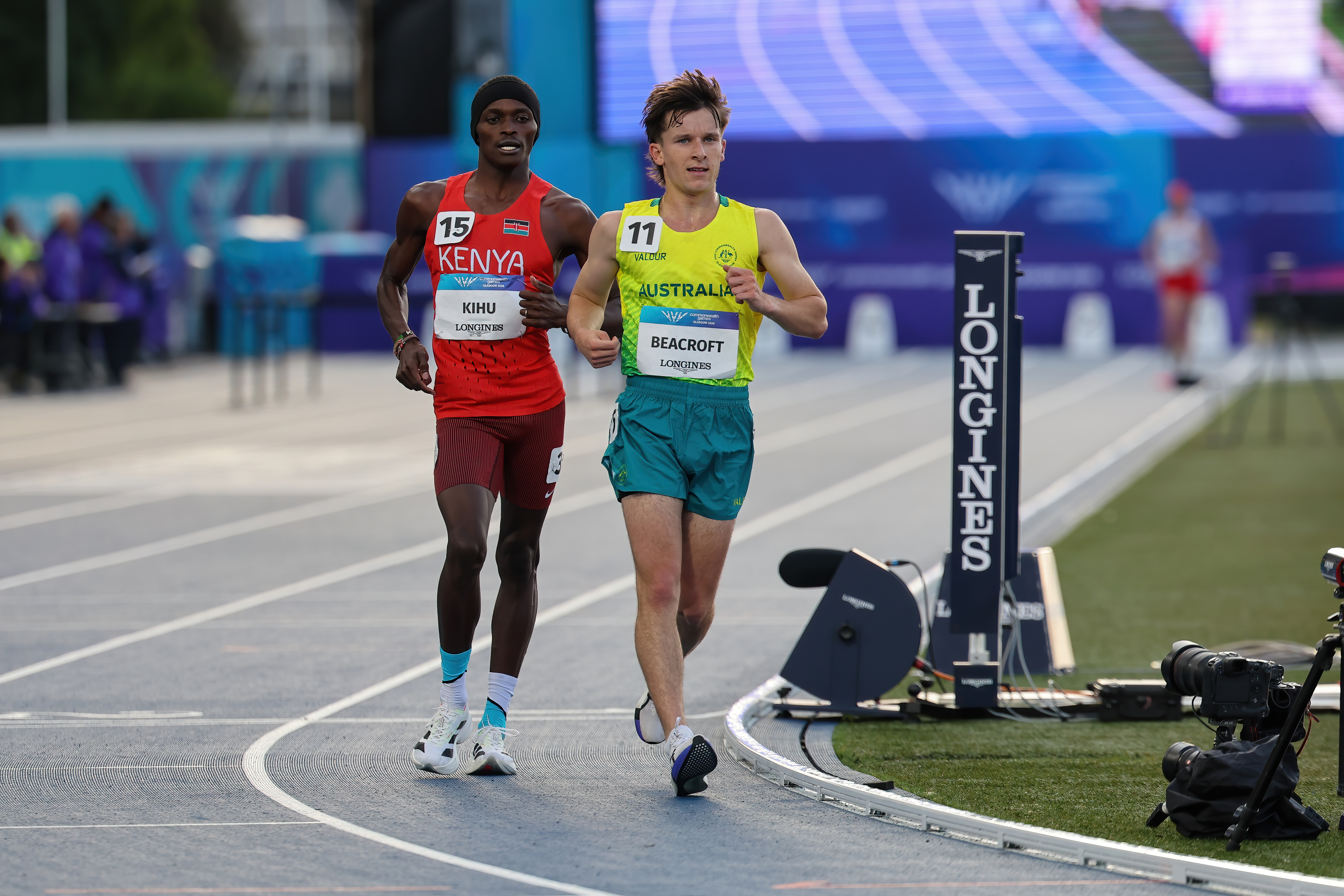
“I closed with a 1:17 final lap — that’s about what the women were running for each lap of their 10,000m race,” he said. “It was a very tactical race, but I think it was every bit as hard.”
Asked whether the event is as brutal as it looks, he did not hedge. “I’d argue it’s actually more tiring than a 10,000m race. We’re putting in just as much effort, but it goes on for about 10 minutes longer. Race walking is the same kind of aerobic event and it takes just as much out of you. It’s something that doesn’t get seen enough.”
The other two Australians
Australia sent three walkers to Scotstoun and finished with one of them on the podium, one in fourth and one disqualified.
Tingay — silver medallist in this event in Birmingham four years ago, and the second fastest Australian in history over the distance — spent time in the penalty zone, and with distance this short the enforced stop was effectively the end of his medal chance. He finished fourth of the four men who completed the race.
Fraser also visited the penalty zone before being disqualified. He and Beacroft had prepared together, including a three-week block in the AIS Altitude House in Canberra earlier this year.
A five-man field, and what that says
Five athletes from three nations started: three Australians, one Canadian, one Kenyan. That is the thinnest men’s walk field the Games have seen.
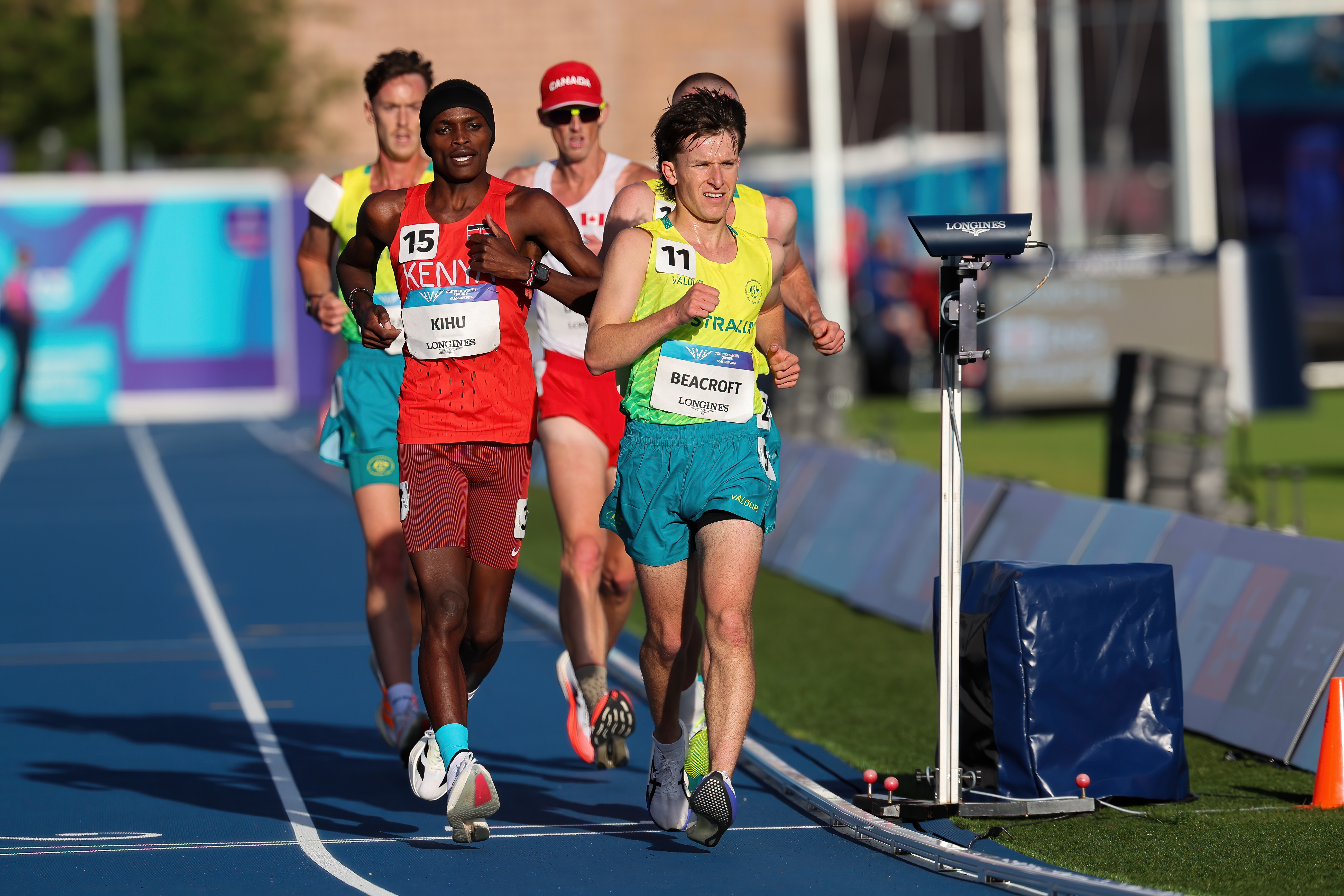
The walk has been on the Commonwealth Games program since 1966, missing only 2014 — in Glasgow, as it happens. For most of that history it was contested over 20km on the road; the track 10,000m is a recent switch, used here and in Birmingham. Beacroft’s winning time is a little under nine seconds outside Dunfee’s Games record of 38:36.37, set on the way to gold in 2022.
Nine days to Oregon
Beacroft leaves Glasgow for Eugene, where he contests the World U20 Championships: an age group he is still eligible for, and an event where he has unfinished business after finishing fourth on the track in Lima two years ago.