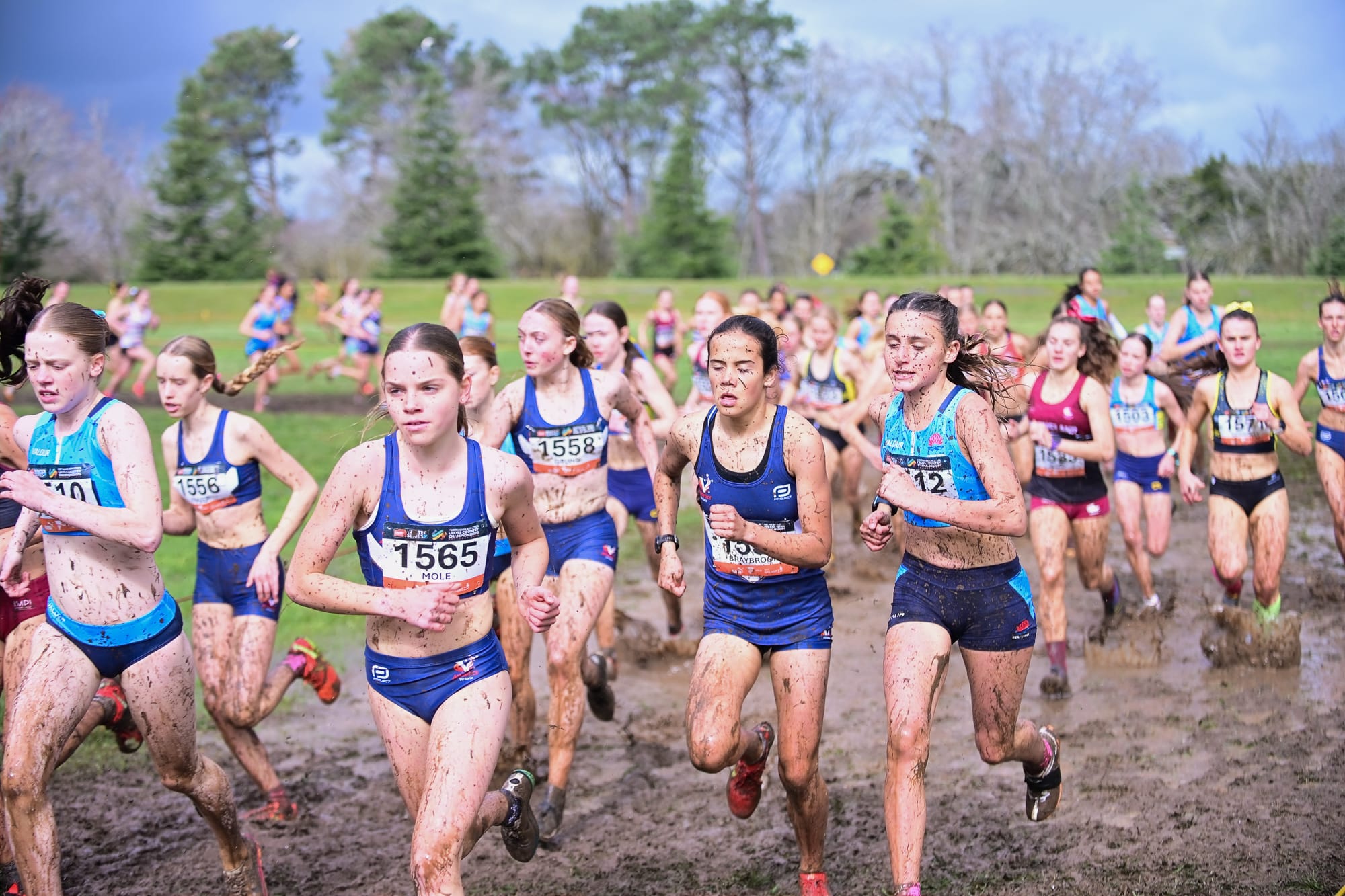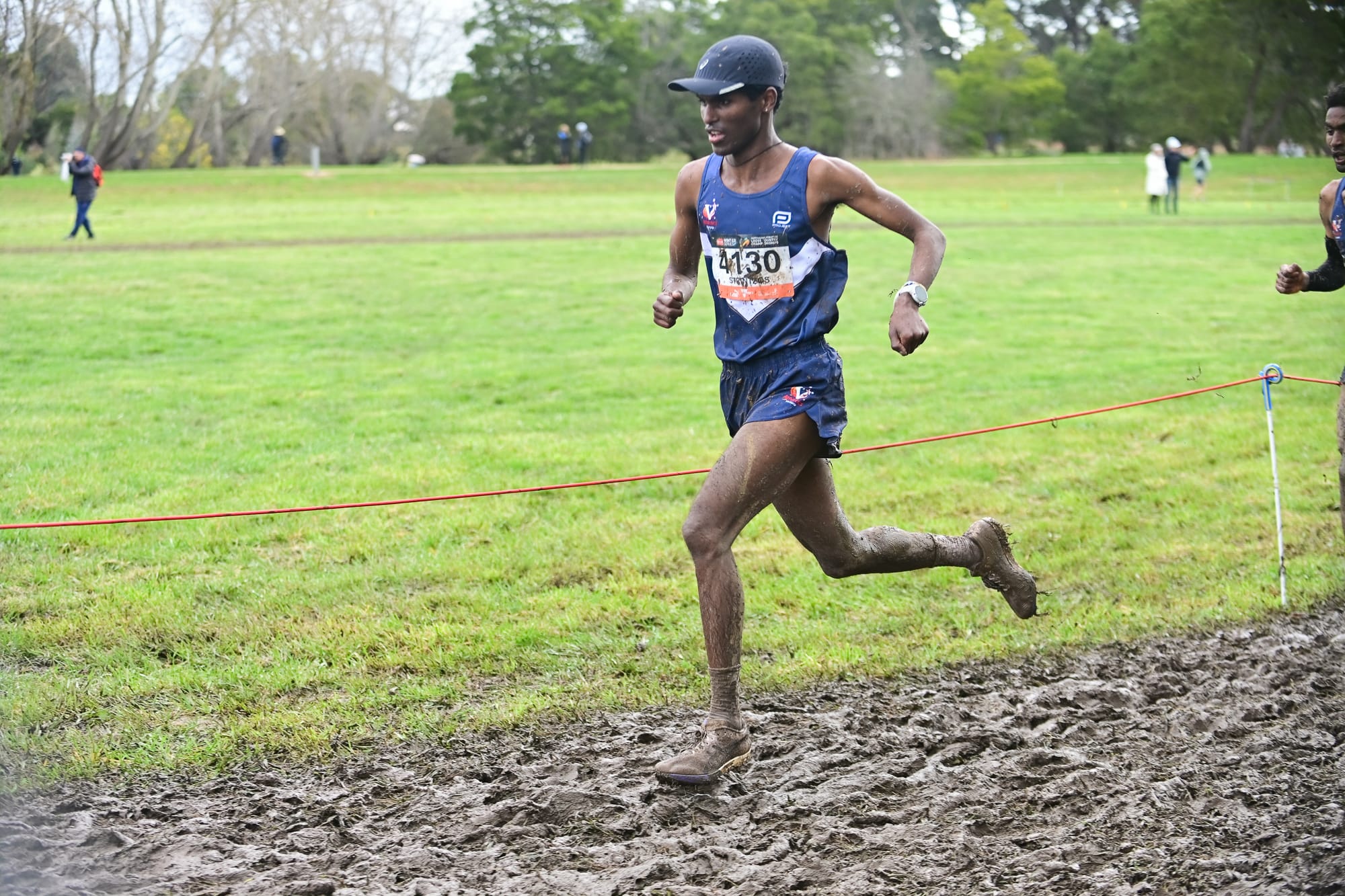
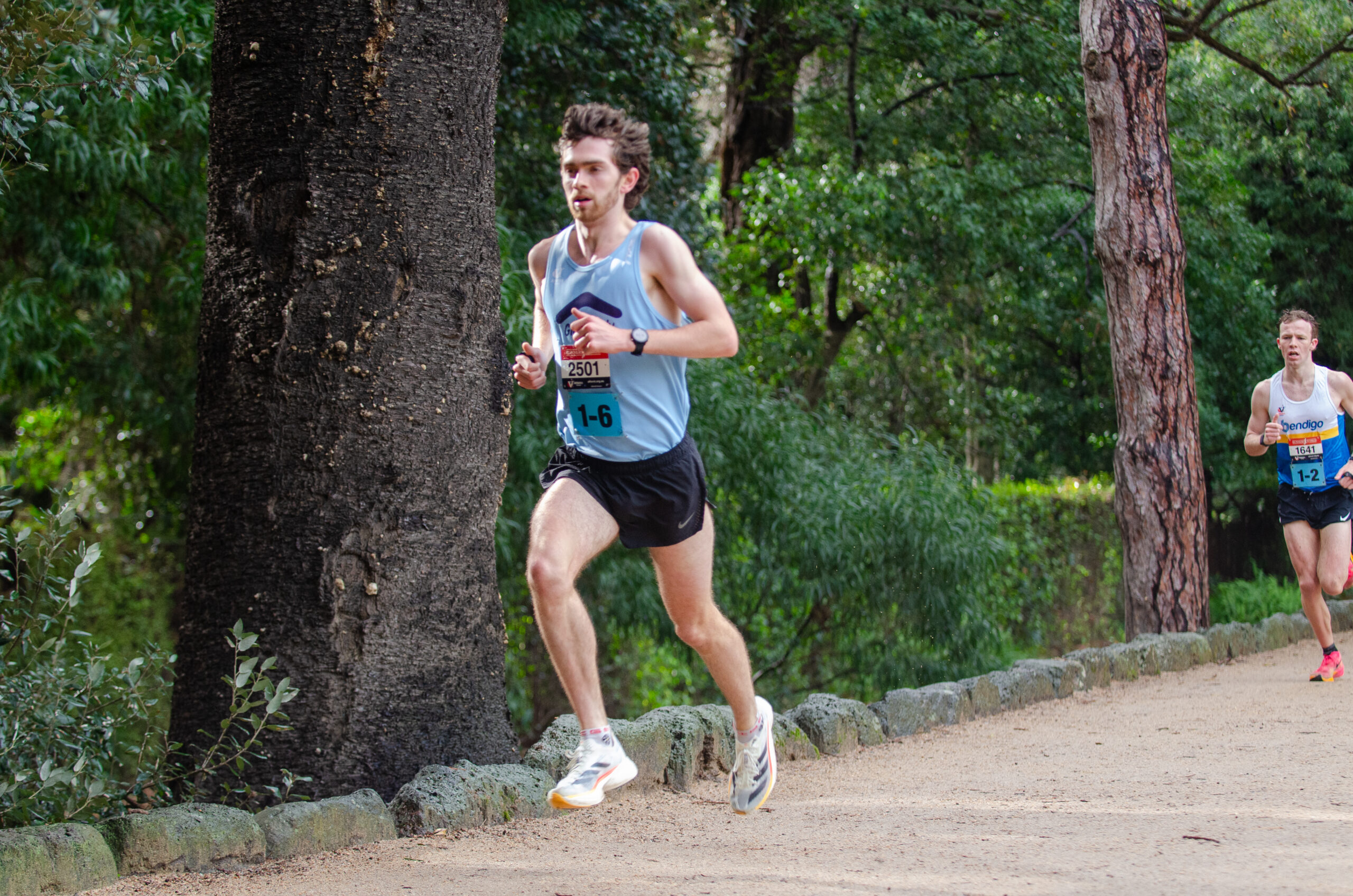
Long before either of them was a national record-holder or a sub-61 half marathoner, Haftu Strintzos and Ed Marks and were two Melbourne schoolboys at Wesley College and Haileybury College getting muddy in their school’s cross country program. Marks remembers how those races usually finished.
“Haftu… we used to run together back in high school, cross country,” Marks told the Run With It podcast last month. “He would always smash me in the cross country races.”
On Saturday, in around 30 minutes of racing at Victoria Park in Ballarat, we find out whether that scoreline still holds.
The two Victorians line up as the clear favourites for the senior men’s title at the Australian Cross Country Championships, and between them they carry the two most eye-catching Australian distance performances of the winter. Strintzos ran 2:06:20 to win the Gold Coast Marathon on 5 July, an Australian and Oceania record, a course record by 73 seconds, and the first Australian men’s win on the Gold Coast since Lee Troop in 2006. The day before, on the same stretch of coastline, Marks made his half marathon debut in 60:57 to take the Oceania and Australian titles and, by a single second over Morgan McDonald’s mark, the fastest debut half ever run by an Australian man.
Neither has ever won this race.
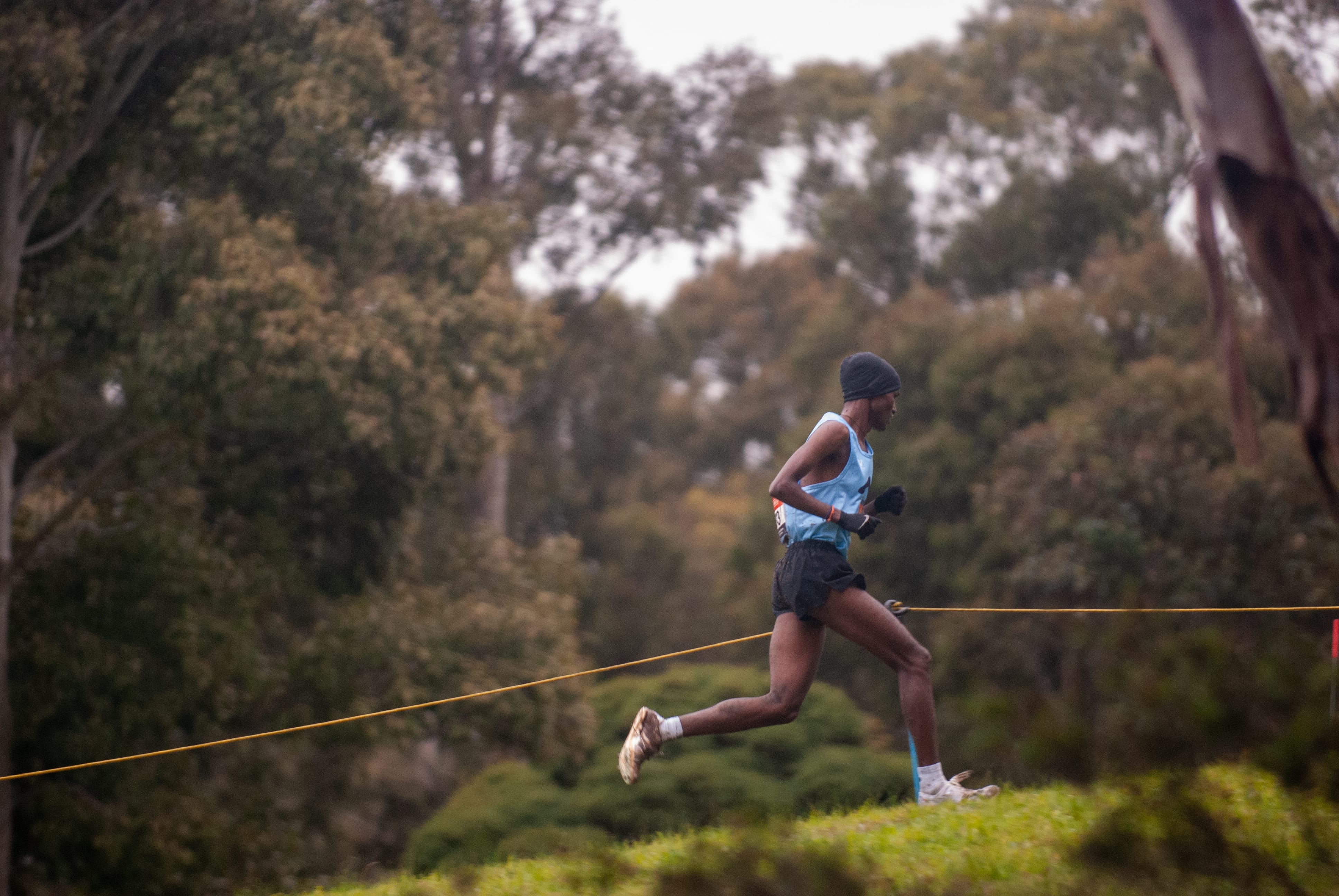
That is the strange arithmetic of Australian cross country. Marks has been second (2024) and third (2023); Strintzos was third in 2024. Both have worn the green and gold at World Cross and Strintzos owns Australia’s best finish across the past two editions with 22nd. But neither has managed to convert that into gold on home grass. Marks was the favourite twelve months ago before injury kept him off the start line, and the title went instead to the now-retired Zac Facioni.
The strength runner
Ask Marks to pick one discipline for the rest of his career — track, road or country, with the money and the medals held equal — and he doesn’t take long.
“I think I’d have to say cross country. I feel like that’s definitely my strong point. I feel like that’s where my origins are.”
Ed Marks
Pressed on what makes him suited to it, his answer is almost boringly practical: hills, and the willingness to sit on an uncomfortable effort for a long time. “I think I’ve always been pretty good at hills, so that really helps,” he said, describing an ability to lock onto a pace and hold it “over the hills and down and over grass and mud.”
That is a useful set of attributes this year in particular. As we covered last week, the 2026 Victoria Park layout has been rebuilt into tighter 1km and 2km loops and, on our reading of the course, packs in roughly twice as much climbing as the 2025 edition. It is a course that punishes riding a rhythm and rewards the athletes willing to keep re-accelerating out of the turns and off the crests: it is a course that suits a strength runner who has spent the winter grinding.
Marks even credits that background for the back half of his Gold Coast debut, when the distance started to bite at 16-17km. “I felt like I could tap into some of my cross country strength towards the end,” he said, “because sometimes at the end of a cross country race, it’s just grinding it out, just trying to maintain a steady pace.”
Article continues below
He followed that up afterward with a swift 28:12 on the roads at the Sydney Harbour 10, showing that his speed hasn’t been sapped by a move towards the longer distance.

He is also, by his own account, a student of courses. Ahead of Gold Coast he watched previous years’ live streams and took notes, spotting that Andy Buchanan had gone from fifth to first in an earlier edition simply by taking the tangents through the closing turn. On a twistier Ballarat loop with more decision points per kilometre, that habit is worth something.
Two very different lead-ins
The complication for both men is that neither arrives at Ballarat with this as the season’s centrepiece.
Strintzos will be racing for the first time since the Gold Coast marathon, a six-week turnaround off a 2:06 effort that, by his own description afterwards, left him flat on his back at the finish. Marathoners have won national cross country titles off that kind of block before; they have also been comprehensively found out by it. There is no ambiguity about his aerobic ceiling, only about how much of it he can access on a hilly course seven weeks after the biggest race of his life.
Marks, meanwhile, has one eye firmly on Copenhagen. The World Road Running Championships is, in his words, “definitely my main goal at the moment” and he and Strintzos headline the Australian men’s team there along with Australian record holder over the distance, Jack Rayner, and Liam Boudin. Nationals sits in the middle of the build rather than at the end of it.
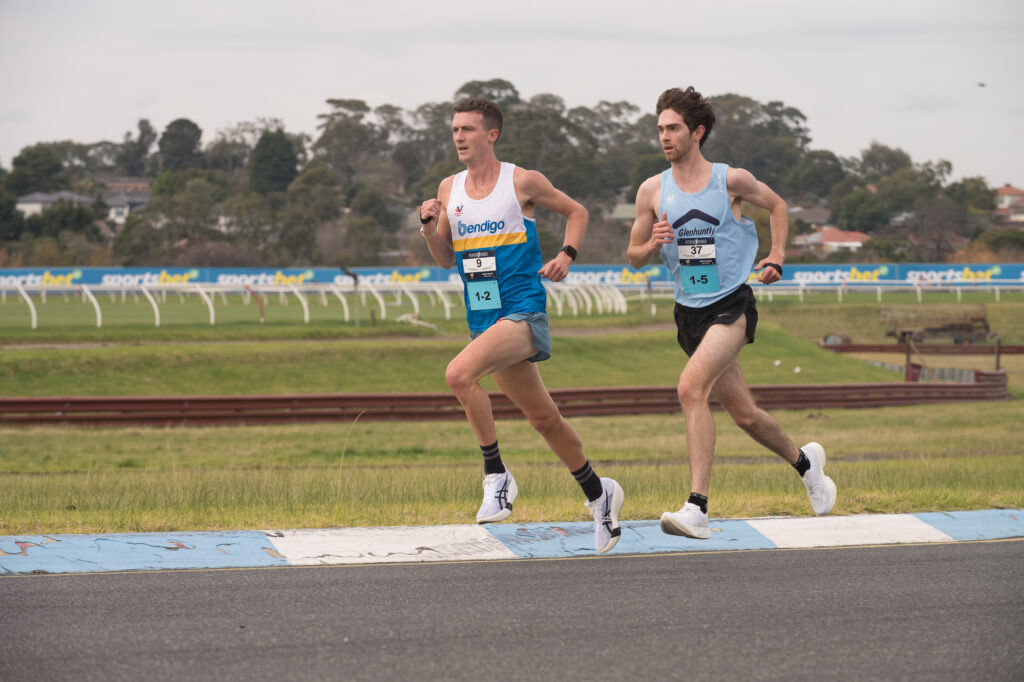
The self-coached Marks is candid about what that means. He sets his own sessions, races off feel and a stopwatch rather than pace on the wrist, and enjoys the flexibility. But he doesn’t pretend the arrangement is frictionless: “It’s not all sunshine and rainbows,” he said. “You have to hold yourself accountable, and it’s hard to do when you don’t have someone looking in objectively at your training.”
There is a body of evidence to be careful with, too. Marks has a history of sacral stress injuries dating back to Year 10, and a rough patch after school he now attributes to under-fuelling and over-training. He believes he is trending the right way — fewer injuries, better instincts about when to back off — but a course this demanding, five weeks out from a selection window, is exactly the sort of race where an athlete and his notional coach have to agree on the risk.
Who else
Calling Marks and Strintzos the favourites is not the same as calling it a two-man race. Marks himself was quick to point out on the podcast that Australian cross country is deeper than the headline names, singling out Seth O’Donnell and Cam Myers, who “came out and at the cross country trials destroyed us all.”
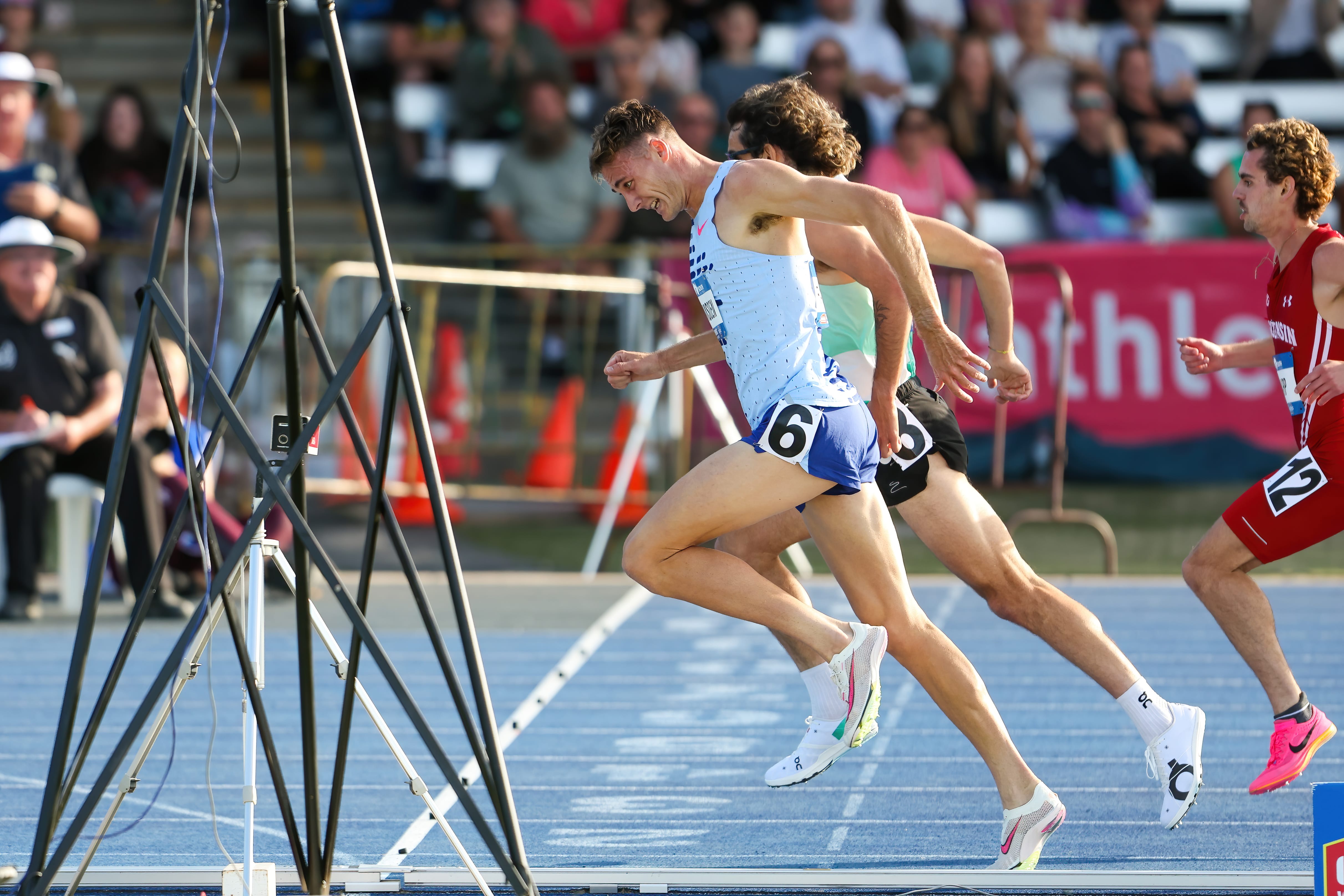
However, neither of the Commonwealth Games reps line up in Ballarat and it is Matthew Ramsden who will look to transfer his track pedigree: a three-time Australian 5000m champion and world championship representative over 1500m. He’s joined by other Australian representatives, steeplechasers both, in Ben Buckingham and Matthew Clarke. Logan Janetzski and Luke Hince have been the form runners on the Victorian and NSW circuits respectively, and are expected to also be in the mix.
The tell
The most interesting thing Marks said about his year had nothing to do with mileage. Asked what had changed in 2026, he pointed at his own head.
“I feel like it’s more of a mindset change in a way this year,” he said, describing a shift from making races up as he went along to arriving with a plan and committing to it. Launceston, Gold Coast, Sydney… the same method each time: decide beforehand, then go.
Cross country is the one discipline that most resists that approach. There are no splits to hit, no pace to lock into, and the plan tends to survive about as long as the first mud pit, obstacle or hurdle or hill to climb. Whether the athlete who has spent a year winning by committing to a number can win by racing a person instead — a person who, on his own telling, used to beat him every time — is the most interesting question at Victoria Park on Saturday.
Australian team for World Road Running Championships
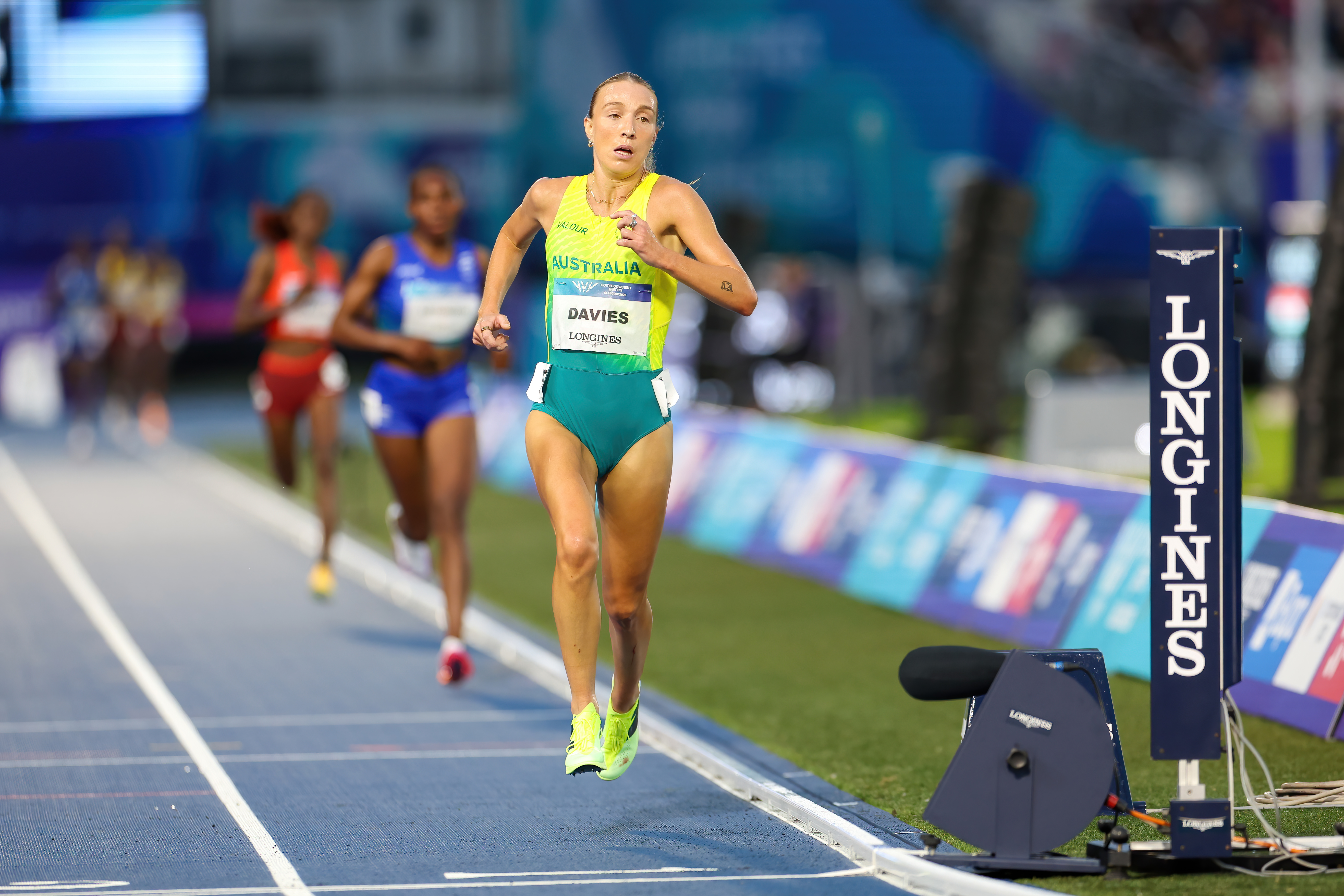
Commonwealth Games 5000m and 10000m champion Rose Davies moves to the roads, contesting the 5km road race in Copenhagen alongside training partner Georgia Griffith, while Commonwealth Games 800m bronze medallist Sarah Billings lines up in the Road Mile alongside Linden Hall.
Lauren Ryan steps back onto the road in the half marathon after a foray into the event in November 2024 (71:40) and January 2025 (68:43), with Ruby Smee, Rebecca Lowe and Donve Viljoen all making their debut in the green and gold. Lowe, 37, had a strong collegiate career on the track and in cross country at the University of Florida before stepping away from the sport in 2010. She returned to the sport in 2019 predominantly on the roads, with personal bests of 72:28 in the half marathon and 2:30:50 in the marathon. Viljoen’s selection continues her ascent in the sport since taking it up during COVID.
WORLD ROAD CHAMPIONSHIPS
Copenhagen, 19-20 September
Women’s Road Mile: Sarah Billings, Linden Hall
Women’s Half Marathon: Lauren Ryan, Ruby Smee, Rebecca Lowe, Donve Viljoen
Men’s Road Mile: Jude Thomas, Oliver Hoare
Men’s 5km: Ky Robinson, Toby Gillen
Men’s Half Marathon: Jack Rayner, Haftu Strintzos, Edward Marks, Liam Boudin
Ed Marks was interviewed by Elise Beacom on episode 56 of the Run With It podcast. Quotes are used with attribution; listen to the full episode for the complete conversation.