
When Jim Thorpe won the first Olympic decathlon in Stockholm in 1912, King Gustav V of Sweden reportedly told him: “Sir, you are the greatest athlete in the world.” The title stuck. Steve Ovett, needling his mate Daley Thompson decades later, offered the alternative view: nine Mickey Mouse events and a slow 1500m.
Somewhere between the coronation and the piss-take sits one of athletics’ oldest structural quirks. The decathlon — ten events across two brutal days — has been the exclusive domain of men at every major championship for 114 years. Women contest the heptathlon, seven events over two days, and have done since 1981, when it replaced the five-event pentathlon (which itself had changed after 1968 when women’s hurdles moved from 80m to 100m).
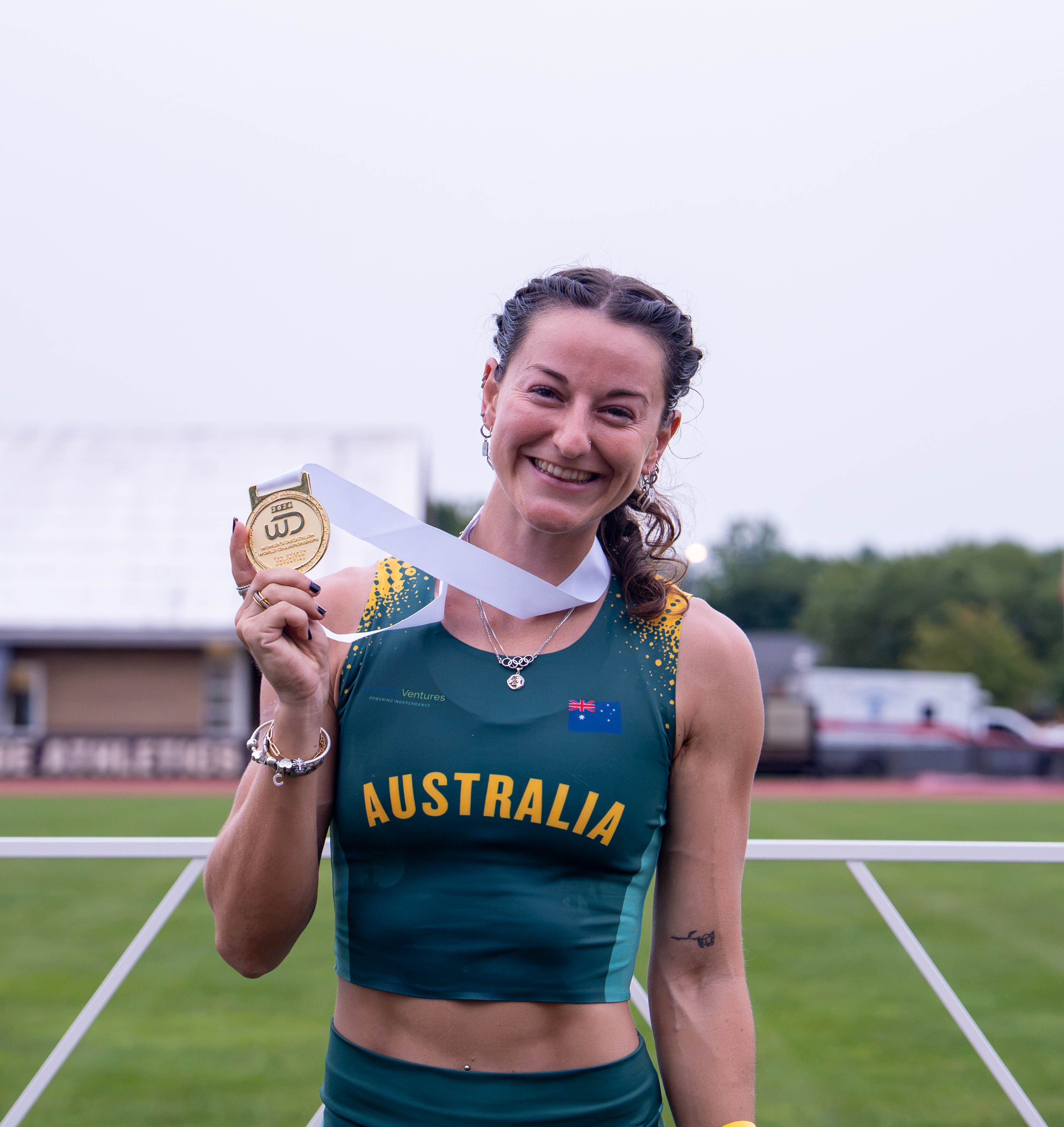
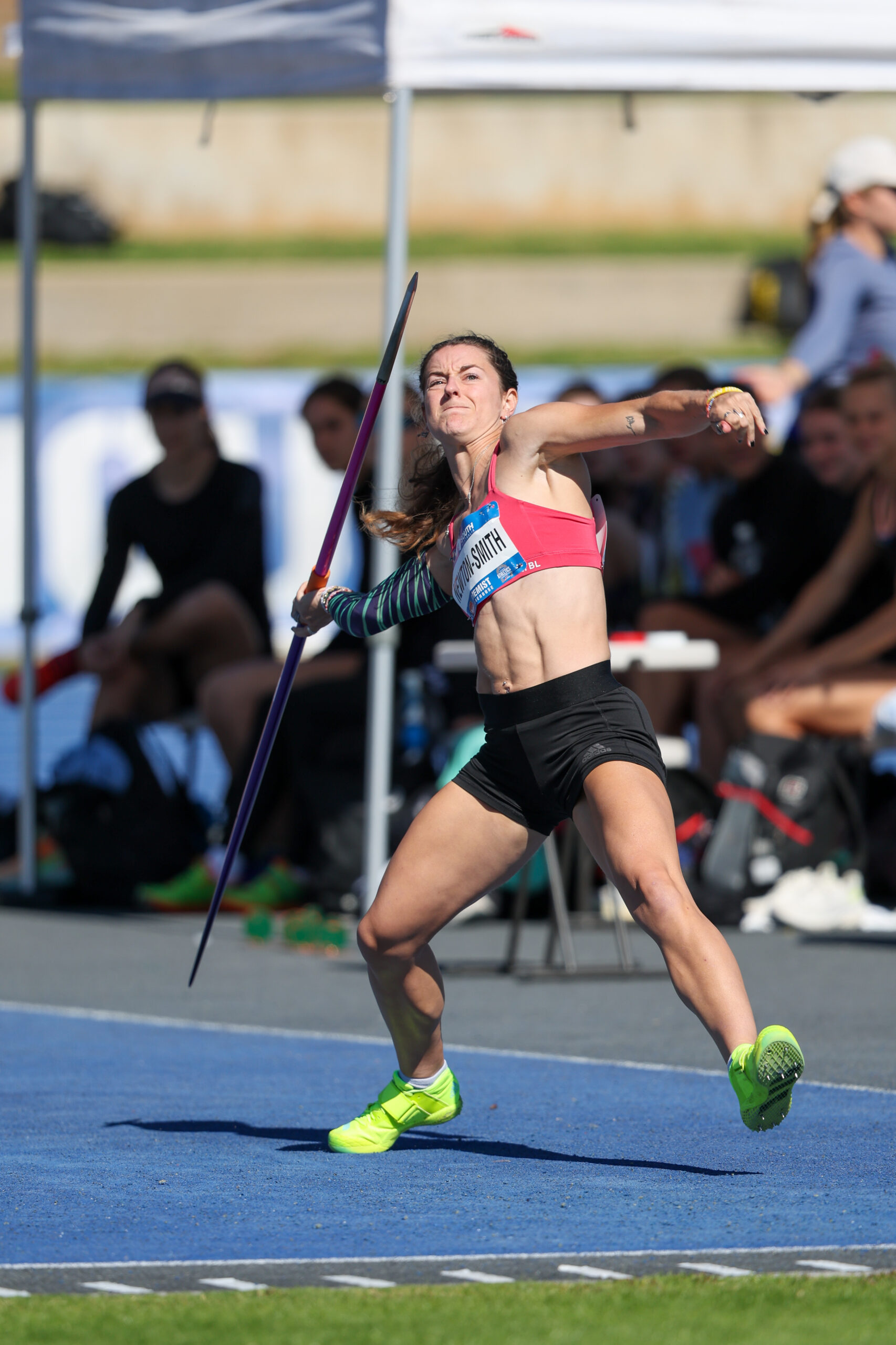
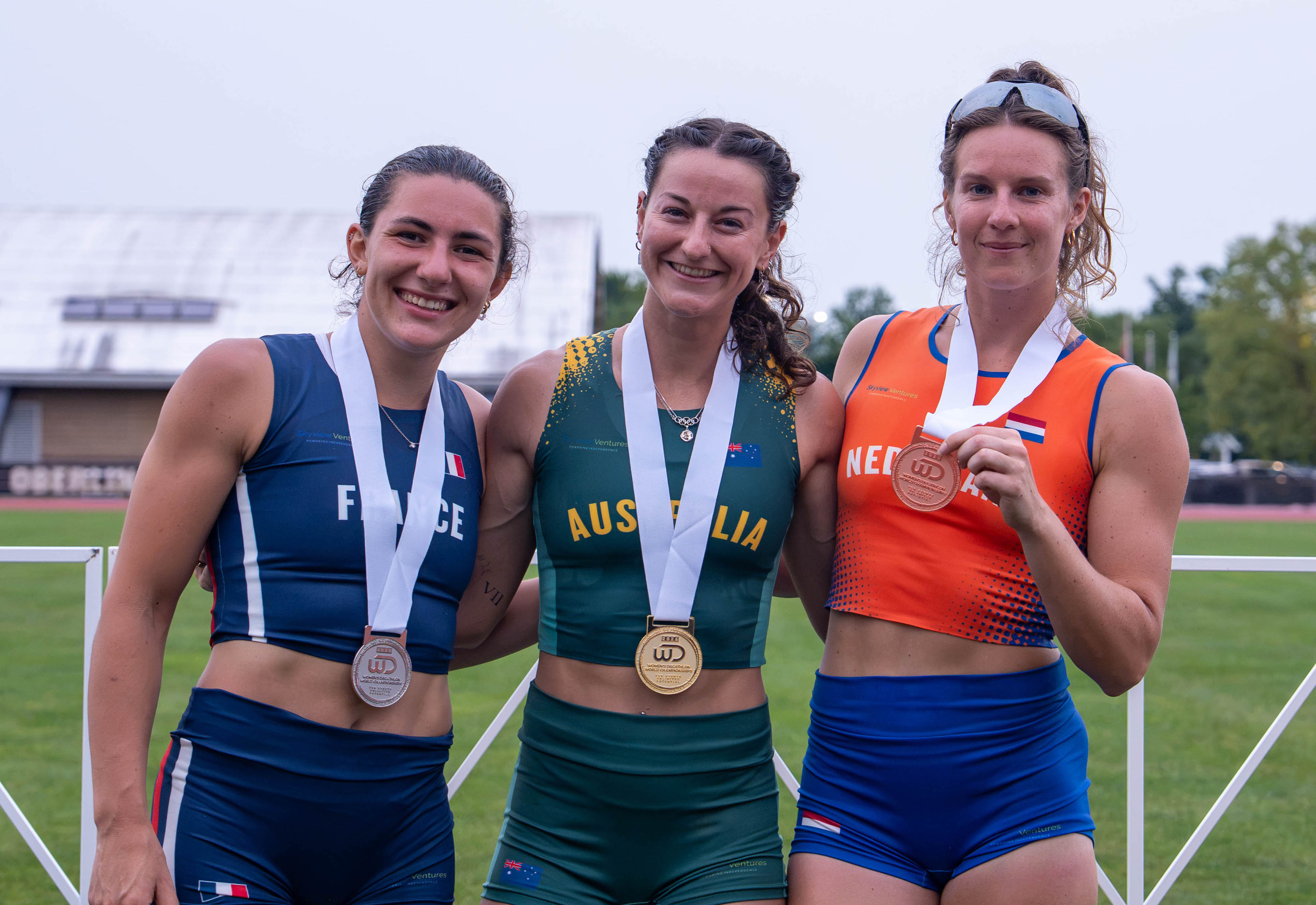
Last weekend at Oberlin College in Ohio, Australia’s Camryn Newton-Smith won the third Women’s Decathlon World Championships, scoring 7,900 points to hold off France’s Noemie Desailly and the Netherlands’ Nikki Boon (7,774) by 95 points. It is not a World Athletics championship: it carries no ratified title and no Olympic pathway. Which is, depending on who you ask, either exactly the problem or entirely beside the point.
Ten events, one door closing
Newton-Smith, an Olympian and the 2024 Australian and Oceania heptathlon champion, arrived at the decathlon almost by accident.
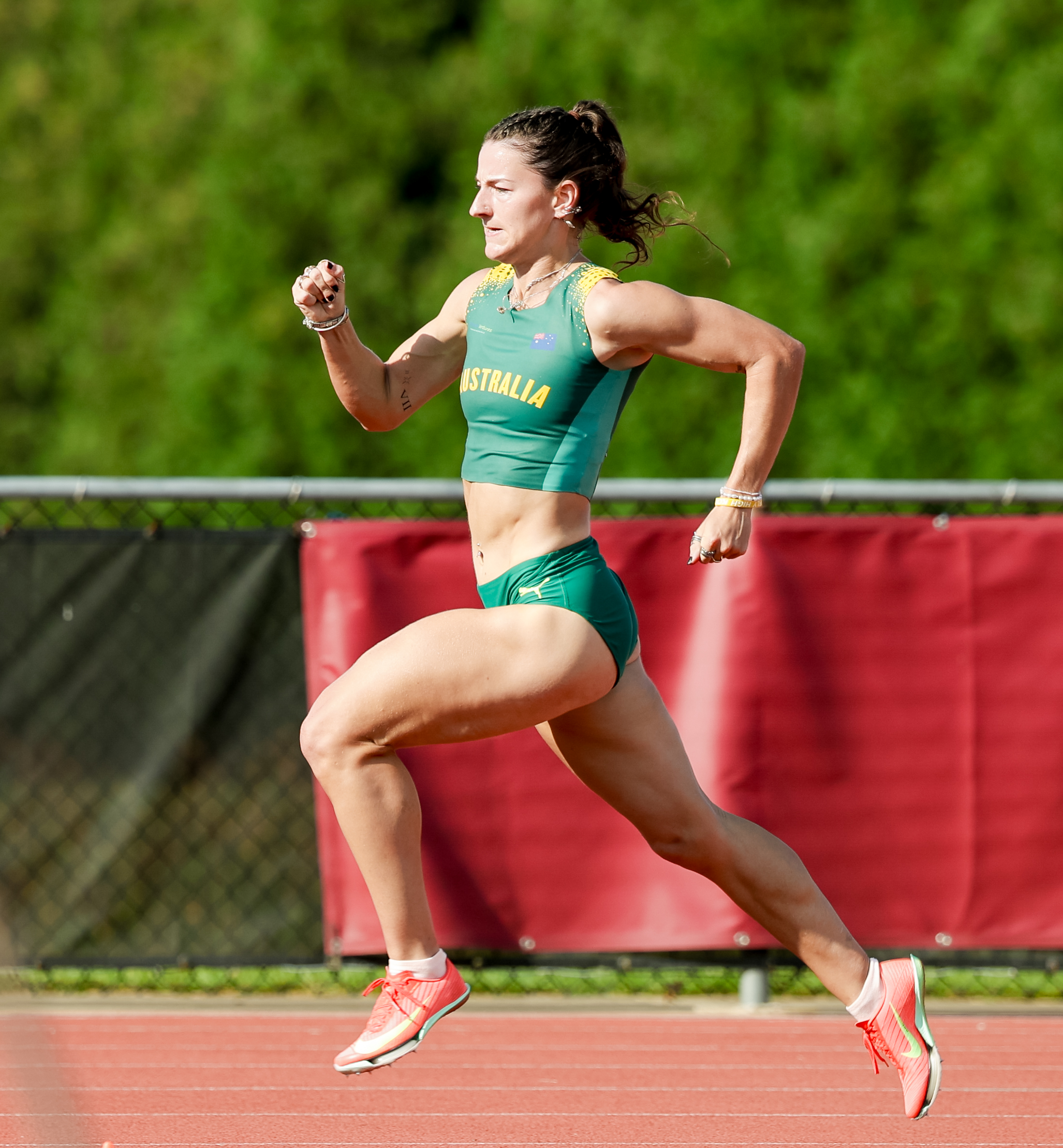
“I was invited to compete in the decathlon again a day after my non-selection email for Commonwealth Games,” she says. “I’m huge on things happen for a reason, and clearly as one door closes another one opens. I’d always wanted to do one, so it turned out to be the perfect time.”
Half the decathlon programme sits outside a heptathlete’s training week — the 400m, discus, pole vault and 1500m replace the heptathlon’s 200m and 800m — and it was in the unfamiliar territory that she surprised herself.
“My highs were the pole vault and 400. I got huge PBs, and I think going into them I just had no idea how they would go, so it was a bit of a shock. I was just taking those events one at a time and trying to stay relaxed. The jav was probably my biggest let-down. I came into the comp with a shoulder injury and it really showed — I think I left a lot of points on the table in that event.”

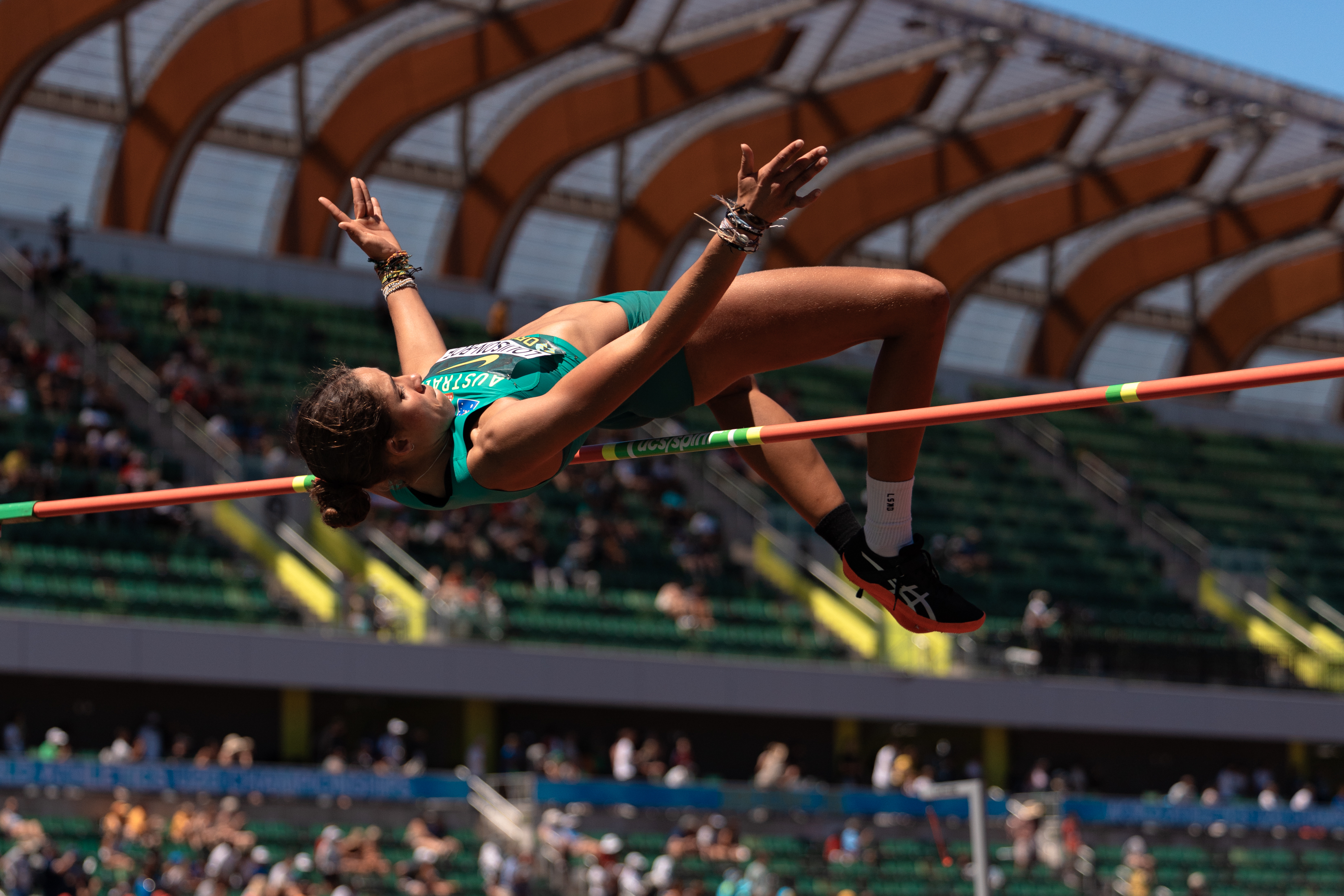
She won the long jump and high jump outright, ran 11.83 for the 100m and hurdled 13.61, then got herself over 3.50m in the pole vault on her way to 7,900 points. Her performance will be recognised as an Australian Record. The World Record of 8,358 belongs to Lithuania’s Austra Skujytė, an Olympic heptathlon silver and bronze medallist, and proof that the two disciplines are not different species.
On the bigger question, Newton-Smith doesn’t hedge.
“Every event in athletics has been brought in line, so why not the multis? Women do every event individually at the highest level, so the discrepancy doesn’t make sense.
Camryn Newton-Smith
“Whether the women go up to the decathlon or the men come down, something has to happen. Maybe we could meet in the middle at an Octathlon,” she said.
There is precedent for meeting in the middle. One of the most recent gender disparity the sport’s governing body erased was in cross country, where for decades senior men ran 12km at the World Championships and senior women 8km. At the 2017 World Cross Country Championships in Kampala, both races were run over 10km for the first time: the men coming down, the women coming up, and the sky conspicuously failing to fall on either.
Building the stage without permission
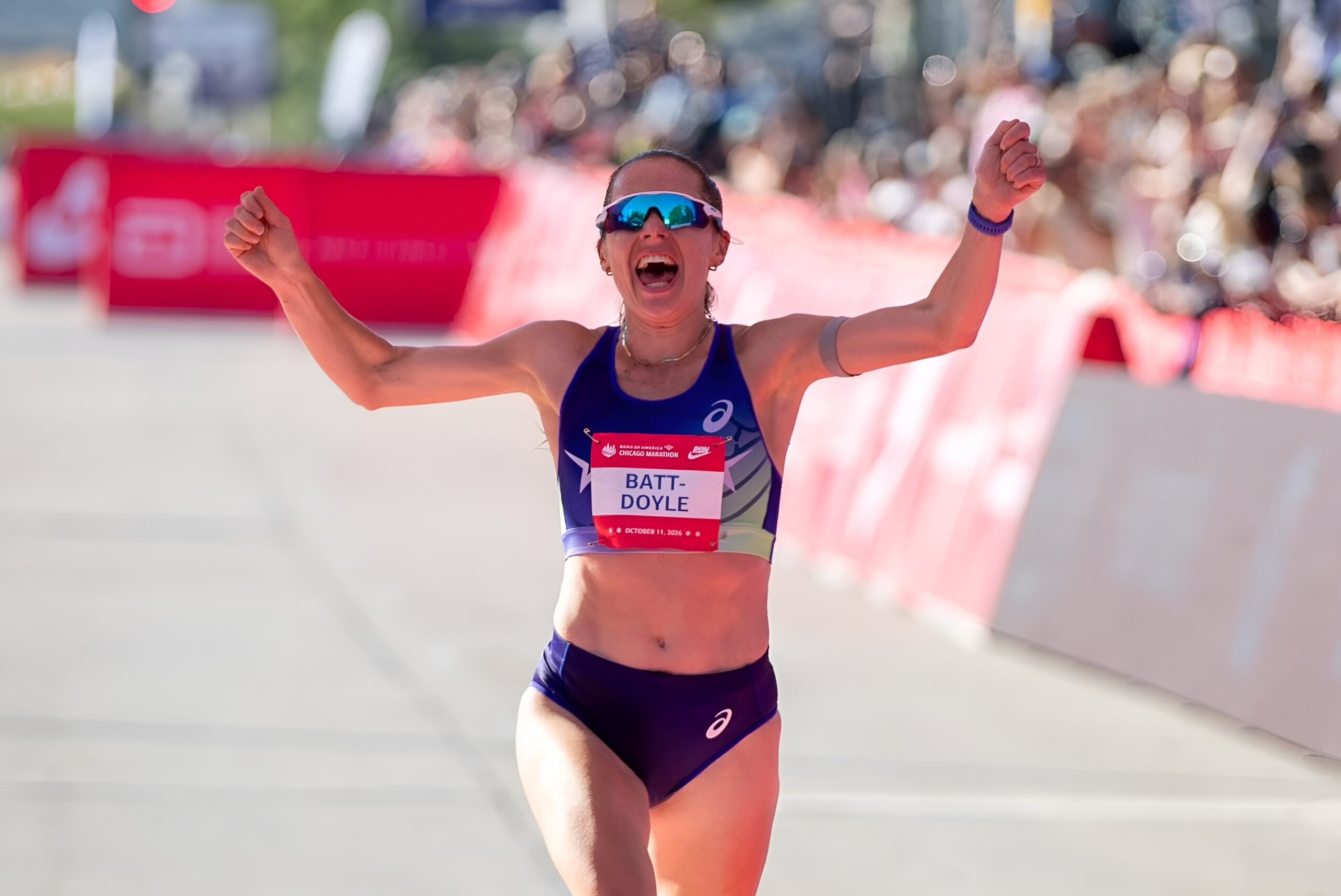
The Women’s World Decathlon Championships exist because Lauren Kuntz stopped asking.
“I spent a long time asking for permission — asking USA Track and Field to include a women’s decathlon, asking World Athletics to create a pathway for it, asking to be allowed to compete in the decathlon,” she says.
“I got tired of being told there’s not enough interest from athletes or fans, or that it was just too hard to figure out the schedule. I decided to just organise our own World Championships and prove there was interest rather than continue to wait to be allowed.”
Lauren Kuntz
Kuntz places the decathlon in a longer lineage. “Track and field has a long legacy of gender inequality — women were allowed to run the 800m in the 1920s Games, then banned from the event for 32 years over unfounded fears it was too strenuous for them. Women weren’t allowed to pole vault until 2000, and the steeplechase wasn’t introduced for women until 2008. The decathlon has been in the Games since 1912 for men, but 114 years later, we’re still waiting.”
Three editions in, she argues the movement has outgrown hypotheticals: fifteen countries represented across the event’s short history, a broadcast partner in AWSN, and a deepening field. “The pipeline of athletes, the business case, the storylines have already been made. All you need to do is embrace the moment.”
The paper trail
History suggests she shouldn’t hold her breath. A 2022 study in the journal Sport in Society by Michele Krech, Jörg Krieger and Lindsay Parks Pieper — built on more than 250 archival documents from the IAAF Women’s Committee between 1990 and 2005 — reads like a field guide to how slowly these doors open.
The committee, chaired for 26 years by Germany’s Ilse Bechthold, had what the authors call responsibility without power: custody of women’s athletics, but no budget, no decision-making authority, and no direct line to the IAAF Council. The women’s pole vault and hammer took repeated submissions before being added to the 1999 World Championships. The 3,000m steeplechase took more than a decade of proposals — rejected first for insufficient international participation, then, when the participation evidence arrived, on newly invented grounds — before finally appearing at the 2005 World Championships, and only after Bechthold went around the bureaucracy and wrote directly to the president. Men’s disciplines, the authors note pointedly, never had to pass any of these tests.
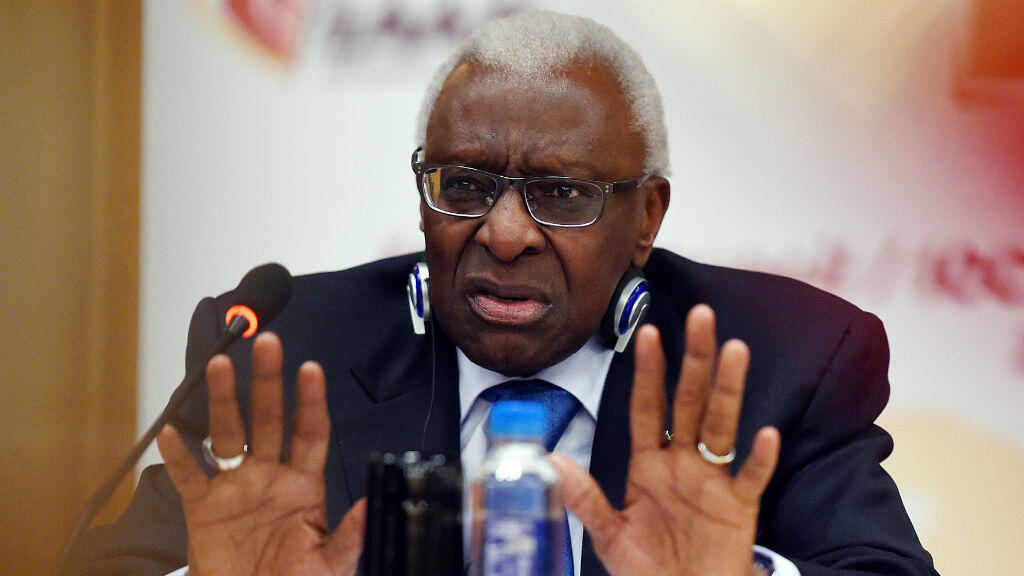
It is worth remembering who held the power the committee was petitioning. The president Bechthold wrote to was Lamine Diack, who ran the IAAF from 1999 to 2015 and was later convicted of corruption by a French court, having taken payments to cover up Russian doping. The rot at the top of the organisation in that era ran deep enough that the IAAF rebranded itself as World Athletics in 2019, in part to draw a line under the scandal. This was the institution women’s athletics depended on for progress: one where advancement required cultivating, flattering and appealing personally to a small circle of men, some of whom, it turned out, were for sale.
And the women’s decathlon itself? It was raised in that era, handed to a working group that barely met, and quietly killed.
“It’s not a question of whether women are capable”
Here is where the topic refuses to be simple: the most substantial counter-argument comes not from officialdom but from within the heptathlon itself.
Tori West, Australia’s Commonwealth Games heptathlon bronze medallist in Glasgow a fortnight ago, is careful to separate two questions that often get collapsed into one.

“It’s great for women to have the opportunity to do decathlon if they choose to. Camryn and the pool of girls competing in the US show clearly that women are more than capable,” she said of her Paris Olympics team mate.
“I believe in today’s age it’s not a question of whether women are capable, or of equality — it’s the practical feasibility of completely changing the women’s combined events at the Olympic level.”
Her concern is the pipeline. “I’d argue it takes at least ten years to develop in the combined events, given we take a generalist approach to technical events over time. To introduce the women’s decathlon too early creates a gap of generational talent, as girls don’t have the opportunity to develop to their full potential. There will be athletes who are anomalies and succeed — but that doesn’t make for good competitions and depth to spectate. Introducing it in a short period opens a generation gap as we find a new equilibrium. That isn’t ideal for an event that already struggles with exposure.”
She also questions who the change would actually be for.
“There’s a community of women advocating for decathlon at the Olympics, and an existing pool of heptathletes happy with things as they are. Both groups are women, both trying to make something of their life from the multi events. So which side do we choose, if equality is the argument?”
Tori West
West would want three things before any switch: consensus within the combined-events community, proper consultation on junior development timelines, and feasibility work with organisers of majors and combined-events tours. “I’d be open to trying a decathlon, for sure. But it’s certainly not something I feel I’m missing out on due to inequality.”
She is not alone, but opinions are mixed. Other prominent women in the sport consulted for this article, who did not wish to go on record, were content for the heptathlon to remain, arguing that women’s athletics disciplines do not need to mirror the men’s program to be equal. Others see it as continued progress of women’s sport reflecting the high standards of speed, strength and athleticism.
The scoreboard and the question
So the arguments sit roughly where the archives said they would. On one side: women contest all ten events individually at the highest level, the exclusion of the decathlon is a historical artefact, and a self-organised championship is once again doing the proving that the global governing body declines to commission. On the other: a genuine, women-led case that the heptathlon is a mature, deep, hard-won event, and that replacing it hastily could damage the very athletes the change claims to serve. The octathlon compromise for both genders floats somewhere in the middle.
What the research makes hard to argue is that the process will sort itself out on merit alone. The steeplechase generation eventually got its event, but only after a decade of shifting goalposts. The question for this generation is whether the decathlon follows the same slow path, a different one, or none at all.