
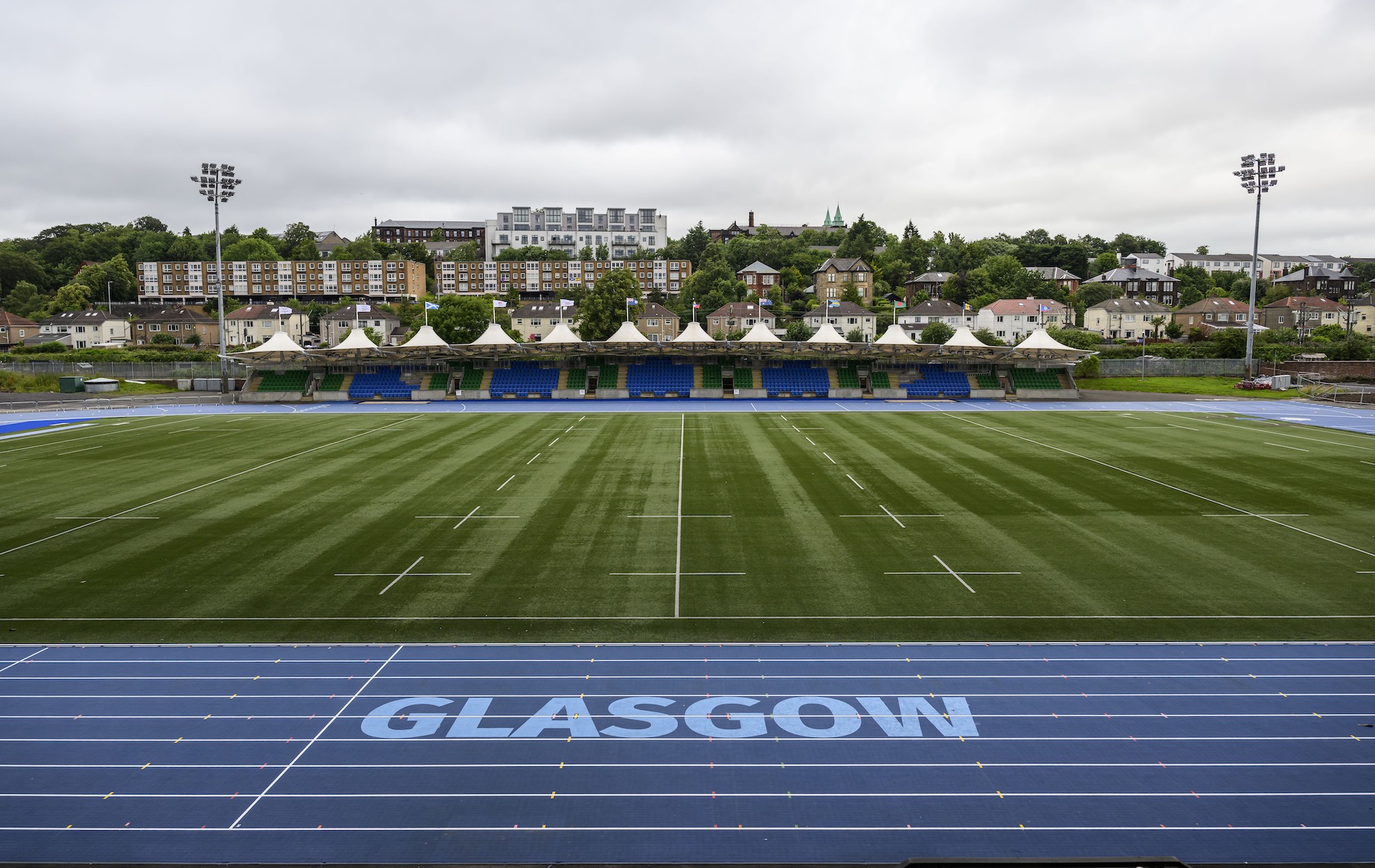
When the athletics program of the Glasgow 2026 Commonwealth Games gets underway on 27 July, it won’t be in a cavernous football stadium or a purpose-built Olympic arena. It will be at Scotstoun Stadium, a compact community athletics venue tucked into the residential streets of Glasgow’s West End. For Australian fans, the easiest way to picture it is simple: think Lakeside Stadium.
A Lakeside on the Clyde
The parallels between Scotstoun and Melbourne’s Lakeside Stadium are striking. Both are genuine, working athletics venues rather than converted stadia. Both share their home with a football code: Lakeside with South Melbourne FC, Scotstoun with rugby’s Glasgow Warriors, who have played there since 2012. Both sit in established inner-suburban settings, and both operate at a scale that puts spectators right on top of the action.
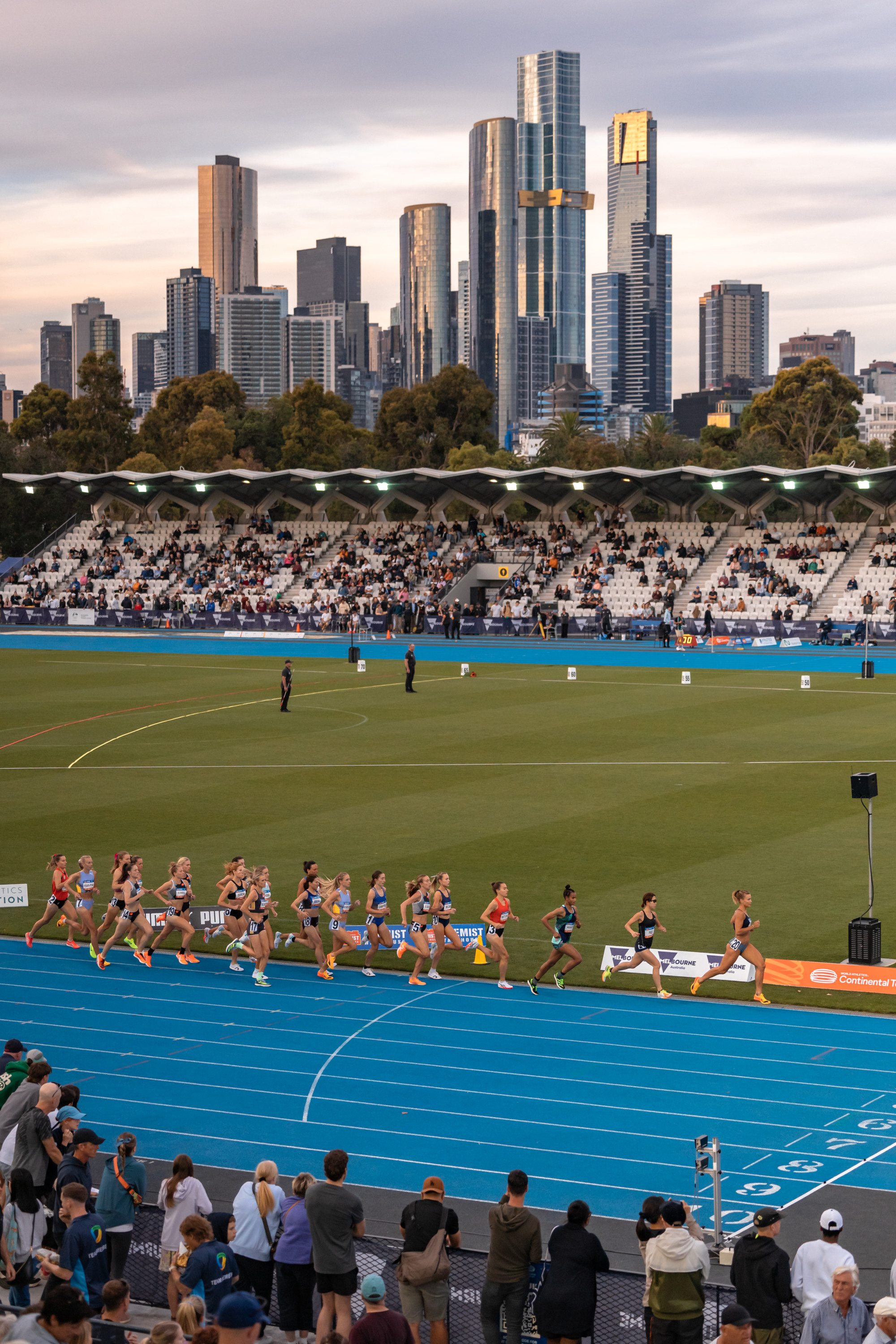
The numbers line up too. Lakeside holds around 12,000, with roughly 7,400 of those seated across its grandstands. Scotstoun’s permanent configuration seats a little under 10,000 for rugby, and with temporary grandstands erected on both bends for the Games, its capacity will lift to between around 11,000 across the two daily sessions of athletics and para athletics.
The difference between the main stand at Lakeside and at Scotstoun is that there’s not a wide walkway in front of the stand for spectators to traverse, and stand, blocking views: the grandstand sits much harder against the outside lanes, close enough that spectators can hear the starter’s commands and the rhythm of spikes hitting the track. There is no moat, no warm-up track buffer (a limited indoor straight under the grandstand serves that purpose), no acres of camera run-off between the crowd and lane eight. At a venue this size, every seat is a good seat.
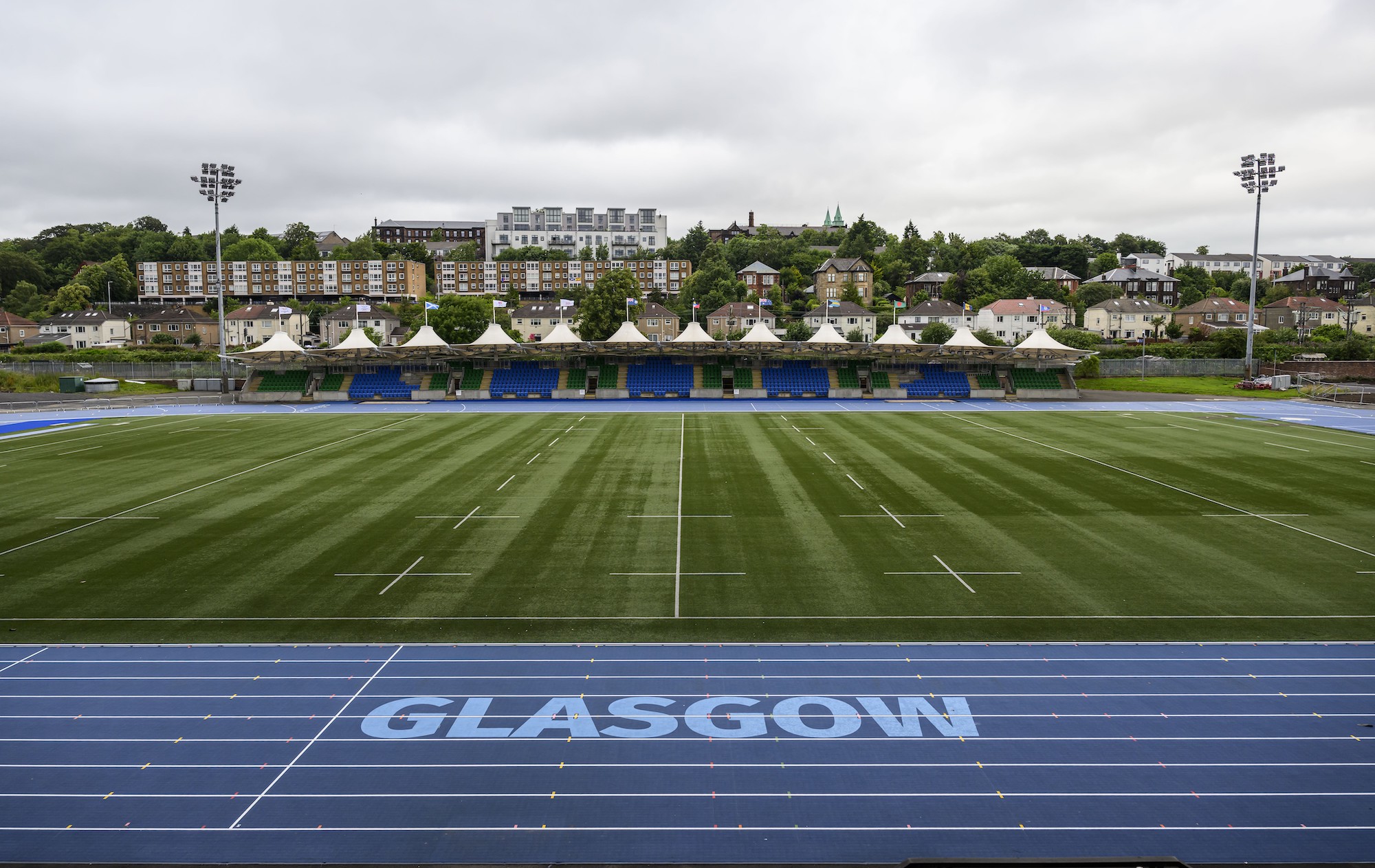
And similar to Lakeside — where the track looks out over the Albert Park parkland with some cityscape — Scotstoun is unmistakably embedded in its neighbourhood. The backdrop beyond the infield is not a stadium superstructure but the tenements and terraced housing of Scotstoun itself. Athletes rounding the top bend will do so with Glasgow’s West End rooftops in view. It’s a Commonwealth Games with a distinctly local, almost club-championships intimacy.
A deliberate break from the recent past
That intimacy marks a sharp departure from the last three editions of the Games. At Glasgow 2014, athletics was staged at Hampden Park, temporarily converted with a raised deck to hold around 44,000. Gold Coast 2018 used Carrara Stadium, expanded with temporary stands to roughly 35,000. Birmingham 2022’s rebuilt Alexander Stadium held around 32,000 in Games mode before scaling back to its permanent 18,000.
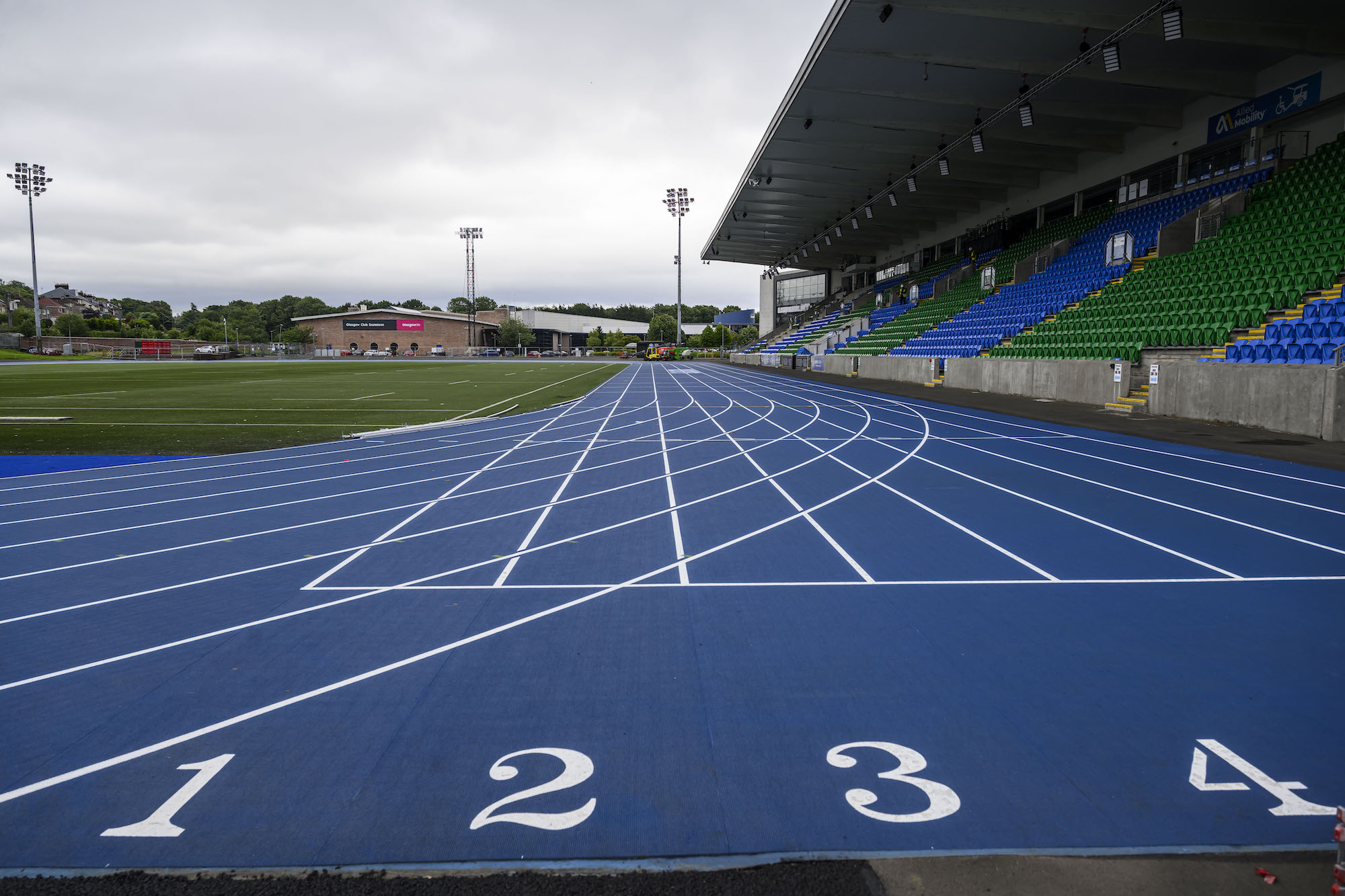
Scotstoun, at 10,000–11,000, is a quarter to a third of the size of any of them. That’s by design: Glasgow 2026 is a deliberately compact, lower-cost Games rescuing the regional Victorian games that would have seen athletics in Ballarat, and is staged across ten sports in just four existing venues within an eight-mile corridor, with no Scottish public money spent on the Scotstoun track works. What’s lost in scale should be repaid in atmosphere.
A cutting-edge surface underfoot
Don’t mistake the modest capacity for modest facilities. The 400m track has been completely relayed for the Games with a world-class Mondo surface — the same brand of vulcanised rubber track used at recent Olympic Games and renowned as the fastest surface in the sport — installed by Glasgow 2026’s official provider, DYNAMIK. After the Games, the track will be gifted to the city, leaving Scotstoun with a genuine legacy surface.
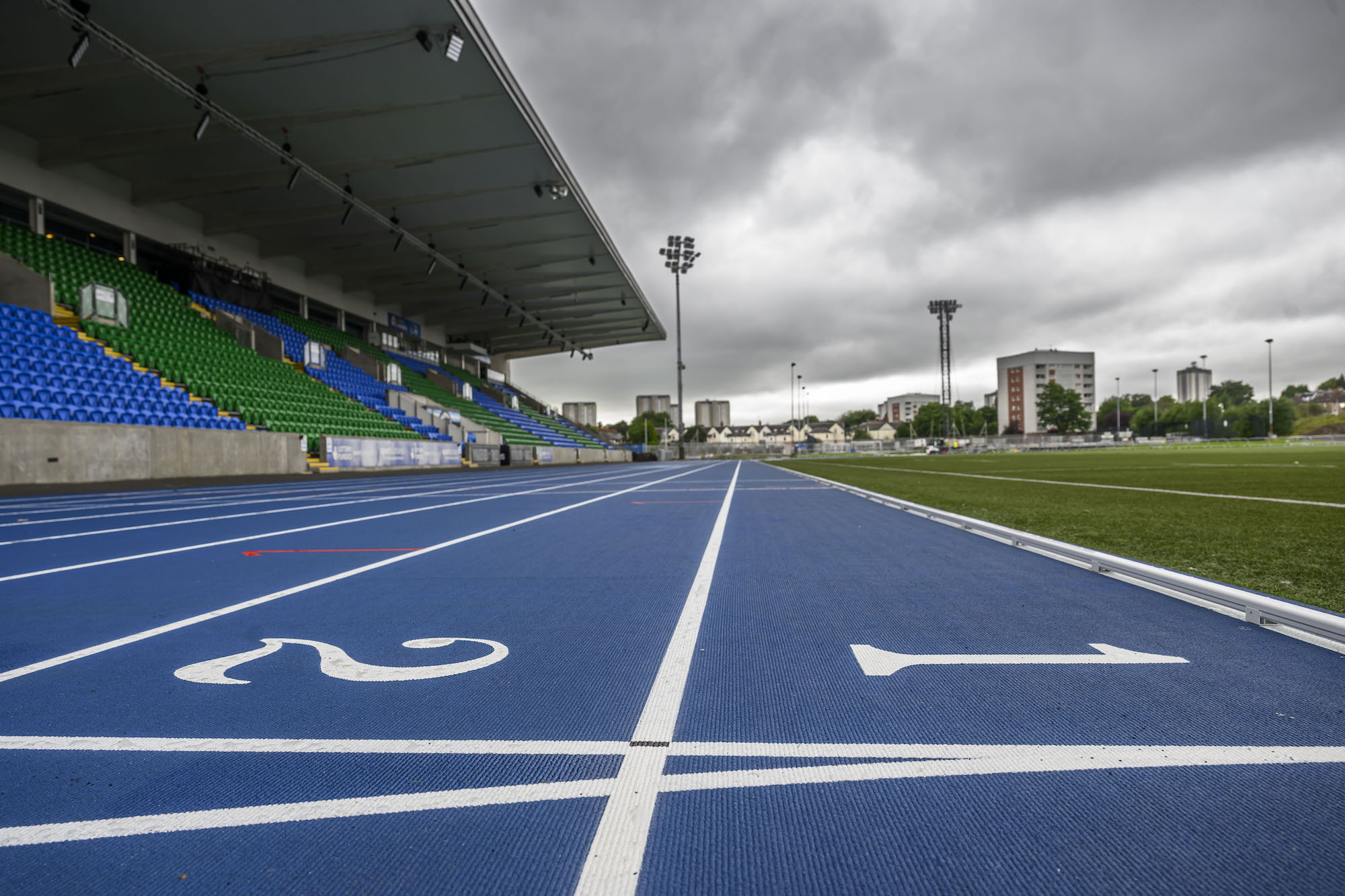
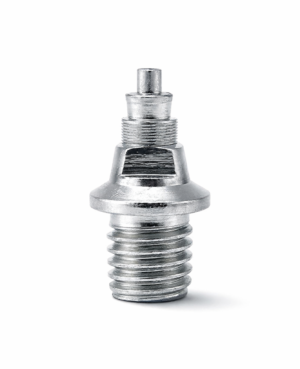
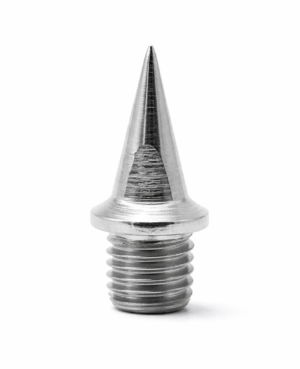
For athletes, standard World Athletics technical rules apply on the new surface: spikes are allowed to a maximum of 9mm for track events, with 12mm permitted in the field, rather than the shorter 7mm/9mm constraints sometimes imposed by specific venues.
What it will feel like
Six days of athletics and para athletics, two sessions a day, the return of the Commonwealth Mile as a signature event, and a crowd sitting almost within touching distance of the athletes. Scotstoun won’t look like Birmingham, the Gold Coast or Hampden: it will look like a big night at Lakeside, turned up to eleven. For a sport that so often rattles around in oversized stadiums, that might be exactly the point for what will be a unique edition of the Commonwealth Games.